





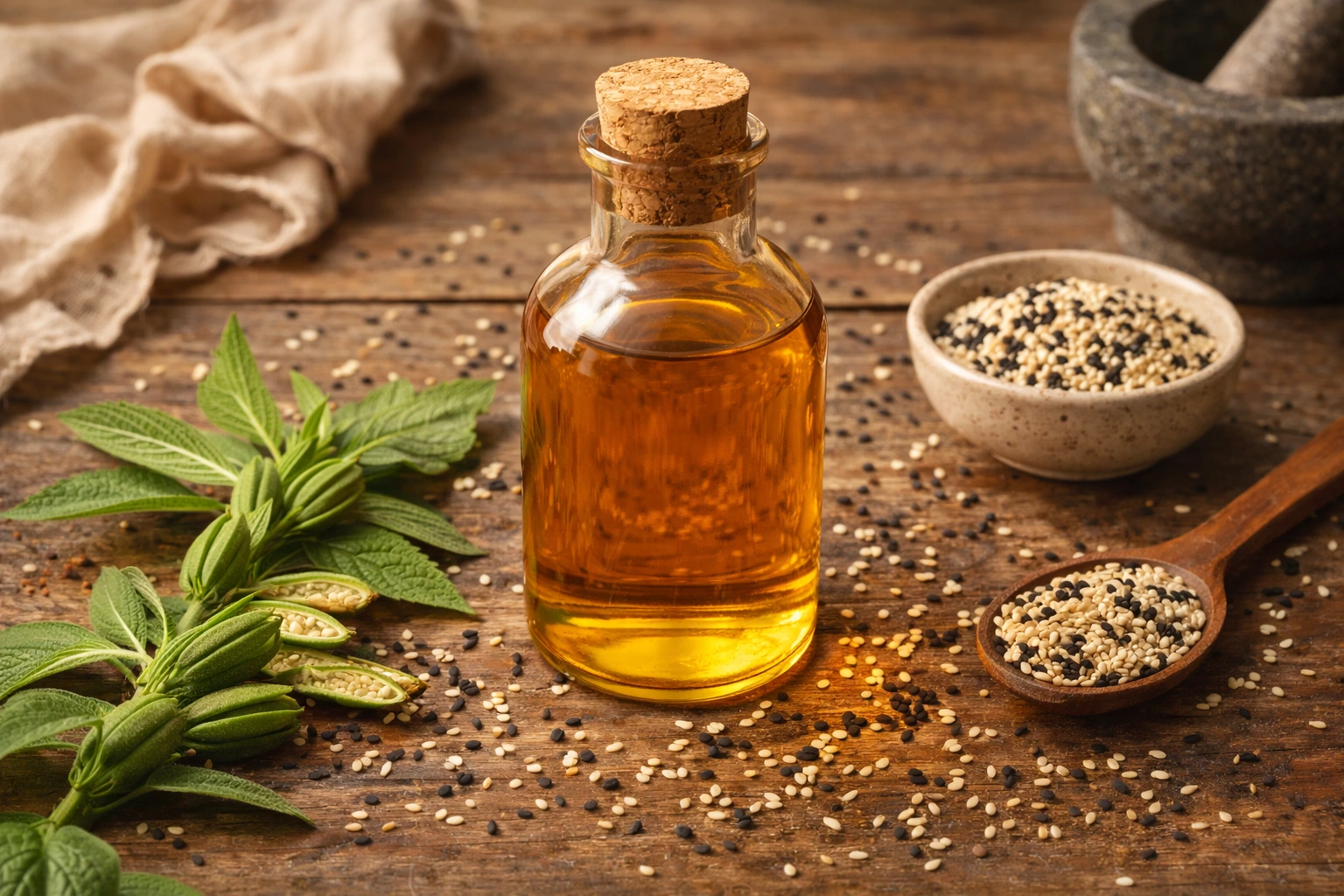
Sesame oil (til ka tel) has been a cornerstone of Indian kitchens for over 5,000 years. And guess what? Modern science is finally catching up.
From reducing cholesterol to promoting hair growth, this golden oil offers benefits that go way beyond cooking. According to Yahoo Finance (2025), the global sesame oil market is projected to grow at 6.50% CAGR, reaching USD 8.6 billion by 2034—proof that people worldwide are rediscovering its power.
Whether you’re looking to improve heart health, achieve radiant skin, or explore traditional oil pulling, you’re in the right place. This guide covers 15 evidence-based health benefits, compares sesame oil with other popular oils, and provides step-by-step usage guides tailored for Indian households.
Ready to unlock the secrets of this ancient treasure?
What is Sesame Oil? Benefits, Nutrition & Active Compounds
Sesame oil isn’t just another cooking oil. It’s packed with heart-healthy fats, antioxidants, and unique compounds that set it apart.
According to News Medical (2025), sesame oil contains 40% oleic acid (omega-9) and 44% linoleic acid (omega-6)—both essential for cardiovascular health (Source: news-medical.net). But here’s what truly makes it special:

- Sesamin & Sesamol: These powerful antioxidants reduce oxidative stress and inflammation. They’re the reason your grandmother’s sesame oil never went rancid.
- Vitamin E (Tocopherols): Protects your cells from damage and supports skin health.
- Copper & Manganese: One tablespoon provides over 100% of your daily copper needs.
- Calcium & Magnesium: Essential for bone health and muscle function.
Here’s the thing: Unlike many oils, sesame oil doesn’t go rancid quickly despite its high unsaturated fat content. Why? Sesamol and sesamin act as natural preservatives.
This makes it ideal for Indian cooking, where oils are often stored at room temperature. No refrigeration needed.
15 Sesame Oil Benefits for Health, Hair & Skin
From heart protection to diabetes management, sesame oil offers a wide range of internal health benefits. Here’s what the evidence shows:

1. Heart Health & Cholesterol Management
Sesame oil may help reduce LDL (bad) cholesterol and triglycerides. According to WebMD (2025), regular consumption can lower LDL cholesterol levels due to its high content of polyunsaturated and monounsaturated fats.
A 2022 study published in ScienceDirect found that sesame oil’s anti-lipogenic properties help prevent fat accumulation in arteries. That’s a fancy way of saying it keeps your arteries clean.
2. Blood Pressure Regulation
Sesame oil’s magnesium content helps relax blood vessels, reducing hypertension. Ayurvedic practitioners in India have used til oil for vata dosha balance, which governs circulation.
3. Anti-Inflammatory Properties
Sesamin reduces inflammation markers in your body. This makes it beneficial for arthritis and joint pain. Many Indian households use warm sesame oil for joint massage during winter months—and there’s science behind it.
4. Blood Sugar Control
Research suggests sesame oil may improve insulin sensitivity and help manage type 2 diabetes. This is particularly relevant for India, which has one of the highest diabetes rates globally.
5. Bone Health & Osteoporosis Prevention
With high calcium, zinc, and copper content, sesame oil supports bone density. Traditional Indian practices include massaging sesame oil on joints to prevent age-related bone loss.
6. Digestive Health
Sesame oil acts as a mild laxative and soothes your digestive tract. Drinking 1 teaspoon on an empty stomach is a common Ayurvedic remedy for constipation.
7. Liver Protection
Sesamol protects liver cells from toxin damage and supports detoxification processes. Your liver will thank you.
8. Brain Health & Cognitive Function
Omega-6 fatty acids and antioxidants support neural health. They may reduce risk of cognitive decline as you age.
9. Hormonal Balance (Female)
Sesame oil contains phytoestrogens that may help balance hormones during menopause. Indian women traditionally consume black sesame seeds (kala til) for reproductive health.
10. Male Vitality
Zinc and selenium in sesame oil support testosterone production and reproductive health. It’s not just for women.
11. Immune System Support
Antioxidants strengthen your immune response and protect against infections. Plus, they help you recover faster when you do get sick.
12. Weight Management
Despite being calorie-dense, sesame oil’s healthy fats promote satiety. This may aid weight loss when used in moderation.
13. Oral Health (Oil Pulling)
Oil pulling with sesame oil for 15-20 minutes daily can reduce Streptococcus mutans bacteria in plaque and saliva, improving oral hygiene (Source: care24.co.in). It’s like a natural mouthwash.
14. Anti-Cancer Properties
Preliminary studies suggest sesamin may inhibit cancer cell growth. More research is needed, but the early signs are promising.
15. Longevity & Anti-Aging
Ayurveda considers sesame oil a rasayana (rejuvenating substance) that promotes longevity and vitality. Your ancestors knew what they were doing.
Sesame Oil Benefits for Skin: From Hydration to Anti-Aging
Sesame oil is a powerhouse for skin health. It offers natural UV protection, deep hydration, and anti-aging benefits.

Here’s something surprising: According to WebMD (2025), sesame oil can resist up to 30% of UV rays—significantly more than coconut (20%), peanut (20%), or olive oil (20%) (Source: care24.co.in). That’s natural sun protection right there.
Key Skin Benefits:
- Deep Moisturization: Penetrates skin layers to lock in moisture. Perfect for dry Indian winters.
- Anti-Aging: Vitamin E and antioxidants reduce fine lines and wrinkles.
- Acne & Scar Treatment: Anti-inflammatory properties reduce acne and fade scars.
- Skin Brightening: Regular use can improve skin tone and reduce pigmentation.
- Wound Healing: Accelerates healing of minor cuts and burns.
- Eczema & Psoriasis Relief: Soothes irritated skin and reduces flaking.
Like sesame oil, olive oil provides deep moisturization while almond oil offers lighter absorption for daily use. Discover more options in our carrier oils comparison guide.
How to Use Sesame Oil for Skin
- Face Massage: Warm 1-2 teaspoons of cold-pressed sesame oil. Massage onto clean face in circular motions for 5 minutes. Leave overnight or rinse after 30 minutes.
- Body Moisturizer: Apply after shower on damp skin for maximum absorption.
- DIY Face Mask: Mix 1 tablespoon sesame oil with 1 teaspoon besan (gram flour) and turmeric for glowing skin.
Disclaimer: If you have sensitive skin or allergies, perform a patch test before full application. Consult a dermatologist for persistent skin conditions.
Sesame Oil Benefits for Hair: Growth, Strength & Scalp Health
Sesame oil is a traditional Indian remedy for hair growth, dandruff control, and preventing premature graying.
According to Nykaa (2025), sesame oil for hair can help promote hair growth, improve scalp health, and protect tresses from environmental damage. Here’s what makes it effective:
Hair Benefits:
- Promotes Hair Growth: Improves blood circulation to scalp, stimulating hair follicles.
- Prevents Dandruff: Antifungal properties combat scalp infections.
- Reduces Hair Fall: Strengthens hair roots and prevents breakage.
- Prevents Premature Graying: Antioxidants protect hair pigment cells.
- Adds Shine & Softness: Coats hair shaft for natural luster.
- Heat Protection: Creates a protective barrier against styling damage.

Enhance sesame oil’s antifungal properties with tea tree oil for dandruff or combine with bhringraj oil for complete scalp care.
Step-by-Step Hair Treatment:
- Warm 3-4 tablespoons of sesame oil. Don’t overheat it.
- Part hair into sections and apply oil to scalp with fingertips.
- Massage in circular motions for 10 minutes to boost circulation.
- Apply remaining oil to hair lengths, focusing on dry ends.
- Cover with shower cap and leave for 1-2 hours (or overnight).
- Wash with mild shampoo. You may need two washes.
- Repeat 2-3 times weekly for best results.
Pro Tip: Mix sesame oil with curry leaves or fenugreek seeds for enhanced hair growth benefits. It’s a popular remedy in South Indian households.
Ayurvedic Perspective: Dosha Balance & Traditional Uses
In Ayurveda, sesame oil (taila) is considered the king of oils. It’s the default choice when a formula mentions ‘oil’ without specifying type.
According to Easy Ayurveda, if a formula mentions ‘oil’ without specifying type, sesame oil is the default choice—indicating its prime importance. Here’s why it’s so revered:
Ayurvedic Properties:
- Vata Balancing: Sesame oil’s warming nature pacifies vata dosha (air element). This reduces anxiety, dryness, and joint pain.
- Penetrative Quality: Sukshma guna allows it to penetrate deep tissues. This makes it ideal for abhyanga (oil massage).
- Base for Herbal Oils: Sesame oil is used as the base for over 90% of Ayurvedic herbal oils. Why? It carries herbal nutrients effectively (Source: kamaayurveda.in).
Traditional Ayurvedic Uses:
- Abhyanga (Self-Massage): Daily full-body massage with warm sesame oil before bathing improves circulation and calms your mind.
- Nasya (Nasal Drops):2-3 drops in each nostril for sinus relief and mental clarity.
- Karna Purana (Ear Oil): Warm oil in ears for tinnitus and earache.
- Gandusha (Oil Pulling): Swish 1 tablespoon for 15-20 minutes for oral health.
- Pada Abhyanga (Foot Massage): Massaging feet with sesame oil at night improves sleep quality. This practice is mentioned in ancient texts.
What Ayurveda Says About Sesame Oil:
According to Charaka Samhita, sesame oil is the best among oils for strength, skin health, and longevity. It’s particularly recommended during winter (vata season) and for individuals with vata-dominant constitutions.
Sesame Oil Benefits for Bones: Prevention & Management
Sesame oil is a natural ally for bone health. It offers nutrients that prevent osteoporosis and strengthen skeletal structure.
This benefit is particularly important for Indian women, who have higher osteoporosis rates due to vitamin D deficiency and dietary factors. Here’s how sesame oil supports bones:
Bone-Strengthening Nutrients:
- Calcium: Essential for bone density and strength.
- Zinc: Supports bone formation and mineralization.
- Copper: Aids collagen production for bone flexibility.
- Magnesium: Helps calcium absorption and bone metabolism.
How Sesame Oil Helps:
- Prevents Bone Loss: Regular consumption and topical application may slow age-related bone density decline.
- Reduces Arthritis Pain: Anti-inflammatory properties ease joint discomfort.
- Improves Joint Mobility: Massage with warm sesame oil lubricates joints and reduces stiffness.
Traditional Practice: In Indian households, massaging warm sesame oil on knees, elbows, and spine is a common remedy for arthritis and joint pain. This is especially popular during monsoon season when joint issues worsen.
Disclaimer: Sesame oil supports bone health but isn’t a substitute for medical treatment. Consult an orthopedic specialist for osteoporosis or severe joint conditions.
Sesame Oil Benefits: 5 Surprising Facts Backed by Science
- Sesame oil resists 30% of UV rays, while other oils like coconut, peanut, and olive oils resist only about 20%. This makes it a better natural UV protector.
- Oil pulling with sesame oil for 15-20 minutes daily can reduce Streptococcus mutans bacteria in plaque and saliva. This improves oral hygiene naturally.
- Sesame oil contains sesamol and sesamin—antioxidants that give it a long shelf life. They make it resistant to rancidity despite high unsaturated fat content.
- In Ayurveda, if a formula mentions ‘oil’ without specifying type, sesame oil is the default choice. This indicates its prime importance.
Sesame Oil vs Olive Oil vs Coconut Oil: Which is Better?
Choosing the right oil depends on your specific needs. Here’s how sesame oil compares to other popular options in Indian kitchens:
| Oil Type | Smoke Point | Best For | Key Benefits | Price (₹/L) |
|---|---|---|---|---|
| Sesame Oil | 210°C (410°F) | Medium-heat cooking, massage, skin care | Heart health, bone strength, UV protection | ₹300-600 |
| Olive Oil | 190°C (374°F) | Salads, low-heat cooking | Heart health, anti-inflammatory | ₹400-800 |
| Coconut Oil | 177°C (350°F) | Baking, hair care, high-heat cooking | Antimicrobial, hair growth | ₹200-400 |
| Mustard Oil | 250°C (482°F) | High-heat cooking, pickling | Antibacterial, omega-3 | ₹150-300 |
| Groundnut Oil | 225°C (437°F) | Deep frying, high-heat cooking | Vitamin E, neutral flavor | ₹180-350 |
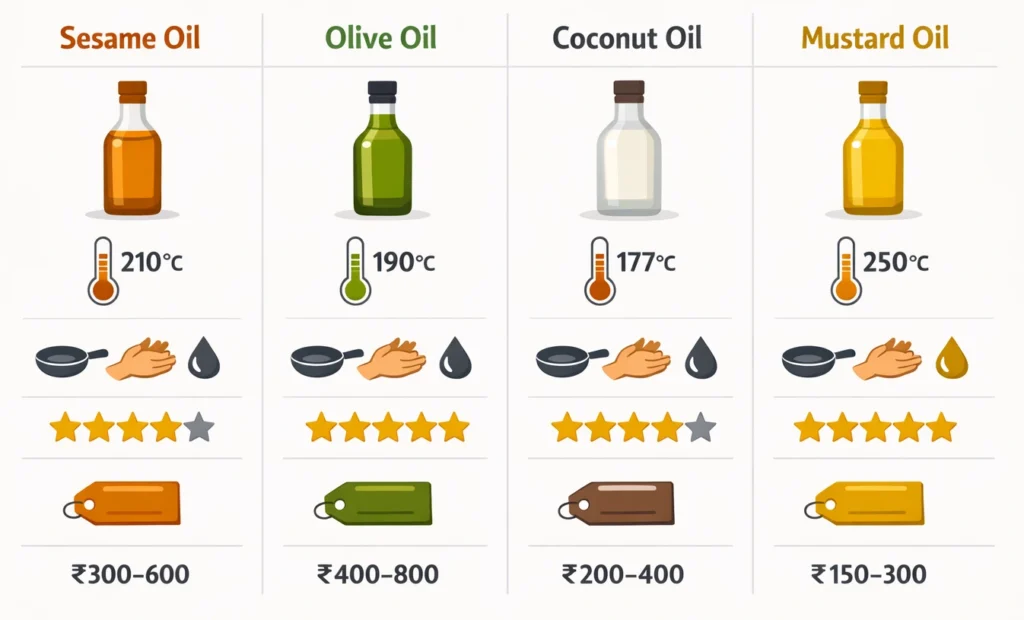
Key Differences:
- Sesame vs Olive Oil: Sesame oil has a higher smoke point and better UV protection. Olive oil has more omega-3s.
- Sesame vs Coconut Oil: Sesame oil is better for bone health and heart health. Coconut oil excels in antimicrobial properties.
- Sesame vs Mustard Oil: Mustard oil handles higher heat. But sesame oil offers superior skin and hair benefits.
Which Oil Should You Choose?
- For Cooking: Mustard or groundnut oil for high-heat; sesame for medium-heat stir-fries.
- For Skin/Hair: Sesame oil (best all-rounder) or coconut oil (for hair growth).
- For Heart Health: Sesame or olive oil.
For Ayurvedic Practices: Sesame oil is the traditional choice.
How to Use Sesame Oil: Step-by-Step Guides
From cooking to beauty rituals, here are practical ways to incorporate sesame oil into your daily routine:
1. For Cooking:
- Stir-Frying: Use 1-2 tablespoons for vegetables, paneer, or chicken.
- Tadka (Tempering): Add mustard seeds, curry leaves, and dried chilies to hot sesame oil.
- Salad Dressing: Mix 2 tablespoons sesame oil with lemon juice and honey.
- Can You Fry Eggs? Yes! Sesame oil adds a nutty flavor to scrambled or fried eggs.
2. Oil Pulling (Gandusha):
- Take 1 tablespoon of sesame oil on an empty stomach.
- Swish vigorously for 15-20 minutes. Don’t swallow.
- Spit into trash (not sink—it can clog drains).
- Rinse mouth with warm water.
- Brush teeth normally.
- Frequency: Daily for best results.
- Benefits: Reduces plaque, whitens teeth, freshens breath.
4. Navel Application (Nabhi Chikitsa):
- Method: Apply 3-5 drops of warm sesame oil in navel before bed.
- Benefits: Improves digestion, relieves menstrual cramps, moisturizes skin.
- Traditional Belief: Navel is connected to body’s energy channels.
Cold-Pressed vs Refined: Which Sesame Oil Should You Buy?
Not all sesame oils are created equal. Understanding the difference between cold-pressed and refined varieties helps you make the right choice.
Cold-Pressed Sesame Oil (Kachi Ghani):
- Processing: Seeds pressed at low temperatures without chemicals.
- Color: Golden to amber.
- Flavor: Strong, nutty aroma.
- Nutrients: Retains all vitamins, minerals, and antioxidants.
- Best For: Massage, skin care, Ayurvedic practices, low-heat cooking.
- Price: ₹400-600 per liter.
- Shelf Life: 6-12 months.
Refined Sesame Oil:
- Processing: High-heat extraction with chemical solvents.
- Color: Light yellow, almost clear.
- Flavor: Mild, neutral.
- Nutrients: Reduced antioxidants and vitamins.
- Best For: High-heat cooking, deep frying.
- Price: ₹250-400 per liter.
- Shelf Life: 12-18 months.
Which Should You Choose?
- For Health Benefits: Always choose cold-pressed. Look for ‘kachi ghani’ or ‘wood-pressed’ labels.
- For Cooking: Refined oil works for high-heat cooking. But cold-pressed is better for medium-heat.
- For Skin/Hair: Only use cold-pressed.
Refined oil lacks beneficial compounds.
Popular Indian Brands:
- Cold-Pressed: Anveshan, Conscious Food, 24 Mantra Organic.
- Refined: Fortune, Dhara, Patanjali.
Storage Tips:
- Store in cool, dark place (not refrigerator).
- Use within 6 months of opening for cold-pressed.
- Discard if oil smells rancid or tastes bitter.
Black Sesame Oil Benefits vs White: Key Differences & Uses
Both black and white sesame oils offer unique benefits. Here’s how to choose based on your needs:
White Sesame Oil (Safed Til):
- Source: Hulled white sesame seeds.
- Color: Light golden.
- Flavor: Mild, slightly sweet.
- Best For: Cooking, skin care, general massage.
- Benefits: Heart health, skin hydration, hair growth.
- Availability: Widely available in India.
Black Sesame Oil (Kala Til):
- Source: Unhulled black sesame seeds.
- Color: Dark brown to black.
- Flavor: Stronger, earthier.
- Best For: Ayurvedic remedies, bone health, anti-aging.
- Benefits: Higher antioxidants, better for premature graying, stronger bone support.
Traditional Use: Preferred during winter and for vata imbalances.
Key Differences:
- Black sesame oil has higher calcium and iron content.
- White sesame oil is milder and better for sensitive skin.
- Black sesame oil is traditionally used for reproductive health in women.
When to Use Which:
- Daily Cooking: White sesame oil.
- Hair Graying Prevention: Black sesame oil.
- Bone Health: Black sesame oil.
- Skin Care: White sesame oil (less staining).
- Ayurvedic Treatments: Black sesame oil in winter, white in summer.
Safety, Risks & Who Should Avoid Sesame Oil
While sesame oil is generally safe, certain individuals should exercise caution or avoid it entirely.

Who Should Avoid Sesame Oil:
- Sesame Allergy Sufferers: Sesame is one of the top 9 food allergens. Symptoms include hives, difficulty breathing, and anaphylaxis. If you’re allergic to sesame seeds, avoid the oil completely.
- People on Blood Thinners: Sesame oil may enhance the effects of anticoagulant medications like warfarin. This increases bleeding risk.
- Individuals with Low Blood Pressure: Sesame oil can lower blood pressure further. This causes dizziness or fainting.
- Those Scheduled for Surgery: Stop using sesame oil at least 2 weeks before surgery due to blood-thinning effects.
- Pregnant Women (Internal Use): While topical use is safe, consuming large amounts may stimulate uterine contractions. Consult your gynecologist before internal use.
Potential Side Effects:
- Digestive Issues: Excess consumption can cause diarrhea or stomach upset.
- Weight Gain: High in calories (120 calories per tablespoon).
- Skin Reactions: Rare cases of contact dermatitis in sensitive individuals.
Drug Interactions: May interact with diabetes medications, causing blood sugar to drop too low.
Safe Usage Guidelines:
- Internal Consumption: Maximum 1-2 tablespoons per day.
- Topical Application: Perform patch test on inner wrist before full application.
- Storage: Keep away from heat and light to prevent rancidity.
- Quality Check: Discard if oil smells off or tastes bitter.
Can You Eat Sesame Oil Every Day?
Yes, 1-2 tablespoons daily is safe for most people and provides health benefits. However, moderation is key due to high calorie content.
Disclaimer: This information isn’t medical advice. Consult a healthcare professional before using sesame oil therapeutically, especially if you have existing health conditions or take medications.
Frequently Asked Questions
Sesame oil offers multiple benefits including heart health support, cholesterol reduction, anti-inflammatory properties, skin hydration, hair growth promotion, and bone strengthening. It contains sesamin and sesamol—powerful antioxidants that reduce oxidative stress. For skin, it provides 30% UV protection. For hair, it prevents dandruff and premature graying.
Yes, consuming 1-2 tablespoons of sesame oil daily is safe for most people. It provides cardiovascular and digestive benefits.
However, it’s calorie-dense (120 calories per tablespoon). So moderation is important if you’re watching your weight. Traditional Ayurvedic practice recommends 1 teaspoon on an empty stomach for digestive health.
Both oils have unique benefits. Sesame oil has a higher smoke point (210°C vs 190°C) and better UV protection (30% vs 20%). Olive oil contains more omega-3 fatty acids.
For Indian cooking, sesame oil is better for medium-heat stir-fries and tadka. Olive oil excels in salads and low-heat cooking. For skin care, sesame oil penetrates deeper and is preferred in Ayurveda. Olive oil is lighter.
Yes, you can drink 1 teaspoon (5ml) of sesame oil on an empty stomach for digestive benefits. But start with small amounts.
This Ayurvedic practice helps relieve constipation, improve gut health, and support detoxification. However, drinking too much can cause diarrhea or stomach upset.
Never drink refined sesame oil – only use pure, cold-pressed varieties. People with sesame allergies, low blood pressure, or those on blood-thinning medications shouldn’t drink sesame oil.
The best way depends on your goal. For cooking, use 1-2 tablespoons for stir-frying. For digestive health, drink 1 teaspoon on an empty stomach. For skin/hair, apply topically after warming.
For oil pulling, swish 1 tablespoon for 15-20 minutes daily before brushing. For massage, warm 1/4 cup and apply in long strokes on limbs and circular motions on joints.
Always choose cold-pressed, organic sesame oil for therapeutic use. Store in a cool, dark place and use within 6 months of opening for maximum potency.
Ayurveda considers sesame oil (taila) the king of oils. It’s the default choice when a formula mentions ‘oil’ without specifying type.
According to Easy Ayurveda, sesame oil is the base for over 90% of Ayurvedic herbal oils due to its penetrative quality (sukshma guna). It balances vata dosha, making it ideal for anxiety, dryness, and joint pain.
Charaka Samhita describes it as the best oil for strength, skin health, and longevity. Traditional practices include abhyanga (self-massage), nasya (nasal drops), and gandusha (oil pulling).
Yes, you can fry eggs with sesame oil. It adds a delicious nutty flavor and has a smoke point of 210°C, which is suitable for medium-heat cooking.
Use 1-2 teaspoons for scrambled or fried eggs. However, refined sesame oil is better for high-heat cooking. Cold-pressed sesame oil is ideal for medium-heat or finishing.
The strong flavor of sesame oil pairs well with Asian-style egg dishes. If you prefer a milder taste, mix sesame oil with a neutral oil like groundnut or sunflower oil in a 1:1 ratio.
No, you shouldn’t refrigerate sesame oil. Store it in a cool, dark place like a kitchen cabinet away from heat and light.
Refrigeration can cause the oil to become cloudy and thick. Though it won’t harm the oil’s quality. Sesame oil has a long shelf life due to its natural antioxidants (sesamol and sesamin) that prevent rancidity.
Cold-pressed sesame oil stays fresh for 6-12 months after opening when stored properly. Refined sesame oil lasts 12-18 months.
To maximize shelf life, store in a cool, dark place with the cap tightly sealed. Exposure to heat, light, and air accelerates rancidity. Signs of spoilage include a bitter taste, rancid smell, or cloudy appearance.
Conclusion
Sesame oil isn’t just a cooking ingredient. It’s a holistic wellness solution backed by 5,000 years of Ayurvedic wisdom and modern scientific research.
From reducing cholesterol and strengthening bones to promoting glowing skin and lustrous hair, the benefits of sesame oil are truly remarkable. Whether you’re practicing traditional oil pulling, massaging your feet before bed, or simply adding it to your dal tadka, this golden oil deserves a permanent place in your home.
Remember to choose cold-pressed, organic varieties for maximum benefits. Also, always consult healthcare professionals for therapeutic use.
As the sesame oil market continues to grow at 6.50% CAGR, it’s clear that more people are rediscovering this ancient treasure. Start your sesame oil journey today and experience the transformation for yourself.
For authentic cold-pressed sesame oil, explore trusted Indian brands like Anveshan, Conscious Food, or 24 Mantra Organic. They’re available on Amazon, Flipkart, and local organic stores.
References & Scientific Sources
This comprehensive guide is supported by scientific research, medical sources, and traditional Ayurvedic texts. Below are the authoritative sources cited throughout this article:
- [1] Yahoo Finance – Global Sesame Oil Market Report (2025): Market Growth Projection at 6.50% CAGR – Industry analysis showing global market reaching USD 8.6 billion by 2034, indicating growing consumer awareness of sesame oil benefits.
- [2] News Medical – Sesame Oil Nutritional Profile: Fatty Acid Composition Analysis – Medical review documenting 40% oleic acid (omega-9) and 44% linoleic acid (omega-6) content for cardiovascular health.
- [3] Chosen Foods – Sesame Oil Nutritional Data: Antioxidant Properties and Copper Content – Detailed breakdown of sesamin, sesamol antioxidants, and mineral composition including 100% daily value of copper per tablespoon.
- [4] WebMD – Sesame Oil Health Benefits: Cholesterol Reduction and Heart Health – Medically reviewed article on LDL cholesterol reduction through polyunsaturated and monounsaturated fats in sesame oil.
- [5] ScienceDirect – Anti-Lipogenic Properties Study (2022): Prevention of Arterial Fat Accumulation – Peer-reviewed research on sesame oil’s ability to prevent fat accumulation in arteries and support cardiovascular health.
- [6] Easy Ayurveda – Traditional Ayurvedic Uses: Sesame Oil in Classical Ayurvedic Texts – Comprehensive guide on sesame oil’s role as the default oil in Ayurvedic formulations, vata balancing properties, and traditional massage techniques including abhyanga and nabhi chikitsa.
- [7] Care24 – UV Protection and Oral Health Research: UV Resistance and Oil Pulling Benefits – Research documentation on 30% UV ray resistance and Streptococcus mutans bacteria reduction through oil pulling practice.
- [8] Nykaa Beauty Guide: Sesame Oil for Hair Growth and Scalp Health – Expert beauty guide on using sesame oil for hair growth, dandruff control, premature graying prevention, and environmental damage protection.
- [9] Kama Ayurveda – Herbal Oil Base Research: Penetrative Quality and Carrier Properties – Traditional Ayurvedic explanation of why sesame oil serves as base for 90% of herbal oils due to its sukshma guna (penetrative quality) and ability to carry medicinal properties deep into tissues.
Medical Disclaimer: The information provided in this article is for educational and informational purposes only. It should not be considered as medical advice or replace consultation with qualified healthcare professionals. Always consult your doctor before using sesame oil therapeutically, especially if you have pre-existing medical conditions, allergies, are pregnant, or are taking medications.