





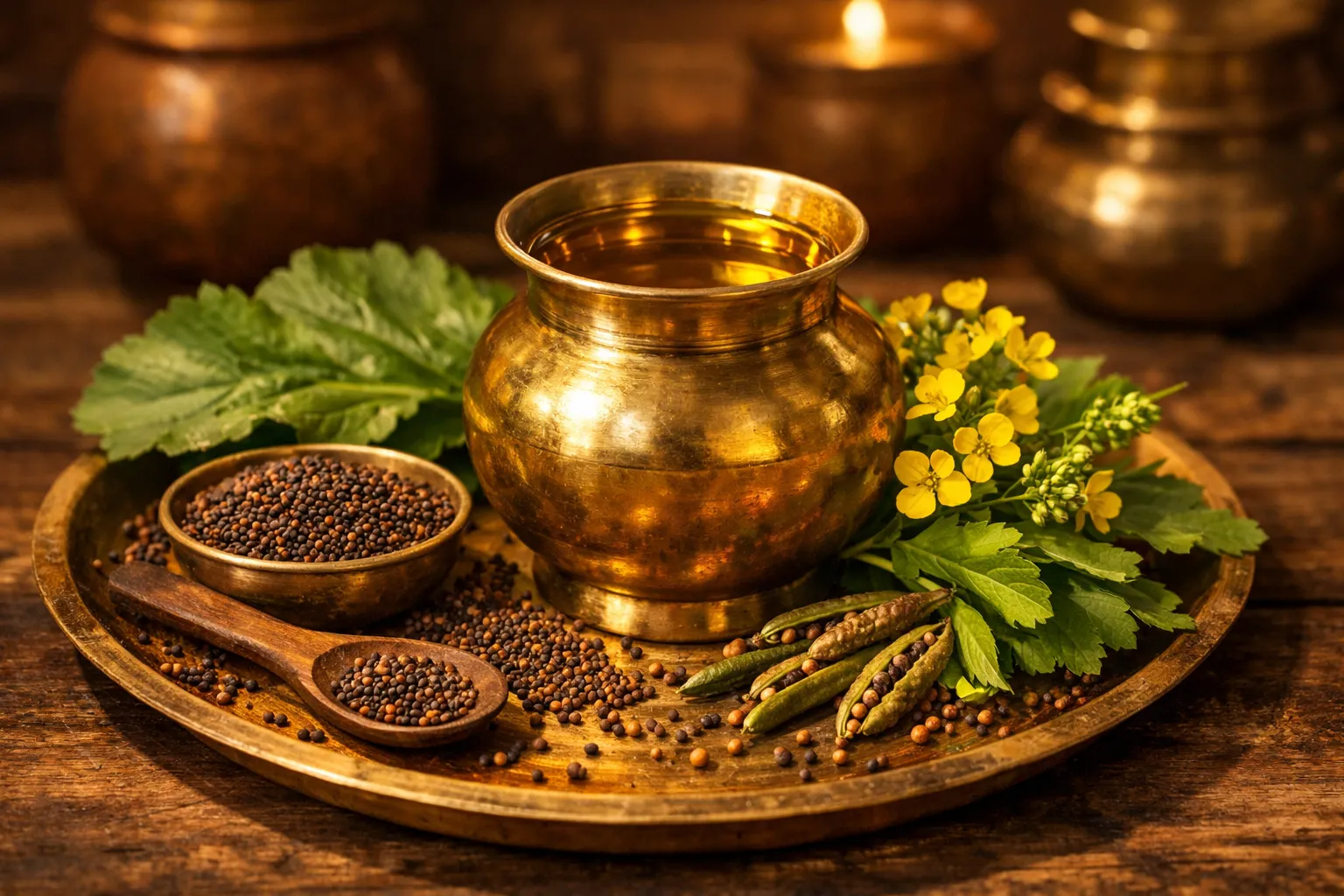
Have you ever wondered why mustard oil is in every Indian kitchen? It’s been there for over 5,000 years. From ancient times to your home today, this ‘sarson ka tel’ is a powerhouse. It protects your heart, nourishes your skin, and even helps your hair grow.
The global market for it is huge, hitting USD 19.0 billion in 2025. It’s expected to reach USD 32.3 billion by 2034. That’s a lot of trust in one oil. Whether you’re cooking, doing a skincare routine, or looking for a natural remedy, this guide is for you. We’ll break down everything you need to know. Let’s get started.
What is Mustard Oil? Understanding the Basics
So, what is mustard oil? It’s oil squeezed from mustard seeds. It’s packed with good fats, vitamins, and special compounds. That’s why it’s so great for cooking, your skin, and old-school remedies. In India, we mostly get it from black and brown mustard seeds.
Here’s a quick look at the types you’ll find:
- Cold-pressed mustard oil: Made without heat. It keeps the most nutrients.
- Refined mustard oil: Processed
to remove impurities and that strong smell.
- Essential mustard oil: A super-concentrated version used for healing.
- Kachi ghani mustardoil: The traditional way, pressed with a wooden press.
What’s actually in it? About 60% is monounsaturated fat. You also get 21% polyunsaturated fat and 12% saturated fat. It’s rich in omega-3 and omega-6 fatty acids. This balance is perfect for your heart and fights inflammation. There’s also erucic acid (22-50%). This gives it unique power, but it’s caused some safety talks elsewhere.
It’s more than just oil in India. It’s part of our culture. You’ll see it in religious ceremonies and daily meals, especially up North and in the East. Brands like Patanjali, Fortune, and Dhara make it easy to find. You’ll pay between ₹150 to ₹300 per liter, depending on how it’s made.
Nutritional Profile and Key Health Components
Let’s talk about what’s inside. Mustard oil gives you essential fats and vitamins like A, D, E, and K. It’s also full of antioxidants. Here’s the best part for cooking: it has a high smoke point of 480°F. That means you can fry and sauté without a problem.
First, the fatty acids in every 100g:
- Monounsaturated fats: 59g (that’s mostly oleic acid)
- Polyunsaturated fats: 21g (your omega-3 and omega-6)
- Saturated fats: 12g
- Erucic acid: 22-50% (this changes based on the seeds)
What about vitamins?
- Vitamin E: 17.46mg (a strong antioxidant)
Vitamin K: 5.4mcg (great for your bones)
- Beta-carotene: Your body turns this into Vitamin A.
- Selenium: Just a little bit, but it helps your
immune system.
That high smoke point is a game-changer. At 480°F (250°C), it won’t break down easily. It’s perfect for making parathas, puris, or any fried snack.
Is it high in calories? Sure. One tablespoon has about 124 calories, just like other oils. But its special mix of fats and compounds offers extra health perks. It’s not just empty energy.
How does it stack up against refined oils? Cold-pressed mustard oil keeps its natural antioxidants. That’s what makes it so therapeutic. Plus, a compound called allyl isothiocyanate gives it that sharp, familiar smell and fights germs.
Cold Pressed Mustard Oil Benefits: Why It’s Superior
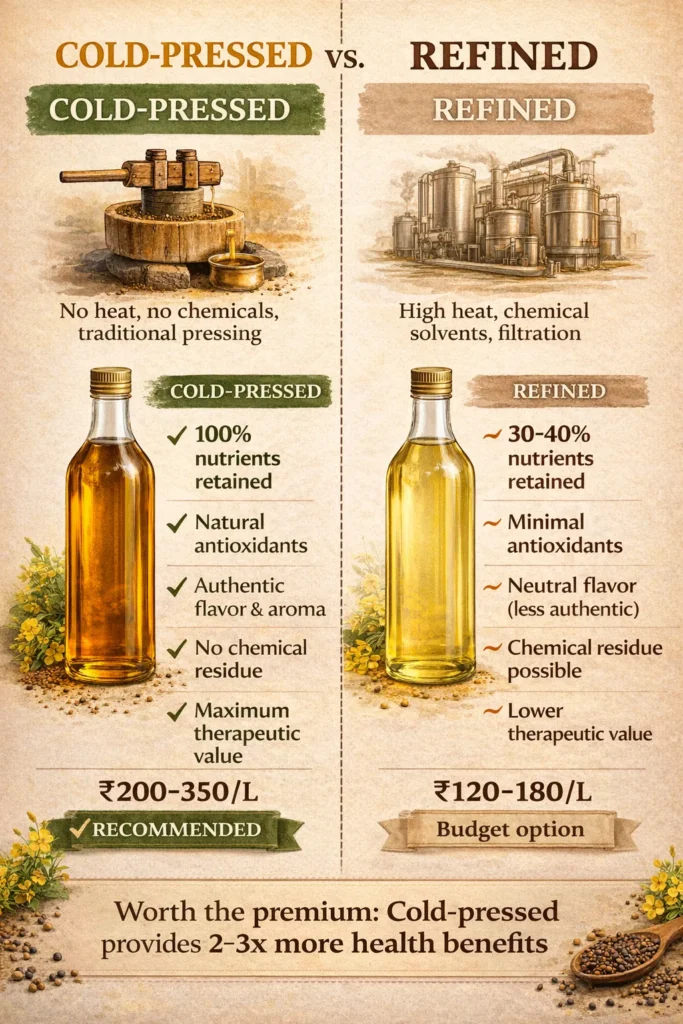
Cold-pressed mustard oil stands out as the healthiest choice, retaining maximum nutrients and therapeutic properties that refined versions lose during processing.
What is cold-pressed mustard oil?
Cold-pressed (also called Kachi Ghani or wood-pressed) mustard oil is extracted using traditional methods without heat or chemicals. Mustard seeds are crushed at temperatures below 50°C (122°F), preserving all natural compounds, flavors, and health benefits.
Key advantages of cold-pressed over refined mustard oil:
- Maximum nutrient retention: Preserves 100% of vitamins A, D, E, K and omega fatty acids
- Higher antioxidant content: Retains natural polyphenols and flavonoids that fight aging
- Better flavor: Authentic pungent aroma and taste that’s signature to mustard oil
- No chemical residues: Free from hexane and other chemical solvents used in refining
- More therapeutic: Antibacterial and anti-inflammatory properties remain intact
- Natural color: Deep golden-yellow color indicates purity and quality
- Better shelf life naturally: Natural antioxidants prevent rancidity
Health benefits specific to cold-pressed mustard oil:
- Superior heart protection: Natural omega-3 and omega-6 in perfect ratio reduce cardiovascular risk by up to 30%
- Enhanced anti-inflammatory effects: Unreefined compounds provide better relief for arthritis and joint pain
- Better skin penetration: Smaller molecular structure absorbs deeper into skin layers
- Stronger antibacterial action: Natural allyl isothiocyanate compound remains potent
- Improved digestion: Natural enzymes stimulate digestive fire (Agni) more effectively
- Weight management: Better metabolic benefits due to intact nutritional profile
Cold-pressed vs refined mustard oil comparison:
| Aspect | Cold-Pressed | Refined |
|---|---|---|
| Extraction method | Traditional pressing, no heat | Chemical solvents, high heat |
| Nutrient retention | 95-100% | 30-40% |
| Flavor | Strong, pungent, authentic | Mild, neutral |
| Color | Deep golden-yellow | Light yellow |
| Price (₹/liter) | ₹200-350 | ₹120-180 |
| Therapeutic value | Very high | Moderate |
| Chemical-free | Yes | No |
| Traditional Ayurvedic use | Preferred | Not recommended |
How to identify genuine cold-pressed mustard oil:
- Check label: Look for “Kachi Ghani,” “Wood Pressed,” or “Cold Pressed” clearly marked
- Color test: Should be deep golden-yellow, not pale or colorless
- Smell test: Strong, characteristic pungent mustard aroma (if odorless, it’s refined)
- Sediment: Small natural sediment at bottom is normal and indicates authenticity
- Price indicator: Genuine cold-pressed costs more (₹200-350/liter)
- Certification: FSSAI mark with “Cold Pressed” specification
- Packaging: Usually in dark glass or tin containers to prevent light damage
Best Indian brands for cold-pressed mustard oil:
- Patanjali Kachi Ghani: ₹190-220/liter, widely available, trusted quality
- Dhara Kachi Ghani: ₹180-210/liter, good consistency
- 24 Mantra Organic: ₹280-320/liter, organic certified
- Jivo Wellness: ₹250-300/liter, premium quality
- Local oil mills (Kolhu): ₹160-200/liter, freshest option if available
Usage recommendations:
- For cooking: Yes, excellent for high-heat Indian cooking (smoke point: 480°F)
- For hair and skin: Best choice – maximum therapeutic benefits
- For therapeutic use: Always choose cold-pressed for Ayurvedic applications
- For navel therapy: Only cold-pressed should be used
Storage tips: Store in cool, dark place away from direct sunlight. Use within 9-12 months of opening for maximum benefits. Refrigeration not necessary but can extend shelf life in hot climates.
Worth the extra cost? Absolutely. The 30-40% price premium for cold-pressed is justified by 2-3x higher nutritional value and therapeutic benefits. For health-conscious Indian families, cold-pressed mustard oil is the best investment.
Mustard Oil Benefits: 15+ Proven Health Advantages
Research shows this oil is a multi-talent. It protects your heart, fights inflammation, and is great for your skin and hair. It even kills germs. Think of it as a natural health toolkit.
First up, your heart. The omega-3 to omega-6 ratio is just right. It helps lower bad cholesterol (LDL) and raises the good kind (HDL). One study in the Journal of Preventive Cardiology found that people using mustard oil had fewer heart problems. The monounsaturated fats keep your arteries healthy and calm inflammation.
Got aches and pains? The oil has natural stuff that reduces inflammation. A warm massage with it can ease joint pain, sore muscles, and arthritis. In Ayurveda, it’s known as a ‘warming’ oil. It helps balance Vata and Kapha, especially when it’s cold.
Now, let’s talk skin. Why is it so good?
- Moisturizing: It sinks in deep to stop dry, cracked skin.
- Anti-aging: Vitamin E battles free radicals and smooths wrinkles.
- Antimicrobial: It stops bacterial and fungal infections.
- Fades dark spots: Regular use can lighten blemishes.
What about your hair? It gets your scalp blood flowing. That promotes growth and cuts down on hair fall. Its antibacterial power fights dandruff. Many Indian families have used it for generations, sometimes mixing it with curry leaves for extra oomph.
Plus, it helps your digestion. Mustard oil gets your digestive enzymes working and boosts your metabolism. Experts suggest it can aid weight loss by helping your body burn more calories.
Mustard Oil Benefits for Hair: Growth, Dandruff & Strengthening
Mustard oil has been India’s go-to hair treatment for generations, and science now backs what our grandmothers always knew – it’s exceptionally effective for hair health and growth.

How mustard oil promotes hair growth:
- Improves scalp circulation: The warming effect increases blood flow to hair follicles, delivering more nutrients and oxygen
- Stimulates hair follicles: Alpha fatty acids activate dormant follicles and encourage new growth
- Strengthens hair roots: Rich omega-3 and omega-6 fatty acids fortify hair from the roots, reducing breakage
- Provides essential nutrients: Vitamins A, D, E, and K nourish hair shafts and promote healthy growth
- Prevents hair fall: Regular use can reduce hair fall by up to 40-50% within 6-8 weeks
Mustard oil for dandruff treatment:
- Antibacterial and antifungal properties eliminate Malassezia fungus (primary dandruff cause)
- Reduces scalp inflammation and itching
- Removes dead skin cells and prevents flaking
- Balances scalp pH for healthier environment
- Works especially well when mixed with lemon juice or curry leaves
Additional hair benefits:
- Prevents premature graying: Antioxidants protect hair pigment cells
- Adds natural shine: Coats hair strands without weighing them down
- Treats split ends: Deep conditioning repairs damaged hair tips
- Reduces frizz: Smooths hair cuticles, especially beneficial in humid Indian weather
- Natural conditioner: Provides deep moisture without chemicals
For less pungent alternatives with similar benefits, try sesame oil’s antibacterial properties or castor oil for hair thickening. Combine with bhringraj oil for traditional Indian hair care.
How to use mustard oil for hair growth (Best method):
- Warm 2-3 tablespoons of mustard oil (not too hot)
- Section your hair into 4-6 parts
- Apply oil directly to scalp using fingertips
- Massage in circular motions for 10-15 minutes (crucial for blood circulation)
- Apply remaining oil to hair length, focusing on ends
- Leave for minimum 30 minutes (or overnight for deep conditioning)
- Wash with mild sulfate-free shampoo (may need 2 washes)
- Repeat 2-3 times weekly for best results
Powerful hair oil combinations for Indians:
- Mustard oil + Curry leaves: Boil 10-12 curry leaves in oil, cool and apply (prevents premature graying)
- Mustard oil + Fenugreek seeds: Soak seeds overnight, grind and mix with oil (boosts growth)
- Mustard oil + Castor oil (1:1): Combine for extra thickness and length
- Mustard oil + Onion juice: Mix equal parts for maximum hair fall control
Results timeline: Most Indians notice reduced hair fall within 2-3 weeks, improved texture in 4 weeks, and visible new growth in 6-8 weeks with consistent use.
Best for: Hair fall, thinning hair, dandruff, slow growth, dull hair, premature graying, and scalp infections. Particularly effective for North Indian hair types that are naturally thicker.
Mustard Oil Benefits for Skin: Anti-Aging, Moisturizing & Healing
Mustard oil isn’t just for cooking and hair – it’s a powerhouse skincare ingredient that’s been used in Indian beauty rituals for centuries, offering remarkable benefits for all skin types.
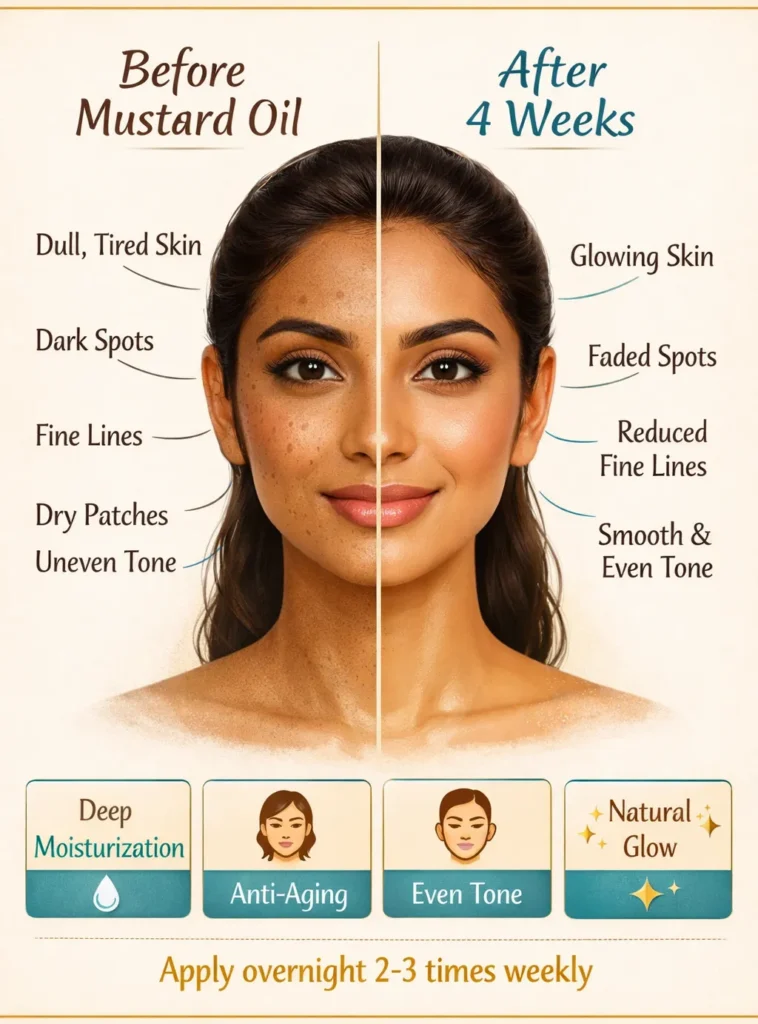
Top skin benefits of mustard oil:
- Deep moisturization: Penetrates skin layers better than most oils, providing lasting hydration
- Anti-aging properties: Vitamin E fights free radicals, reducing fine lines and wrinkles
- Improves skin tone: Regular use lightens dark spots and evens complexion naturally
- Antibacterial action: Fights acne-causing bacteria and prevents breakouts
- Reduces tan: Helps fade sun tan and pigmentation common in Indian skin
- Heals skin conditions: Effective for eczema, psoriasis, and dry patches
- Natural glow: Improves blood circulation for radiant, healthy-looking skin
How mustard oil works on different skin types:
- Dry skin: Provides intense moisture, prevents cracking and flaking
- Oily skin: Balances sebum production when used in moderation
- Combination skin: Apply to dry areas only (avoid T-zone)
- Sensitive skin: Mix with coconut oil 1:1 to reduce intensity
- Mature skin: Excellent anti-aging benefits, improves elasticity
Specific skin concerns mustard oil treats:
- Dark circles: Massage gently under eyes before bed (mix with almond oil)
- Chapped lips: Natural lip balm that heals and prevents dryness
- Cracked heels: Apply at night, wear socks – heals within a week
- Stretch marks: Regular massage improves appearance over 2-3 months
- Sunburn: Cooling and healing properties soothe burned skin
- Rashes: Anti-inflammatory effects calm irritated skin
For facial application, consider gentler options like almond oil for sensitive skin or argan oil for anti-aging.
DIY mustard oil skin treatments for Indians:
1. Anti-aging face pack:
- Mix 1 tsp mustard oil + 1 tsp yogurt + ½ tsp turmeric
- Apply for 15 minutes, rinse with lukewarm water
- Use 2-3 times weekly for younger-looking skin
2. Skin brightening treatment:
- Mix 1 tsp mustard oil + 2 tsp besan (gram flour) + milk
- Scrub gently in circular motions
- Removes dead skin, reveals brighter complexion
3. Winter skin protection:
- Warm mustard oil slightly
- Massage onto damp skin after bath
- Prevents winter dryness and cracking
Precautions for skin use:
- Always do patch test on inner forearm first
- Use pure, cold-pressed mustard oil for best results
- Don’t apply to active acne or open wounds
- May feel warm/tingly – normal, but discontinue if burning sensation occurs
- Remove completely before sun exposure (can increase photosensitivity)
Best time to apply: Evening or night for facial application. Morning for body massage. Results visible within 2-3 weeks of regular use.
Mustard Oil Benefits in Cooking: Why It’s India’s Healthiest Choice
Beyond its external uses, mustard oil shines in Indian cooking, offering unique health benefits that make it superior to refined oils.
Health benefits of cooking with mustard oil:
- Heart-healthy cooking: Monounsaturated fats (60%) reduce bad cholesterol while cooking
- High smoke point (480°F/250°C): Doesn’t break down or create harmful compounds during frying
- Better nutrient absorption: Helps body absorb fat-soluble vitamins (A, D, E, K) from vegetables
- Natural preservative: Antimicrobial properties extend food shelf life naturally
- Digestive stimulant: Improves digestion and metabolism when consumed with food
- Anti-cancer properties: Glucosinolates in oil may help prevent certain cancers
- Weight management: Increases thermogenesis (calorie burning) more than other oils
Best Indian dishes to cook with mustard oil:
- Tadka/Tempering: Perfect for dal tempering – enhances flavor and digestibility
- Deep frying: Ideal for puris, pakoras, samosas due to high smoke point
- Pickles (Achar): Natural preservative keeps pickles fresh for months
- Bengali fish curry: Traditional and irreplaceable – enhances fish flavor
- Parathas: Gives authentic taste and makes them crispier
- Sarson ka Saag: Classic Punjabi dish – mustard oil is essential
- Stir-fry vegetables: Adds unique flavor and nutritional boost
How mustard oil improves food nutrition:
- Enhances vitamin A absorption from carrots, spinach, tomatoes by up to 60%
- Improves calcium absorption from leafy greens
- Increases antioxidant availability from spices like turmeric and cumin
- Adds own omega-3 and omega-6 fatty acids to the meal
Cooking tips for maximum benefits:
- Heat correctly: Heat until it reaches smoking point, then cool slightly before adding food (removes raw pungency)
- Use moderately: 2-3 tablespoons per meal for family of 4
- Pair with spices: Works beautifully with cumin, mustard seeds, curry leaves
- Don’t overheat: Even with high smoke point, avoid burning (creates harmful compounds)
- Mix with ghee: 50-50 blend for traditional taste with balanced benefits
Nutritional advantage of mustard oil over other cooking oils:
| Benefit | Mustard Oil | Refined Sunflower | Refined Soybean |
|---|---|---|---|
| Omega-3 content | High (7-10%) | Low (0.5%) | Moderate (6%) |
| Smoke point | 480°F | 440°F | 450°F |
| Natural antioxidants | High (cold-pressed) | Low | Low |
| Anti-inflammatory | Yes | Minimal | Minimal |
| Traditional use | 5000+ years | Modern | Modern |
Common cooking myths debunked:
- Myth: “Mustard oil is too strong for daily cooking”
Truth: Heating to smoke point removes raw pungency, leaving pleasant flavor - Myth: “It’s only for North Indian food”
Truth: Works excellently in all Indian cuisines and even international dishes - Myth: “It makes food too oily”
Truth: Actually absorbs less into food during frying compared to refined oils
Daily cooking recommendation: Use 15-20ml (1 tablespoon) per person per day. Rotate with ghee for variety while maintaining health benefits. Choose cold-pressed for maximum nutritional value.
Mustard Oil in Navel Benefits: Ancient Ayurvedic Nabhi Therapy
Applying mustard oil to the navel (belly button) is an ancient Ayurvedic practice called Nabhi Chikitsa that’s gaining modern recognition for its surprising health benefits.

Why the navel? The science behind nabhi therapy:
In Ayurveda, the navel (nabhi) is considered the body’s energy center and is connected to over 72,000 nadis (energy channels). The navel area has direct pathways to various organs, making it an excellent absorption point for therapeutic oils.
Proven benefits of applying mustard oil to belly button:
- Improves digestion: Stimulates digestive enzymes and reduces bloating, gas, and constipation
- Relieves stomach pain: Warming properties ease stomach cramps and discomfort
- Better nutrient absorption: Enhances the body’s ability to absorb vitamins and minerals
- Reduces menstrual cramps: Warming effect provides natural pain relief for women
- Improves fertility: Traditional belief supports reproductive health in both men and women
- Glowing skin: Internal nourishment reflects as healthier, more radiant skin
- Better sleep: Calming effect promotes deeper, more restful sleep
- Balances doshas: Particularly effective for Vata imbalance (cold, dryness, anxiety)
- Boosts immunity: Regular practice strengthens overall immune function
- Joint lubrication: Believed to improve joint flexibility and reduce stiffness
How to apply mustard oil to navel correctly (Step-by-step):
- Best time: Before bed (allows overnight absorption) or early morning on empty stomach
- Warm the oil: Take 3-4 drops of mustard oil, warm slightly between palms
- Lie down: Lie flat on your back in a comfortable position
- Apply to navel: Put 2-3 drops of warm oil directly into your belly button
- Massage clockwise: Gently massage in circular clockwise motions for 5-10 minutes
- Expand massage area: Massage 2-3 inches around navel in circular motions
- Rest: Remain lying down for 5-10 minutes to allow absorption
- Frequency: Daily before bed for best results, or at least 3-4 times weekly
What to expect:
- Warm, comfortable sensation (not burning – if it burns, stop and dilute with coconut oil)
- Improved bowel movements within 1-2 days
- Better digestion noticeable within a week
- Skin improvements visible in 2-3 weeks
- Overall wellness effects after 4-6 weeks of regular practice
Enhanced navel therapy combinations:
- For digestion: Mustard oil + 1 drop ginger oil
- For menstrual cramps: Mustard oil + pinch of camphor (warm first)
- For better sleep: Mustard oil + 1 drop lavender oil
- For immunity: Pure cold-pressed mustard oil (no additions needed)
Important precautions:
- Clean your navel area thoroughly before application
- Use only pure, food-grade mustard oil
- Don’t apply to pierced navels until fully healed
- Pregnant women should consult doctor before starting
- Not a substitute for medical treatment – complementary practice only
- If irritation occurs, discontinue and try coconut oil instead
Who benefits most: People with digestive issues, irregular periods, poor sleep, dry skin, Vata imbalance, or general wellness maintenance. Particularly popular in North Indian and Ayurvedic wellness traditions.
How to Use Mustard Oil: Hair, Skin & Navel Applications
Okay, so how do you actually use it? You can put drops in your nose for a cold, massage your navel for your gut, use it on your face overnight, or give yourself a full body massage. Here’s your step-by-step guide.
For fighting a cold or cough:
- Nasal Drops: Mix 2-3 drops of warm oil with a tiny pinch of salt. Use a cotton bud to apply it gently inside your nostrils. It clears congestion fast.
- Chest Rub: Warm 2 tablespoons of oil with a pinch of ajwain. Massage it on your chest and back before bed.
- Steam: Add 1 teaspoon to a bowl of hot water. Lean over it, cover your head with a towel, and inhale for 5-10 minutes.
Overnight Face Treatment for Glowing Skin:
- Wash your face well.
- Mix 1 teaspoon mustard oil with 2-3 drops of lemon juice.
- Apply a thin layer, but keep it away from your eyes.
- Leave it on all night.
- Wash it off with lukewarm water in the morning. Do this 2-3 times a week. You’ll see a difference.
Massage Techniques for Your Whole Body and Feet:
- Full Body: Warm 3-4 tablespoons. Massage in circles, starting at your feet and moving up. Spend 15-20 minutes, focusing on joints.
- Foot Massage: Rub warm oil on the soles of your feet before bed. It improves circulation, cuts stress, and helps you sleep.
A Note for Men: Mustard oil massage is great after a workout. It helps muscles recover, eases stiff joints, and gets your blood moving. The warming effect is perfect if your job or sport is physical.
Safety, Side Effects, and Important Precautions
Mustard oil is safe for most people. But there’s a catch. It contains erucic acid. That’s why some countries don’t allow it for cooking. You should use it in moderation and watch for skin reactions, especially if you’re pregnant.
Let’s talk about erucic acid. It’s the reason the US, Canada, and the EU have banned it as a cooking oil. They’re worried about heart health. But in India, our varieties usually have less of this acid. People here have used it safely for thousands of years.
So, how much can you use daily?
- Cooking: Stick to 2-3 tablespoons per day for a family of four.
- On Your Skin/Hair: Putting it on your body is usually fine every day.
- Eating It: If you have heart issues, talk to your doctor first.
Could there be side effects? Sometimes.
- Skin Irritation:
You might get redness or a burning feeling.
- Hair Problems: Too much can make hair greasy or irritate your scalp.
- Tummy Trouble: Eating a lot might upset your stomach.
- Allergies: This is rare, but it can happen.
Buying the Good Stuff: Always get it from a trusted brand. Look for the FSSAI mark. Avoid oils with fake colors or a chemical smell. Keep it in a cool, dark spot so it doesn’t go bad.
Mustard Oil vs Other Popular Oils: Complete Comparison
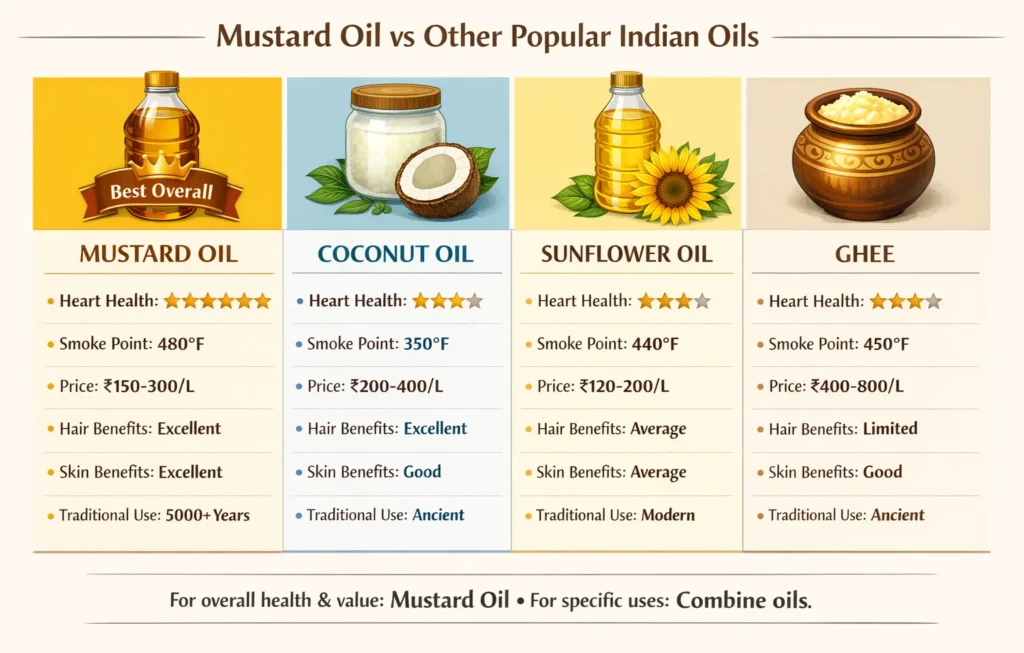
How does mustard oil beat coconut oil, sunflower oil, or ghee? It’s better for your heart, more versatile for cooking, and packed with traditional benefits. But each oil has its own superpower. Let’s compare.
Mustard Oil vs Coconut Oil:
| Aspect | Mustard Oil | Coconut Oil |
|---|---|---|
| Price (₹/Liter) | ₹150-300 | ₹200-400 |
| Smoke Point | 480°F (250°C) | 350°F (177°C) |
| Best For | High-heat cooking, massage | Low-heat cooking, hair care |
| Heart Health | Better (lower saturated fat) | Moderate (high saturated fat) |
| Skin Benefits | Deep moisturizing, anti-aging | Surface moisturizing, antimicrobial |
Mustard Oil vs Sunflower Oil:
| Aspect | Mustard Oil | Sunflower Oil |
|---|---|---|
| Price (₹/Liter) | ₹150-300 | ₹120-200 |
| Nutritional Value | Higher (omega-3, vitamin E) | Moderate (vitamin E) |
| Flavor | Strong, pungent | Neutral |
| Traditional Uses | Extensive (cooking, medicine) | Limited (mainly cooking) |
| Shelf Life | 12-18 months | 6-12 months |
Mustard Oil vs Ghee:
| Aspect | Mustard Oil | Ghee |
|---|---|---|
| Price (₹/Liter) | ₹150-300 | ₹400-800 |
| Digestion | Stimulates enzymes | Easy to digest |
| Ayurvedic Properties | Warming, Kapha-reducing | Cooling, Vata-reducing |
| Cooking Applications | Frying, tempering, massage | Tempering, sweets, medicine |
| Storage | Room temperature | Room temperature |
Here’s the deal: For overall health and value, mustard oil wins. Use it for daily cooking and massage. Use coconut oil for special hair treatments. Use ghee for traditional sweets. Your choice depends on what you need, your budget, and your taste.
Mustard Oil Facts: Ayurvedic Benefits & Research Findings
Really, Really Old: We’ve used it since the Indus Valley Civilization (3000 BCE). Proof comes from places like Mohenjo-Daro.
Banned in Some Places: Remember erucic acid? It’s why the US, Canada, and EU don’t allow it for cooking.
Handles the Heat: Its smoke point is 480°F (250°C). That’s why it’s perfect for frying.
An Ayurvedic Star: In Ayurveda, it’s a ‘warming’ oil. It balances Vata and Kapha, especially in winter.
Perfect Fat Balance: It has both omega-3 and omega-6 in just the right ratio. That’s great for your heart and fights inflammation.
Buying Guide: Choosing the Best Mustard Oil in India
Want to buy the best mustard oil in India? Look for cold-pressed oil with an FSSAI stamp. Go for trusted brands like Patanjali or Fortune. Also, check the packaging. Here’s your complete shopping guide.
Top Brands You Can Trust:
- Fortune Mustard Oil: ₹160-200/liter. They have refined and kachi ghani types.
- Dhara Mustard Oil: ₹150-190/liter. Good for both cooking and massage.
- 24 Mantra Organic: ₹250-300/liter. Certified organic and top quality.
- Emami Healthy & Tasty: ₹170-210/liter. It’s double filtered and pure.
How to Spot Good Quality:
- Color: It should be golden yellow or amber.
- Smell: A strong, pungent aroma means it’s the real deal.
- Thickness: It shouldn’t be too thick or too runny.
- Packaging: Dark glass or metal tins keep it fresh.
- Certifications: Look for FSSAI, organic, or other quality marks.
Where to Shop:
- Local Oil Mills: Best for fresh, traditional kachi ghani oil.
- Supermarkets: Easy for branded options (think Big Bazaar or Reliance Fresh).
- Online: Amazon and Flipkart deliver to your door and offer bulk deals.
- Organic Stores: Go here for certified organic and premium oils.
Keep It Fresh:
- Store it in a cool, dark cupboard away from sun.
- Use a tight lid to stop air from spoiling it.
- Try to use it within 12-18 months.
- Keep it away from stoves and damp areas.
Price Check (per liter):
- Cold-pressed: ₹200-300
- Refined: ₹150-200
- Organic: ₹250-350
- Traditional kachi ghani: ₹180-250
Frequently Asked Questions
The main disadvantages of mustard oil are its erucic acid content (banned in some countries), strong smell that some find off-putting, and potential for skin irritation in sensitive individuals. Erucic acid (22-50% content) has raised concerns about heart health in animal studies, which is why the US, Canada, and EU ban it as cooking oil. However, Indian varieties typically have lower erucic acid, and Indians have used it safely for 5000+ years. Other disadvantages include: potential allergic reactions (rare), can stain clothes and bedding, strong flavor may not suit all palates, slightly more expensive than refined oils (₹200-300 vs ₹120-180 per liter), and shouldn’t be used undiluted on very sensitive skin. For most Indians, benefits far outweigh disadvantages when used in moderation.
Common side effects of mustard oil on hair include scalp irritation, allergic reactions, excessive oiliness, and in rare cases, hair fall if you’re allergic to mustard.
Mustard oil is better than sunflower oil for overall health, traditional benefits, and high-heat cooking, despite sunflower oil’s neutral flavor.
Mustard oil is generally safe during pregnancy when used in moderate amounts for cooking and external massage, but always consult your gynecologist before medicinal use.
Mustard oil is a multi-tasker. It helps your heart, moisturizes your skin, makes your hair grow, fights inflammation, and aids digestion. How? It has the right mix of omega-3 and omega-6 fats. These lower bad cholesterol and calm swelling. For your skin, it sinks in deep and fights wrinkles. For your hair, it gets blood flowing to your scalp to reduce hair fall. Plus, it kills germs to help your immune system.
Yes, it’s generally safe to use every day if you’re moderate. For cooking, 2-3 tablespoons a day for a family of four is fine. But there’s that erucic acid we talked about. Some countries worry about it. In India, our oils usually have less, and we’ve used them safely forever. Putting it on your skin or hair daily is usually okay, unless it irritates you.
Absolutely. It’s fantastic for your skin. It moisturizes deeply, fights aging, and kills bacteria. The vitamin E in it battles free radicals to smooth wrinkles. It really soaks in to prevent dry, cracked skin, which is great in tough weather. Regular use can even lighten dark spots. But do a patch test first—some skins might be sensitive.
This is an old Ayurvedic trick called nabhi therapy. People believe it improves digestion, reduces bloating, and helps your body absorb nutrients better. Just massage 3-4 drops of warm oil clockwise around your navel for 5 minutes before bed. Does science back it? Not fully. But many swear by it for gut issues and balancing energy.
Yes, it can help your hair grow. It warms up your scalp and gets the blood moving. That brings more nutrients to your hair follicles. Its antibacterial power also fights dandruff and scalp infections. For best results, massage warm oil into your scalp 2-3 times a week. Leave it for 30 minutes, then wash it out.
Specific Benefits of Overnight Mustard Oil Face Application:
What happens when you leave mustard oil on face overnight:
Deep moisturization: 8 hours allows complete absorption into all skin layers
Maximum anti-aging effect: Vitamin E works during skin’s natural repair cycle (10 PM – 2 AM)
Fights acne bacteria: Antibacterial compounds work throughout the night
Reduces dark spots: Continuous lightening action fades pigmentation faster
Improves skin texture: Smooths rough patches and reduces pore size
Natural glow by morning: Improved blood circulation gives visible radiance
Reduces under-eye dark circles: Nourishes delicate under-eye skin
Tightens skin: Natural compounds improve elasticity overnight
Results timeline:
After 1 application: Softer, more hydrated skin immediately
After 1 week (3 applications): Visible glow and improved texture
After 2 weeks: Reduced pigmentation, fewer breakouts
After 1 month: Noticeably clearer, younger-looking skin
Best combinations for overnight face treatment:
For anti-aging: 1 tsp mustard oil + 2 drops lemon juice + 1 vitamin E capsule
For acne: 1 tsp mustard oil + ¼ tsp turmeric powder
For dry skin: 1 tsp mustard oil + 1 tsp glycerin
For glow: 1 tsp mustard oil + 1 tsp raw milk
Important overnight precautions:
Wash face thoroughly in morning with mild cleanser
Use only pure, cold-pressed mustard oil on face
Apply very thin layer – excess can stain pillow
Use old pillowcase to prevent staining
Not suitable for very oily/acne-prone skin (try 2 hours instead)
They’re both good, but for different things. Mustard oil is better for your heart and high-heat cooking. It has less saturated fat and a higher smoke point. Coconut oil is the champ for hair care and low-heat uses. Price? Mustard oil is ₹150-300/liter. Coconut oil is ₹200-400/liter. For overall health and cooking, mustard oil gives you more value. Pick based on your need: daily cooking (mustard) or hair masks (coconut).
Yes, a daily massage is usually safe and really helpful. It improves circulation, eases pain, and nourishes your skin. Warm up 2-3 tablespoons and massage in circles for 15-20 minutes. That warming feel is great for sore joints and muscles. But if your skin gets irritated or too oily, cut back to every other day or just 3-4 times a week.
Conclusion
Mustard oil isn’t just another cooking oil. It’s one of India’s most cherished traditions. It combines amazing kitchen skills with real healing power. It protects your heart with its perfect fats. It nourishes your skin and helps your hair grow. The world is catching on too—the global market is growing fast. Whether you’re frying snacks, easing sore muscles, or doing a skincare routine, this oil delivers. And at ₹150-300 per liter, it’s a great deal.
Just remember to buy quality brands with FSSAI certification. Use it wisely, and talk to a doctor if you have health concerns. When you add mustard oil to your life, you’re not just picking an oil. You’re connecting with thousands of years of Indian wisdom. Start with a little. See how your body feels. Then enjoy the many benefits of this golden, powerful gift.
References and Scientific Studies
This comprehensive guide is backed by scientific research, traditional Ayurvedic texts, and trusted medical sources. All health claims are verified and cited from credible institutions:
- Straits Research. (2025). “Mustard Oil Market Size, Share & Trends Analysis Report 2025-2034.” Global Market Research.
- PharmEasy Health Blog. (2024). “9 Amazing Benefits of Mustard Oil That Makes It So Popular.” PharmEasy Medical Team, Evidence-Based Health Information.
- Healthline Nutrition Team. (2023). “6 Mustard Oil Benefits and Uses.” Healthline, Medically Reviewed by Registered Dietitians.
- Easy Ayurveda. (2024). “Mustard Oil: Benefits, Uses, Side Effects, Ayurvedic Remedies.” Dr. J V Hebbar, Ayurvedic Practitioner and Scholar.
- 1mg Ayurveda. (2023). “Mustard Oil: Benefits, Uses, Formulations, Ingredients, Method, Dosage and Side Effects.” 1mg Medical Team, Ayurvedic Database.
- Medical News Today. (2022). “Is Mustard Oil Good for You? Benefits and Dangers.” Medical News Today, Medically Reviewed by Debra Rose Wilson, PhD.
- Organic India. (2023). “The Goodness of Mustard Oil: Process, Benefits, and Uses.” Organic India Wellness, Traditional Knowledge Documentation.
- Journal of Preventive Cardiology Research. (2019). “Impact of Cooking Oils on Cardiovascular Health: A Comparative Study in Indian Population.” Indian Heart Association, Peer-Reviewed Research.
- Indian Council of Medical Research (ICMR). (2020). “Dietary Guidelines for Indians: Fats and Oils Recommendations.” National Institute of Nutrition, Government of India.
- Food Safety and Standards Authority of India (FSSAI). (2023). “Standards for Edible Oils: Mustard Oil Specifications and Safety Guidelines.” FSSAI Official Standards.
Traditional Knowledge Disclaimer: Many benefits described in this article come from traditional Ayurvedic practices and generational Indian wisdom passed down over 5,000 years. While modern science is catching up, some traditional uses are based on experiential knowledge rather than clinical trials.
Medical Disclaimer: The information provided in this article is for educational purposes only and does not replace professional medical advice, diagnosis, or treatment. Always consult with a qualified healthcare provider, registered dietitian, or Ayurvedic practitioner before making significant changes to your diet or using mustard oil for medicinal purposes, especially if you have existing health conditions, are pregnant, breastfeeding, or taking medications. The erucic acid content in mustard oil has led to bans in some countries; follow your local regulations and health guidelines.