





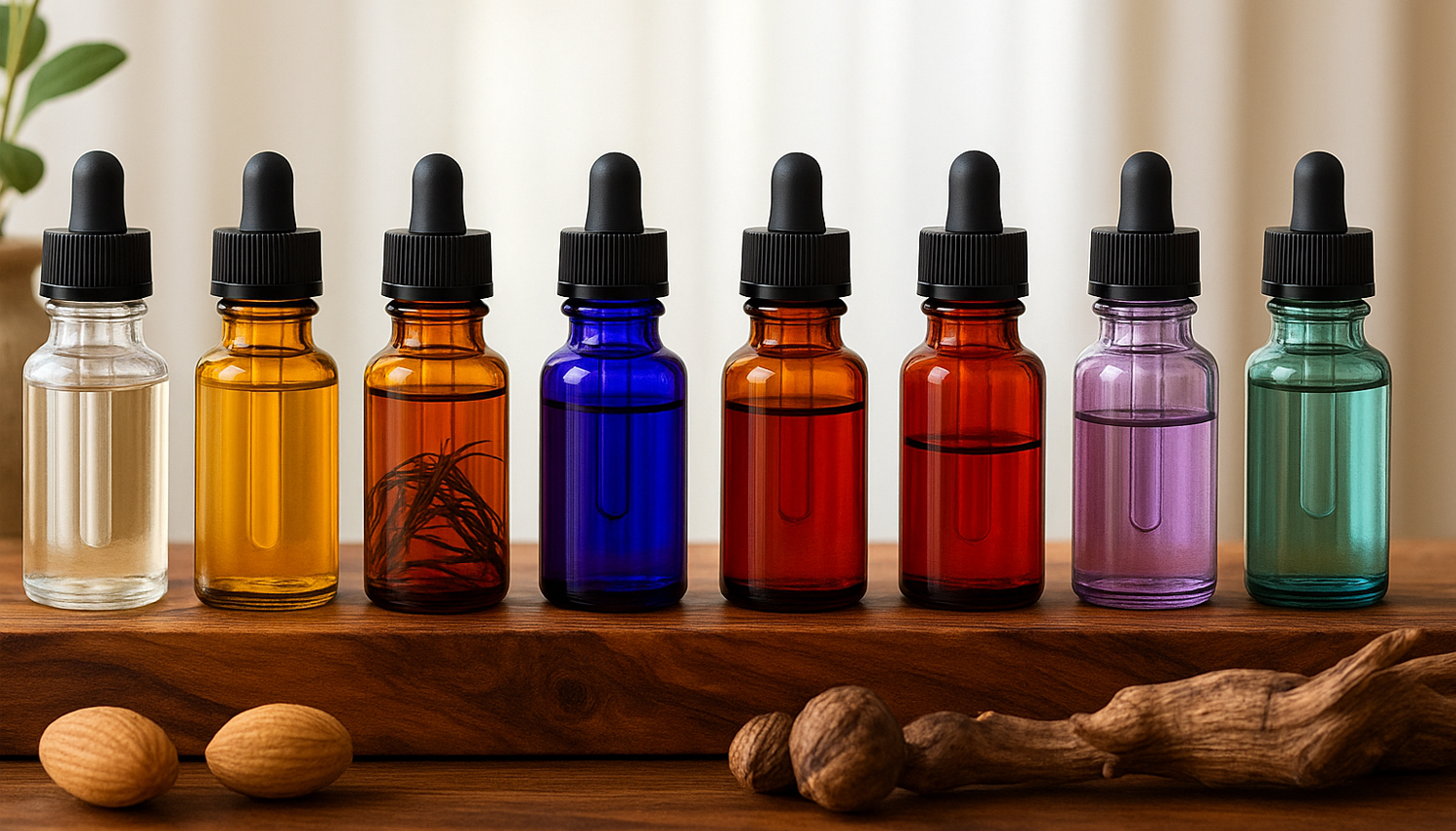
Medical Disclaimer: The content in this article is for informational purposes only and is not a substitute for professional medical advice, diagnosis, or treatment. Essential oils are potent plant extracts that can cause allergic reactions, sensitization, or irritation. Always perform a patch test before use. Do not use essential oils to treat diagnosed skin conditions (like eczema, rosacea, or cystic acne) without consulting a dermatologist. If you are pregnant, nursing, or have a medical condition, consult your healthcare provider before using essential oils.Essential oils for skin can improve the appearance of your complexion, but only when used safely. These plant-extracts are 50-100 times more concentrated than the original plant, which means improper dilution can cause chemical burns, photosensitivity reactions, and long-term barrier damage.
This guide walks you through evidence-based dilution protocols, photosensitive oils to avoid in Indian climates, oils by skin concern (acne, wrinkles, dark spots, dryness), and tested DIY recipes with precise measurements.
From tea tree oil for pesky pimples to lavender for calming down angry skin, these plant extracts are a huge deal in natural beauty, especially here in India. Essential oils are seriously powerful. When you know how to use them, they can be a game-changer for your skin. Get it wrong, though, and you could be looking at some major irritation. That’s exactly why we put this guide together.
Whether you’re fighting stubborn acne, noticing the first signs of aging, or just want that healthy, natural glow, you’re in the right place. We’ll walk you through the best oils for your skin, how to use them safely (this part is super important), which ones to skip, and even share some simple DIY recipes you can whip up at home.
What Are Essential Oils? Understanding Their Benefits for Skin
So, what exactly are essential oils? Think of them as super-concentrated liquids pulled from plants—everything from flowers and leaves to bark and roots. They’re basically the pure essence of the plant, capturing its scent and all its beneficial properties in one tiny, potent bottle.
When you uncap a bottle of rose essential oil, you’re smelling the power of thousands of rose petals. Amazing, right?
How Essential Oils Are Made: From Plant to Bottle
Most essential oils are made using a process called steam distillation. It might sound complicated, but it’s actually a pretty cool process. First, the plant material gets placed in a special chamber. Then, steam is passed through it, which gently breaks down the plant and releases all those amazing aromatic compounds. The steam and oil vapor then travel through a cooling system, where the pure essential oil separates from the water. And that’s how you get the good stuff.
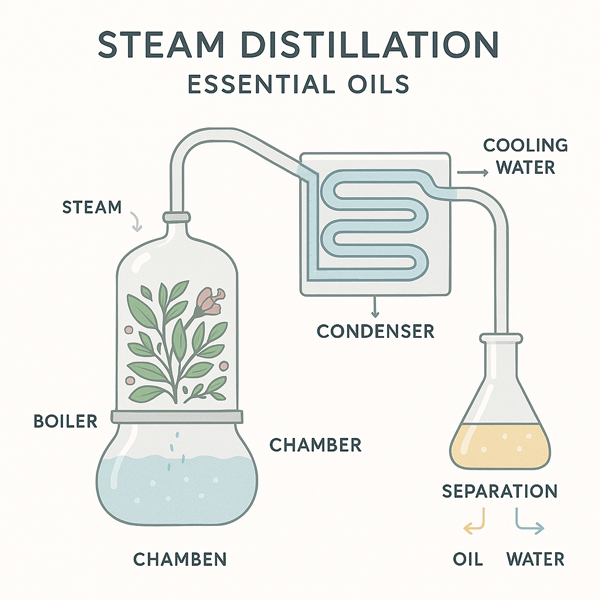
Some oils, like the citrusy ones, are made by cold pressing. The peels are just squeezed really hard to release the oil, which is why they often cost a bit less.
Explore individual oil benefits in detail: tea tree oil for acne-prone skin, rosemary oil for anti-aging, and jojoba oil for all skin types.
Essential Oils vs. Carrier Oils: What are the Differences for Skincare?
This is a big one, and it trips a lot of people up. Essential oils and carrier oils are not the same thing.
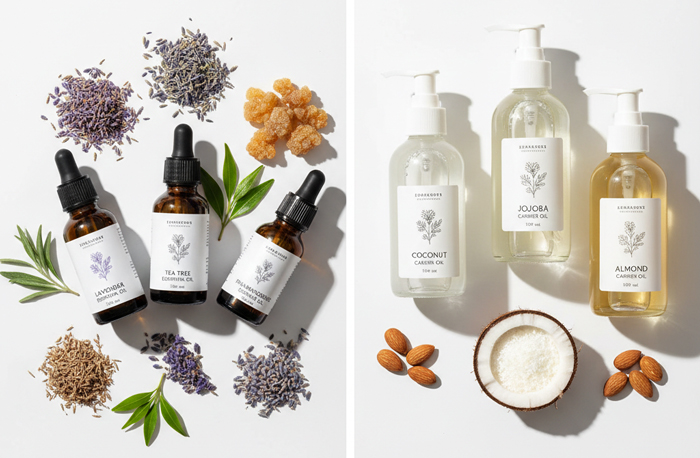
| Essential Oils | Carrier Oils |
|---|---|
| The super-concentrated plant extracts we’ve been talking about. | Fatty oils that come from nuts or seeds. |
| Volatile, meaning they evaporate quickly. | Not volatile, so they don’t evaporate. |
| A huge no-no for applying directly to your skin. Never do it. | Totally safe to apply directly to your skin. |
| Used in tiny amounts, like a few drops at a time. | Used as a base to dilute essential oils so they’re safe for you. |
| Lavender, tea tree, and frankincense oil. | Jojoba, coconut, and sweet almond oil. |
You absolutely need both. The carrier oil does the important job of diluting the essential oil to a safe level and helps your skin absorb it properly.
Popular carrier oils include argan oil for mature skin, sweet almond oil for sensitive skin, and olive oil for deep moisturization.
Key Benefits of Essential Oils for Your Skin Health (Science-Backed)
So why is everyone, including dermatologists, so interested in essential oils? Because the science backs them up. They offer some real, tangible benefits for your skin.
1. They calm things down: Oils like chamomile and lavender are fantastic for reducing redness and soothing irritated skin, making them a supportive option for general dryness or temporary redness on healthy skin.
2. They fight bacteria: Tea tree and rosemary oil are famous for their ability to take on acne-causing bacteria. In fact, some studies show tea tree oil can be just as effective as benzoyl peroxide for mild acne[NLM], but with fewer side effects.
3. They’re packed with antioxidants: Frankincense and sandalwood are loaded with compounds that fight off free radicals—those nasty things that lead to premature aging and wrinkles.
4. They support your skin barrier: Certain oils help strengthen your skin’s natural defense system, which means less moisture loss and better protection from irritants.
Plus, they offer a beautiful, natural fragrance, unlike the synthetic stuff that can often irritate sensitive skin.
The trick is knowing which oils are right for you and how to use them correctly. And that’s exactly what we’re getting into next.
How to Use Essential Oils for Skin Safely: The Golden Rules
Okay, before you grab that bottle of tea tree oil, let’s talk safety. Learning how to use essential oils for skin correctly is crucial for getting results without irritation. This isn’t the boring part—it’s the most important step. Because these oils are so concentrated, using them the wrong way can lead to some bad results like skin irritation, or allergic reactions.
⚠️ Important Safety Precautions:
- Keep away from eyes: Never apply essential oils near your eyes, lips, or nostrils. If oil gets in your eye, flush with a carrier oil (like coconut oil), NOT water.
- Not for children: Do not use these recipes on infants or children under 12 without pediatrician approval.
- Stop immediately if: You feel heat, stinging, or see redness. Wash the area with a carrier oil or mild soap immediately.
- Skin Cycling: Do not use essential oils 365 days a year. Take a “break week” every month to prevent sensitization (developing an allergy over time).
Let’s make sure you know exactly how to do it right.
Why You Must Not Apply Essential Oils Undiluted or Neat?
This is the number one mistake, and it’s a serious one. Essential oils are anywhere from 50 to 100 times more concentrated than the original plant. Applying them ‘neat’ (undiluted) is like a full-on assault on your skin.
Here’s what can happen:
- Chemical burns that feel and look like a bad sunburn.
- Intense redness and inflammation.
- Blistering or peeling skin.
- Sensitization, where your skin becomes permanently allergic to that oil.
- Photosensitivity, which makes you extra sensitive to the sun.
Even ‘gentle’ oils like lavender can cause a reaction if you don’t dilute them. Your skin just isn’t built to handle that kind of potency.
The Patch Test: Your Non-Negotiable First Step
Always, always, always do a patch test before putting a new essential oil on your face. It’s simple and it can save you a world of trouble.
Here’s how to do it:
- Mix 1 drop of essential oil with 1 teaspoon of a carrier oil (like jojoba or almond).
- Dab a small amount on the inside of your forearm.
- Pop a bandage over it.
- Wait a full 24 hours.
- Check the spot for any redness, itching, or irritation.
Dilution Ratios for Face and Body
Your face is more delicate than the skin on your body, so you’ll need to use a weaker dilution for anything you apply there.
Here are some good guidelines:
| Use Case | Dilution % | Drops per 30ml Carrier Oil | Best For |
|---|---|---|---|
| Facial use | 0.5-1% [NAHA] | 3-6 drops | Sensitive skin, daily use |
| Body use | 2-3% | 12-18 drops | General skincare |
| Spot treatment | 1-2% | 12-30 drops | Acne, blemishes (small areas) |
When you’re just starting out, stick to the lowest concentration. You can always add more later if you need to, but you can’t take back the damage from using too much.
Photosensitivity: Which Oils to Avoid Before Sun Exposure
Some essential oils contain compounds that basically turn up your skin’s sensitivity to sunlight. If you put these on and then head outside, you could end up with a serious burn, blisters, or even permanent dark spots.
Photosensitive oils to skip before sun exposure[ACHS]:
- All citrus oils (lemon, lime, bergamot, grapefruit, orange)
- Angelica root
- Cumin
- Fig leaf absolute
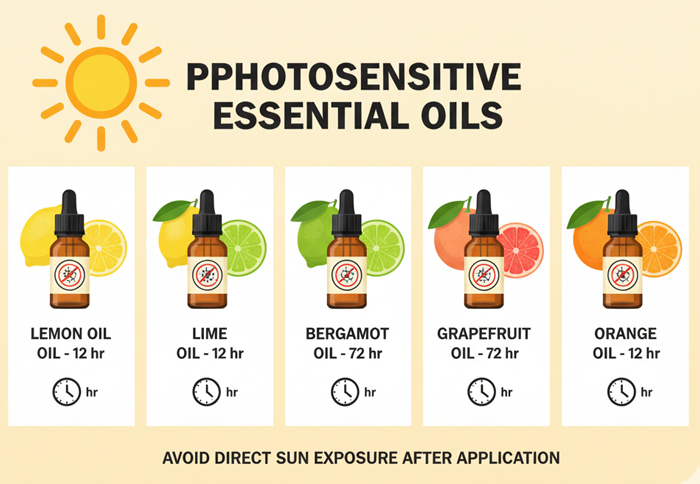
| Oil | Photosensitivity Level | Safe Sun Exposure Window | Safer Alternative |
|---|---|---|---|
| Bergamot | High | 12-18 hours | Bergamot FCF (furanocoumarin-free) |
| Lemon | High | 12-24 hours | Frankincense for brightening |
| Lime | Very High | 24 hours | Carrot seed oil |
| Grapefruit | High | 12-18 hours | Geranium for tone |
| Sweet Orange | Moderate | 8-12 hours | Sandalwood |
If you use these, wait at least 12-24 hours before going in the sun. Honestly, it’s just easier to use them only at night.
Also, remember: UV rays can get you through windows. So if you’re working near a sunny window, it’s best to avoid these oils during the day. And no matter what, always wear your sunscreen. It’s the best way to protect your skin.
The Best Essential Oils for Your Skin Type & Concern
Alright, now that you’re a pro at safety, let’s get to the fun stuff: finding the perfect oils for your skin. This is where you can really customize your routine and see amazing results.
Best Essential Oils for Acne-Prone Skin
If breakouts are your main battle, these oils are your best allies, thanks to their antibacterial and anti-inflammatory powers.
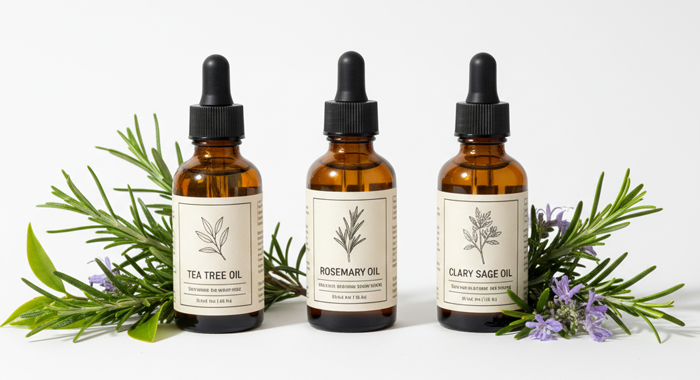
Tea tree oil: This is the popular choice for managing mild breakouts has been shown in some studies to offer comparable benefits to benzoyl peroxide for mild acne, often with fewer side effects. Studies have shown it can seriously reduce breakouts by fighting off pimple-causing bacteria and calming inflammation.
Rosemary oil: This one is great because it helps control the extra oil your skin might be producing, which is often what triggers breakouts in the first place.
Clary sage: A fantastic choice for hormonal acne, especially the kind that pops up around your jawline. It helps balance oil production.
How to use: Add 2-3 drops to 30ml of jojoba oil (it won’t clog your pores) and apply to clean skin. For a single pimple, you can use a stronger 2-5% dilution as a spot treatment.
Best Essential Oils for Skin Tightening, Face Wrinkles & Anti-Aging
If you’re looking for the best essential oils for skin tightening and anti-aging, these powerful options can help improve firmness and reduce wrinkles. These essential oils are packed with antioxidants and support collagen.
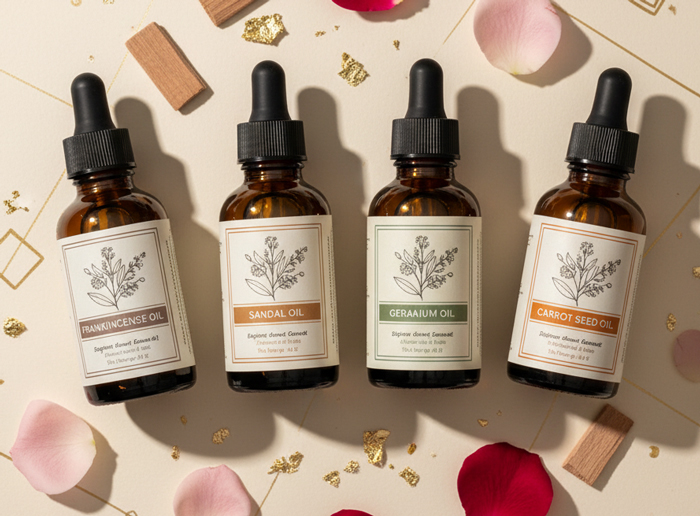
Frankincense oil: Often called the ‘king of oils’ for a reason. It helps improve skin tightening & elasticity and can soften the look of fine lines by promoting cell turnover.
Sandalwood oil: A true classic in Ayurvedic skincare and a favourite in India. It’s full of antioxidants that protect your skin from damage and leaves it feeling incredibly smooth.
Geranium oil: This floral oil helps tighten the skin and is great for improving your overall skin tone and reducing the appearance of age spots.
Carrot seed oil: Don’t let the name fool you; this oil is a powerhouse for rejuvenating mature skin and improving texture.
How to use: Mix 3-4 drops into 30ml of rosehip seed or argan oil. Gently press it onto your face and neck every morning and night.
Best Essential Oils for Dry Skin & Dehydration
If your skin feels tight, flaky, or thirsty, these oils will help lock in moisture and nourish the skin barrier.
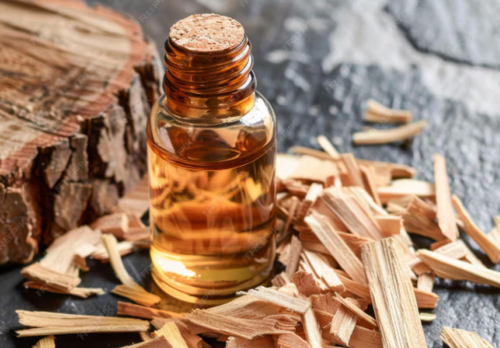
Lavender oil: So gentle and versatile. It calms redness and helps your skin hold onto moisture, making it perfect for almost everyone.
Chamomile oil: Think of this as a cup of calming tea for your skin. It’s incredibly soothing and helps repair your skin’s protective barrier.
Sandalwood oil: This one’s a double-win. It’s deeply moisturizing and also has those amazing anti-aging benefits.
How to use: Blend 3-5 drops with 30ml of coconut oil or sweet almond oil. For best results, apply it to slightly damp skin right after a shower to seal in all that hydration.
Best Essential Oils for Oily Skin
It might sound weird, but oily skin needs moisture too! The right oils can actually help balance out your skin’s sebum production.
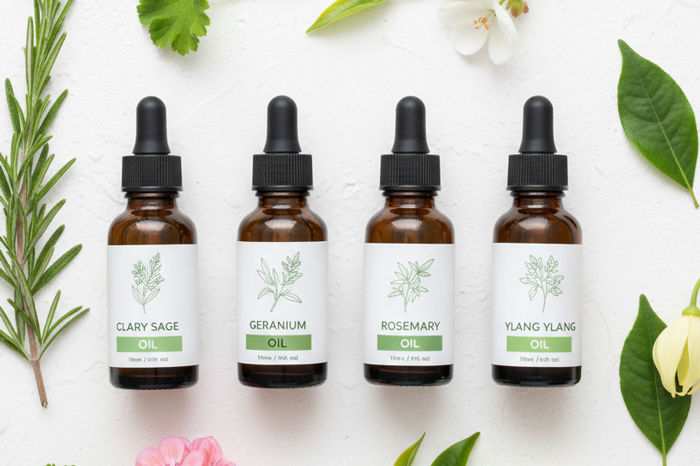
Clary sage: Helps get oil production under control without stripping your skin and making things worse.
Geranium oil: A master balancer. It works on both oily and dry patches, making it perfect for combination skin.
Rosemary oil: Reduces excess oil while also providing those helpful antibacterial benefits, which is great if you’re also prone to breakouts.
Ylang ylang: Another great sebum regulator with a beautiful floral scent. It’s especially good for an oily T-zone.
How to use: Mix 2-3 drops with 30ml of a lightweight carrier oil like jojoba or grapeseed oil.
Best Essential Oils for Skin Inflammation & Sensitivity
Note: If you have a diagnosed condition like Rosacea, Eczema, or Psoriasis, do not use these oils without approval from your dermatologist, as your skin barrier is already compromised.
Essential oils for skin inflammation can provide natural relief for redness, irritation, and sensitive skin conditions.
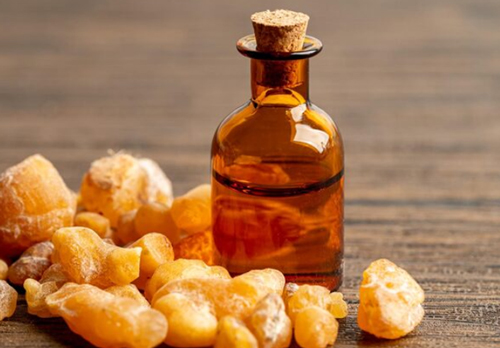
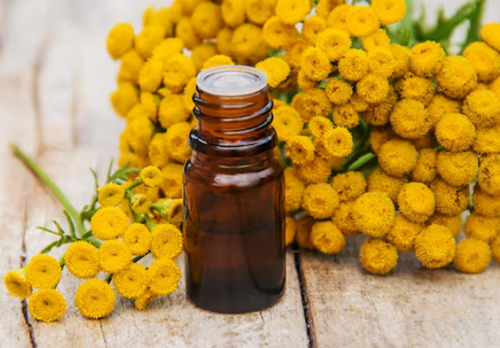
- Lavender Oil: Excellent essential oil for skin inflammation and redness
- German Chamomile: Powerful anti-inflammatory properties
- Frankincense: Calms inflamed skin and promotes healing
- Helichrysum: Reduces inflammation and speeds skin repair
Best Essential Oils for Hyperpigmentation & Brightening
Essential oils for skin lightening can naturally help fade dark spots and even out skin tone.
Heads up – Be extra careful with these oils, as some can make your skin sensitive to the sun.
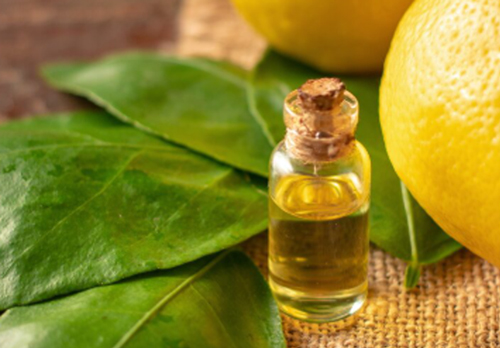
Lemon oil: Popular essential oil for skin lightening effects. Can help fade dark spots, but it’s highly photosensitive. Only use this one at night, and be diligent with your sunscreen the next day. No exceptions!
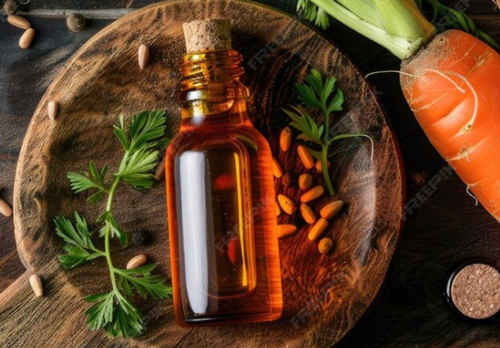
Carrot seed oil: Helps even out skin tone and is a bit safer for daytime use than citrus oils, but you still need sun protection.
Frankincense oil: A great option for fading scars and spots while helping your skin regenerate. It’s much safer for daytime use.
How to use: Mix 2 drops with 30ml of rosehip seed oil (which is also great for pigmentation). Apply only in the evening and always wear sunscreen during the day.
Quick reference guide:
| Skin Concern | Top 3 Oils | Best Carrier Oil |
|---|---|---|
| Acne | Tea tree, Rosemary, Clary sage | Jojoba oil |
| Wrinkles | Frankincense, Sandalwood, Geranium | Rosehip seed oil |
| Dry skin | Lavender, Chamomile, Sandalwood | Coconut oil |
| Oily skin | Clary sage, Geranium, Rosemary | Jojoba oil |
| Dark spots | Lemon (night only), Carrot seed, Frankincense | Rosehip seed oil |
Did You Know? Fascinating Facts About Essential Oils
Before we get into the oils you should avoid, here are a few mind-blowing facts that show just how special these plant extracts are.
1. The power of a rose: It takes a staggering 242,000 rose petals to create just 5 mL of pure rose essential oil.(Source)
2. They aren’t really ‘oils’: The name is a bit misleading. Essential oils don’t contain the fatty acids that make up true oils. Their chemical structure is different, which is why they feel less greasy on your skin than a carrier oil like coconut or jojoba. (Source)
3. An ancient beauty secret: As far back as 3500 B.C., Ancient Egyptians were using oils like frankincense and myrrh in their embalming rituals. They knew these oils had powerful antibacterial properties that could preserve tissues. (Source)
These little tidbits really highlight how potent these substances are, which is exactly why using them the right way is so important.
The ‘Do Not Use’ List: 5 Essential Oils to Avoid on Your Face
Just because an oil is natural doesn’t automatically mean it’s good for your face. Some are just too harsh, no matter how much you dilute them. Here’s a list of worst essential oils to steer clear of—and the reasons why.
Why Citrus Oils Can Be Risky
They smell incredible, but citrus oils and your face can be a bad mix, mainly because of sun sensitivity.
Bergamot, Lime, Lemon, and Grapefruit oil: All of these are highly photosensitive. Putting them on your skin and then going into the sun can lead to serious burns and even permanent dark spots. While lemon oil has some brightening benefits, the risk often outweighs the reward. It’s much safer to get your vitamin C from a well-formulated serum.
The bottom line: If you must use them, do it only at night, in a very low dilution, and be extra vigilant with sunscreen the next day.
Hot Oils to Handle with Extreme Care
These are called ‘hot’ oils for a reason—they create a burning sensation and can cause real damage.
Cinnamon and Clove oil: These are major skin irritants. Even when diluted, they can cause redness, burning, and blistering. Definitely not something you want anywhere near your face.
Oregano and Thyme oil: While they are powerful antimicrobials, they are far too harsh for your delicate facial skin and can wreck your skin’s protective barrier.
Why they’re dangerous: The immediate burn is bad enough, but the real issue is long-term damage. Once your skin barrier is compromised, your skin can become sensitive to everything, even products you used to love.
Peppermint & Eucalyptus: Too Strong for Sensitive Facial Skin?
These are great for aromatherapy or a muscle rub, but they can be too much for your face.
Peppermint oil: That cooling tingle comes from menthol, which can be really irritating, especially around your eyes.
Eucalyptus oil: This is another very strong oil that can easily cause irritation on sensitive facial skin.
The verdict: If you have sensitive skin, it’s best to just skip these. If your skin is tougher, you could try them in a very, very low dilution (like 0.5%), but be extremely careful and keep them away from your eyes.
Oils to avoid on your face:
- Bergamot
- Lime
- Lemon (use with extreme caution, night only)
- Grapefruit
- Cinnamon
- Clove
- Oregano
- Thyme
- Peppermint (especially for sensitive skin)
- Eucalyptus (especially for sensitive skin)
What to do if you have a bad reaction:
- Stop using the oil immediately.
- Gently wash the area with a mild soap and cool water.
- Apply a simple, fragrance-free moisturizer.
- If the burning doesn’t stop or you see blisters, it’s time to call a dermatologist.
Easy DIY Essential Oils for Glowing Skin Recipes
Okay, let’s get to the really fun part – making your own custom skincare! These essential oils for glowing skin recipes are super simple, effective, and use some of the amazing oils we’ve talked about. You’ve got this.
Recipe 1: Essential Oils for Glowing Skin – Daily Face Serum
This is a fantastic all-rounder serum that works for most skin types and helps with skin tightening and firming, lit-from-within glow.
What you need:
- 30ml rosehip seed oil (your anti-aging carrier oil)
- 2 drops frankincense oil (for skin regeneration)
- 2 drops lavender oil (for calming and balancing)
- 1 drop geranium oil (for skin tightening and toning)
- A 30ml dark glass dropper bottle
How to make it:
- Carefully pour the rosehip seed oil into your clean glass bottle.
- Add the essential oils, one drop at a time.
- Screw the cap on tightly and give it a gentle shake for about 30 seconds.
- Slap a label on it with the date. It’s best used within 6 months.
How to use:
- After cleansing, apply 3-4 drops to your slightly damp face and neck.
- Gently press it into your skin.
- Use it morning and night. Follow up with a moisturizer if your skin feels thirsty.
Why it works: Rosehip seed oil is a star on its own, packed with skin-loving vitamins. The essential oils give it an extra boost of antioxidant and balancing power.
Recipe 2: Calming Lavender & Chamomile Moisturizer
This is a dream for dry, sensitive, or skin inflammation relief. It’s gentle, soothing, and perfect for everyday use.
What you need:
- 25ml coconut oil (melted)
- 5ml jojoba oil
- 3 drops lavender oil (the ultimate calmer)
- 2 drops chamomile oil (for soothing and barrier repair)
- A small 30ml jar with a lid
How to make it:
- If your coconut oil is solid, gently melt it in a warm water bath.
- Mix in the jojoba oil.
- Let it cool down a bit so it’s not hot.
- Add your essential oils and stir everything together well.
- Pour it into your jar and let it set.
How to use:
- Scoop out a tiny, pea-sized amount.
- Warm it up between your palms.
- Gently press it into clean, slightly damp skin.
Why it works: Coconut oil delivers deep moisture, while jojoba oil helps balance your skin without clogging pores. The lavender and chamomile are a power duo for calming down any inflammation.
Pro tip for India’s climate: If it’s hot where you live and the moisturizer stays liquid, just pop it in the fridge! It will solidify and feel extra refreshing on your skin.
Recipe 3: Tea Tree Spot Treatment for Blemishes
When a pimple pops up, this targeted treatment can help send it packing.
What you need:
- 10ml jojoba oil (a great non-clogging carrier)
- 2-3 drops tea tree oil (your antibacterial hero)
- A small 10ml roller or dropper bottle
Warning: “Do not apply to open wounds or popped pimples. Apply only to the blemish, not the surrounding skin.
How to make it:
- Pour the jojoba oil into your bottle.
- Add the tea tree oil.
- Shake it up to combine.
How to use:
- Use a cotton swab or the roller to apply it directly onto a blemish.
- Do this 2-3 times a day until the spot clears up.
- Avoid putting it on any broken skin.
Why it works: This creates a safe, targeted dilution (approx. 1-1.5%) that is effective against bacteria without burning sensitive facial skin.
A few important notes for all recipes:
- Always use dark glass bottles to protect your oils from sunlight.
- Store them in a cool, dark place (your bathroom cabinet is fine, just not on a sunny windowsill).
- Always do a patch test before using a new blend on your face.
- These are preservative-free, so try to use them up within 6 months.
Choosing a High-Quality Essential Oil: A Buyer’s Guide
The quality of your essential oil makes a huge difference. The market is full of cheap, fake oils that won’t help your skin and could even cause irritation. Here’s how to become a smart shopper and spot the real deal.
Reading the Label: What to Look For
A good quality oil will have all this information right on the bottle.
1. The Latin name: Every plant has a scientific name. For lavender, you want to see Lavandula angustifolia. This proves you’re getting the right plant with the right benefits.
2. ‘100% pure essential oil‘: The label needs to say this clearly. If you see ‘fragrance oil’ or ‘perfume oil,’ put it back. That’s not what you want.
3. Country of origin: Good brands are proud of where their plants are grown. For example, sandalwood from India is considered top-tier.
4. Extraction method: It should say ‘steam distilled’ or ‘cold pressed.’
5. Batch number: This shows the company is serious about quality control.
What to avoid:
- Vague terms like ‘fragrance oil.’
- No Latin name listed.
- Claims like ‘therapeutic grade’ (this is just marketing).
- Prices that seem too good to be true.
Why Essential Oils Need Dark Glass Bottles
Sunlight and heat are the enemies of essential oils. That’s why any brand worth its salt will package their oils in dark glass bottles, usually amber or dark blue.
Why dark glass is a must:
- It blocks the UV light that breaks down the oil.
- It preserves the oil’s benefits and extends its shelf life.
So, if you see an essential oil being sold in a clear glass or plastic bottle, that’s a major red flag. And once you buy a good oil, don’t transfer it to a pretty clear bottle at home—you’ll just ruin it.
‘Therapeutic Grade’ vs. ‘Pure’ Essential Oils
Let’s clear this up, because it’s confusing. ‘Therapeutic grade’ is a marketing term. That’s it. There is no official, independent body that certifies oils with this label. Any company can slap it on their bottle.
What actually matters is proof of purity:
- GC/MS testing: This is a lab test that breaks down the oil’s chemical makeup to prove it’s pure. The best brands will make these test results available to you.
- Organic certification: Look for official logos like ‘India Organic’ or ‘USDA Organic.’
Price reality check: Quality costs money. If you see prices way below these typical ranges in India, be very skeptical.
- Tea tree oil: ₹300 – ₹800 for 10ml
- Lavender oil: ₹400 – ₹1000 for 10ml
- Frankincense oil: ₹800 – ₹2000 for 10ml
- Rose oil: ₹3000 – ₹10,000+ for 5ml
Where to buy High-Quality Essential Oil in India?
Stick to reputable online brands with transparent testing, or check out trusted organic stores. Avoid buying from street markets or random online sellers offering unbelievable deals. Investing a little more in a quality oil is always worth it for your skin’s safety and for getting the results you actually want.
Essential Oils for Skin: FAQ
Yes, you absolutely can, but you need to be extra cautious. Stick with the super-gentle oils like lavender and chamomile. It’s also crucial that you use a very low dilution—start with just 0.5% (that’s about 3 drops in a 30ml bottle of carrier oil). And please, never skip the patch test! Steer clear of all citrus oils and ‘hot’ oils like cinnamon. If you have a condition like eczema or rosacea, it’s always best to have a quick chat with your dermatologist first.
This is a tricky one, and the best answer is to talk to your doctor. Some essential oils are considered safe during the second and third trimesters, but many should be avoided because they can have powerful effects. Your doctor or a certified aromatherapist can give you the safest advice for you and your baby. It’s always better to be safe and get a professional opinion.
You can, and it’s a great way to start! Just be sure to mix it properly. Don’t just drop essential oil into the whole bottle. Instead, put a normal amount of your moisturizer or face wash in your palm, add just one drop of essential oil, mix it together right there, and then apply. This ensures it’s well-diluted and you’re not altering your whole product.
Patience is key here. While you might feel some immediate soothing effects from oils like lavender, bigger changes like reduced acne or faded dark spots take time and consistency. Give your skin at least 4-6 weeks of consistent use to see noticeable improvements. Skincare is a marathon, not a sprint!
No, you should not ingest essential oils unless you are under the direct supervision of a qualified medical professional. They are incredibly concentrated and can be toxic if swallowed. For skincare, the only safe way to use them is topically (on your skin) and always, always diluted.
Yes, many essential oils and carrier oils can clog pores depending on their comedogenic rating (0-5 scale); highly comedogenic oils (rated 4-5) are likely to block pores and trigger breakouts in acne-prone individuals. Oils high in oleic acid tend to clog pores more than those rich in linoleic acid.
No, cold-pressed citrus oils (bergamot, lemon, lime, grapefruit) contain furocoumarins that cause phototoxicity—resulting in burns, blistering, and permanent skin discoloration when exposed to UV light—and should be avoided for at least 12 hours before sun exposure.
Some users may notice calmer skin (reduced redness) within a week, though results vary. visible results occur after 2-4 weeks of consistent twice-daily application, and full benefits require 12 weeks for sustained acne control and clearer skin.[pubmed]
Immediately wash affected skin with cool water and gentle soap; if you experience anaphylaxis symptoms (difficulty breathing, throat swelling, rapid heartbeat, vomiting), call emergency services (911) immediately and discontinue all contact with the oil. [windly]
No, essential oils are not recommended for eczema or rosacea as they can cause significant skin irritation and allergic reactions—compromised skin barriers in these conditions increase absorption of irritants and allergens, worsening inflammation even when properly diluted.[Webmd]
Conclusion
Essential oils can be an amazing, natural addition to your skincare routine, helping you tackle everything from acne to fine lines. The most important thing to remember is to treat them with respect. They are powerful, so safety and proper dilution are everything.