






Castor oil has been a trusted natural remedy for thousands of years, from ancient Egypt to modern India. This thick, pale yellow oil extracted from castor beans (Ricinus communis) contains 90% ricinoleic acid, making it one of nature’s most potent anti-inflammatory and healing oils. With the global castor oil market valued at ₹20,000 crores ($2.4 billion) in 2025 and India holding 59.73% of the Asia-Pacific market share, it’s clear this ancient remedy has found its place in modern wellness.
Whether you’re seeking relief from constipation, looking to moisturize dry skin, or hoping to promote hair growth, this comprehensive guide covers everything you need to know about castor oil benefits, safety, and proper usage.
What is Castor Oil? Understanding Ricinoleic Acid & Its Properties
Castor oil is a vegetable oil extracted from the seeds of the castor bean plant (Ricinus communis), containing 90% ricinoleic acid which gives it powerful anti-inflammatory and laxative properties.
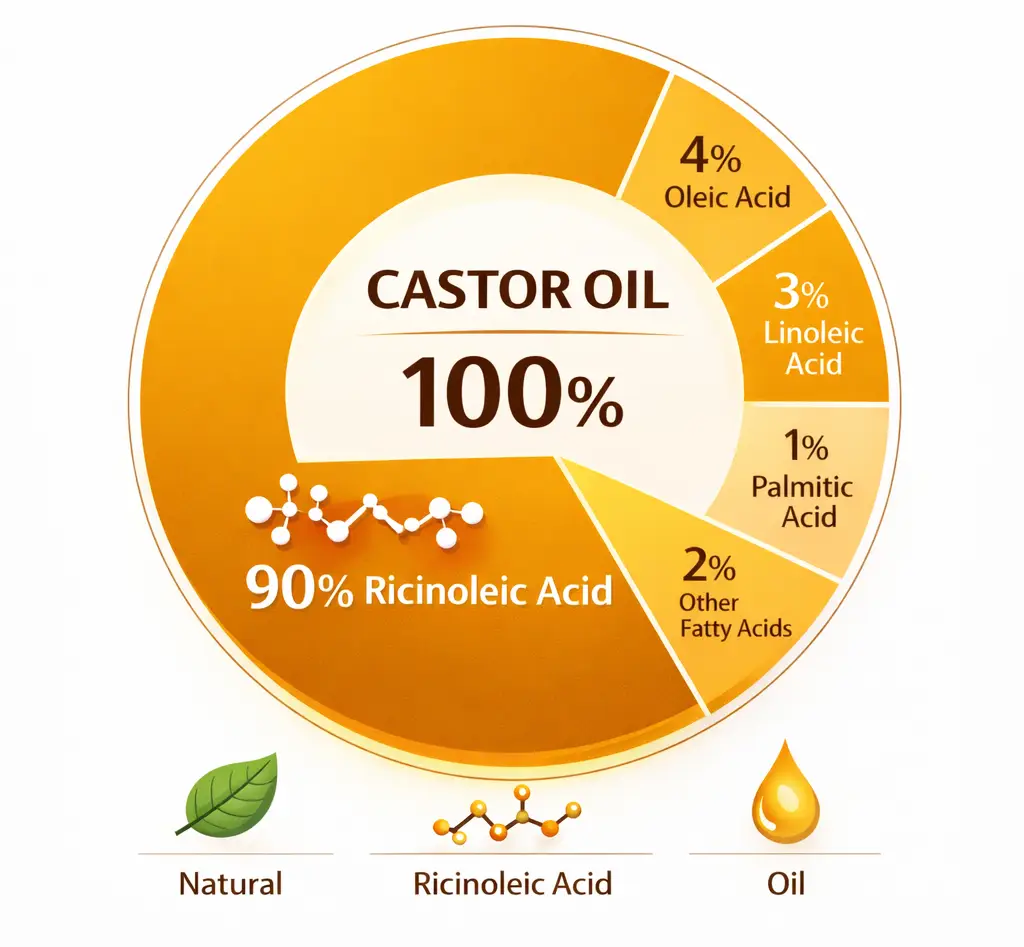
This thick, viscous oil has been used for over 4,000 years, with historical records showing Cleopatra used it to brighten the whites of her eyes. Today, castor oil is FDA-approved as a stimulant laxative and classified as Generally Recognized as Safe and Effective (GRASE) for over-the-counter use.
Types of Castor Oil Available in India:
- Cold-pressed castor oil: The purest form, extracted without heat
- Jamaican Black castor oil: Made from roasted beans, darker in color
- Hydrogenated castor oil: Processed for cosmetic applications
- Organic castor oil: Certified pesticide-free varieties
The key to castor oil’s effectiveness lies in ricinoleic acid, a unique fatty acid that makes up 85-90% of its composition. This compound provides the oil’s distinctive anti-inflammatory, antimicrobial, and moisturizing properties that we’ll explore throughout this guide.
How Castor Oil Works: The Science Behind Ricinoleic Acid Benefits
Castor oil’s therapeutic effects stem from ricinoleic acid, which triggers specific biological pathways that reduce inflammation, fight bacteria, and promote healing.
According to Professor Stefan Offermanns from Goethe University, Frankfurt, “Castor oil is one of the oldest drugs, used for centuries for its laxative properties and other medicinal benefits“.
Key Mechanisms of Action:
- Anti-inflammatory Response: Ricinoleic acid inhibits prostaglandin production, reducing swelling and pain in joints and muscles
- Antimicrobial Protection: The oil’s fatty acid structure disrupts bacterial cell membranes, helping prevent infections
- Moisture Barrier Function: Acts as both a humectant (draws moisture) and occlusive agent (seals moisture in)
- Digestive Stimulation: When consumed, ricinoleic acid stimulates intestinal contractions for natural laxative effects
The oil’s molecular structure allows it to penetrate deeply into skin and hair follicles, delivering nutrients directly where they’re needed. This explains why castor oil works effectively for both topical applications and internal use when taken safely.
Research Validation: Multiple studies have confirmed castor oil’s effectiveness, leading to its inclusion in pharmaceutical formulations worldwide. The FDA’s approval as a 100% active ingredient stimulant laxative underscores its proven safety profile.
15+ Proven Castor Oil Benefits for Hair, Skin, Digestion & Pain Relief
Castor oil offers scientifically-backed benefits for digestive health, skin care, hair growth, and pain management, making it one of nature’s most versatile healing oils.
Castor Oil for Constipation: Dosage & Digestive Benefits

1. Natural Constipation Relief Castor oil is FDA-approved for treating temporary constipation. When consumed, ricinoleic acid stimulates intestinal muscles, promoting bowel movements within 2-6 hours. Typical dosage: 15-60ml for adults (consult a healthcare provider first).
2. Digestive System Support In Ayurveda, castor oil (‘Eranda Tel’) is used in detoxification therapies. It helps reduce bloating and supports overall digestive comfort when used appropriately.
Castor Oil Benefits for Skin: Acne, Wrinkles & Moisturizing
3. Deep Moisturization for Dry Skin Castor oil’s thick consistency creates a protective barrier that locks in moisture for up to 24 hours. It’s particularly effective for:
- Cracked heels and elbows
- Winter dry skin patches
- Mature skin needing intensive hydration
4. Acne and Blemish Treatment The antimicrobial properties help reduce acne-causing bacteria while the anti-inflammatory effects calm redness and swelling.
5. Anti-Aging and Wrinkle Reduction Regular application may help reduce fine lines by boosting collagen production and maintaining skin elasticity.
6. Scar and Stretch Mark Improvement The oil’s healing properties can help fade scars and stretch marks over time with consistent use.
While castor oil works wonders for dry skin, argan oil offers powerful anti-aging benefits and tea tree oil targets acne-causing bacteria effectively.
Castor Oil for Hair Growth: Does It Really Work?
7. Hair Growth Stimulation While scientific evidence is limited, many users report improved hair thickness and growth. The oil nourishes hair follicles and improves scalp circulation.
8. Eyebrow and Eyelash Enhancement Dermatologist Margaret Mioduszewski notes: “There’s no real evidence to support that castor oil can help grow eyebrows and eyelashes; there are more effective methods”. However, it can condition existing hair.
9. Beard Growth and Conditioning Men use castor oil to soften beard hair and potentially stimulate growth in patchy areas.
10. Split End Treatment The oil’s emollient properties help seal split ends and prevent further damage.
Combine castor oil with rosemary oil for enhanced hair growth results, or try amla oil to prevent premature greying alongside hair growth. For lighter absorption, consider sweet almond oil as a gentle alternative.
Castor Oil for Joint Pain and Arthritis Relief
11. Joint Pain and Arthritis Relief Topical application with gentle massage can reduce inflammation in arthritic joints. The anti-inflammatory ricinoleic acid penetrates skin to provide localized relief.
12. Muscle Pain and Soreness Athletes and fitness enthusiasts use castor oil packs for post-workout muscle recovery.
Castor Oil Belly Button Benefits & Specialized Uses
13. Belly Button Application (Nabhi Therapy) Traditional practice involves applying castor oil to the navel before bed, believed to improve digestion and reduce bloating.
14. Overnight Foot Treatment Applying castor oil to feet before bed helps soften calluses and heal cracked skin.
15. Wound Healing Support The antimicrobial and anti-inflammatory properties may help minor cuts and scrapes heal faster.
Important Note: While castor oil has many traditional uses, always consult healthcare professionals for serious conditions. As Dr. Mioduszewski states, “The most promising use of castor oil is as a laxative, but there is still need for further scientific research”.
How to Use Castor Oil: Safe Application for Hair, Face & Constipation
Always perform a patch test before first use and follow proper dilution guidelines to ensure safe, effective application of castor oil.
Safety Guidelines for Using Castor Oil Topically & Internally

Patch Test Protocol:
- Apply a small amount of castor oil to your inner wrist
- Wait 24 hours and check for redness, itching, or irritation
- If no reaction occurs, it’s generally safe for broader use
- Discontinue use if any adverse reactions develop
Step-by-Step: How to Apply Castor Oil on Face, Hair & Body
For Facial Skin Care:
- Cleanse face thoroughly with gentle cleanser
- Apply 2-3 drops of castor oil to damp skin
- Gently massage in circular motions for 1-2 minutes
- Leave overnight or rinse after 30 minutes for sensitive skin
- Use 2-3 times per week initially
For Hair Growth Treatment:
- Section hair to expose scalp
- Warm 2-3 tablespoons of castor oil slightly (not hot)
- Massage into scalp using fingertips for 5-10 minutes
- Apply remaining oil to hair lengths
- Cover with shower cap and leave for 2-8 hours
- Shampoo thoroughly (may require 2 washes)
- Repeat weekly for best results
For Joint Pain Relief:
- Clean the affected area
- Warm castor oil to body temperature
- Apply generously and massage gently for 10-15 minutes
- Cover with a warm, damp cloth for 20-30 minutes
- Rinse with warm water
- Use daily during pain flare-ups
For Constipation (Oral Use): Disclaimer: Consult a medical professional before internal use
- Adults: 15-60ml (1-4 tablespoons) on empty stomach
- Children: Consult pediatrician for appropriate dosage
- Take in morning for daytime effect
- Expect results within 2-6 hours
- Don’t use for more than 7 days without medical supervision
Dilution Guidelines

| Use Case | Castor Oil | Carrier Oil | Ratio |
|---|---|---|---|
| Sensitive facial skin | 1 part | 2 parts coconut oil | 1:2 |
| Body moisturizer | 2 parts | 1 part jojoba oil | 2:1 |
| Hair treatment | Pure | None needed | 100% |
| Joint pain massage | 3 parts | 1 part olive oil | 3:1 |
| Eyebrow/eyelash | 1 part | 1 part sweet almond oil | 1:1 |
Storage Tips:
- Store in cool, dark place away from direct sunlight
- Use within 2 years of opening
- Keep container tightly sealed to prevent oxidation
- Choose dark glass bottles over plastic containers
Castor Oil Side Effects: Who Should Avoid It & Safety Warnings
While generally safe, castor oil can cause serious side effects in certain individuals and should be avoided by pregnant women, people with bowel obstructions, and those with specific medical conditions.

Common Side Effects
Digestive Issues (When Taken Orally):
- Severe cramping and abdominal pain
- Diarrhea and dehydration
- Nausea and vomiting
- Electrolyte imbalance with excessive use
Skin Reactions (Topical Use):
- Contact dermatitis in sensitive individuals
- Clogged pores if used excessively on acne-prone skin
- Allergic reactions (rare but possible)
Who Should NOT Use Castor Oil
Absolute Contraindications:
- Pregnant and breastfeeding women – Can stimulate uterine contractions
- People with intestinal blockages – May worsen obstruction
- Those with inflammatory bowel disease – Can aggravate symptoms
- Children under 12 – Without pediatric supervision
- People with appendicitis – May mask symptoms or worsen condition
Use with Caution:
- Individuals taking blood-thinning medications
- People with kidney or liver disease
- Those with chronic digestive conditions
- Anyone scheduled for surgery (discontinue 2 weeks prior)
Drug Interactions
Castor oil may interact with:
- Diuretics (water pills)
- Heart medications (digoxin)
- Potassium supplements
- Other laxatives
Important: Always consult healthcare providers before using castor oil if you take any medications or have underlying health conditions.
Emergency Signs
Seek immediate medical attention if you experience:
- Severe abdominal pain lasting more than 2 hours
- Signs of dehydration (dizziness, dry mouth, decreased urination)
- Allergic reactions (difficulty breathing, swelling, severe rash)
- No bowel movement within 6 hours of oral consumption
Disclaimer: This information is for educational purposes only. Consult a medical professional before using castor oil for any health condition.
Comparing Castor Oil: Jamaican Black vs. Regular & Other Oils
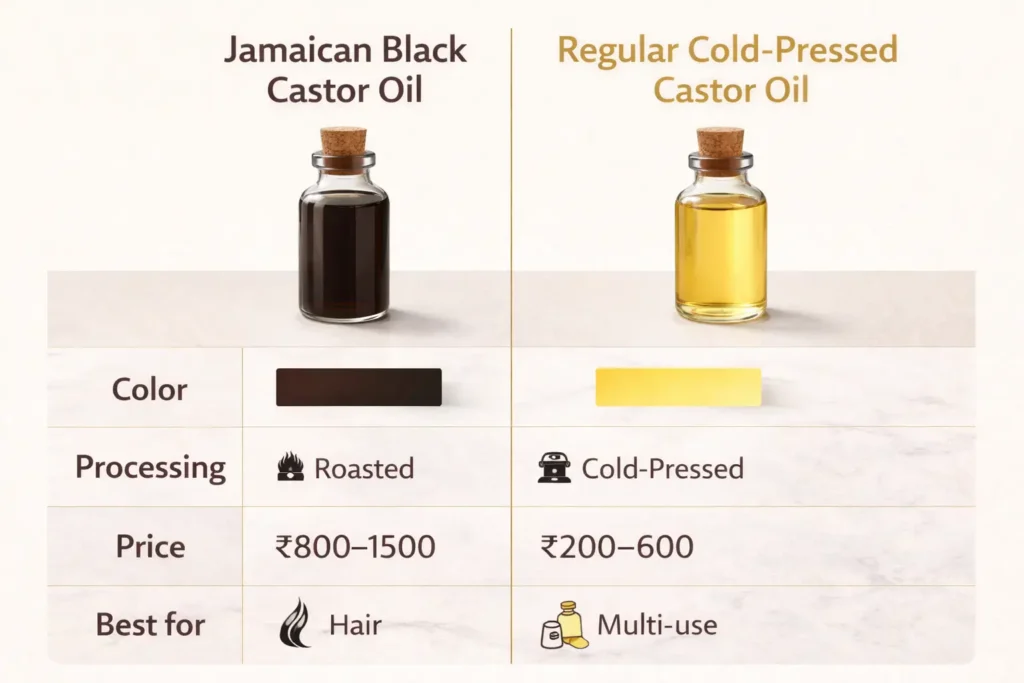
Jamaican Black castor oil differs from regular castor oil primarily in processing method and ash content, while both offer similar therapeutic benefits with slight variations in potency.
Jamaican Black Castor Oil Benefits: Is It Better Than Regular?
| Feature | Jamaican Black | Regular Cold-Pressed |
|---|---|---|
| Processing | Beans roasted before pressing | Raw beans pressed directly |
| Color | Dark brown/black | Pale yellow/clear |
| pH Level | Higher (more alkaline) | Lower (more acidic) |
| Ash Content | Higher mineral content | Lower mineral content |
| Price Range | ₹800-1,500 per 100ml | ₹200-600 per 100ml |
| Best For | Hair growth, scalp health | General skin/digestive use |
| Market Growth | 7.48% CAGR through 2030 | Steady 3.0% CAGR |
The Truth About Jamaican Black Castor Oil: The ‘black’ color comes from roasting castor beans before pressing, which increases ash content and creates a more alkaline pH. While many claim superior hair benefits, scientific evidence doesn’t conclusively prove it’s more effective than regular castor oil.
Castor Oil vs. Other Popular Oils
Castor Oil vs. Coconut Oil:
- Castor oil: Better for constipation, deeper moisturizing
- Coconut oil: Lighter texture, antimicrobial properties, better for cooking
Castor Oil vs. Olive Oil:
- Castor oil: More potent anti-inflammatory effects
- Olive oil: Better for heart health when consumed, lighter for daily skin use
Castor Oil vs. Argan Oil:
- Castor oil: Superior for hair growth stimulation
- Argan oil: Better for anti-aging, absorbs faster
Choosing the Right Type: For most users in India, cold-pressed regular castor oil offers the best value and effectiveness. Consider Jamaican Black only if you’re specifically targeting hair growth and don’t mind the premium price.
Also Read: Kalonji (Black Seed): Benefits, Uses, Oil & Ayurvedic Healing
5 Surprising Facts About Castor Oil You Didn’t Know
Discover surprising facts about castor oil that highlight its unique properties and historical significance.
- Ancient Beauty Secret: Cleopatra reportedly used castor oil to brighten the whites of her eyes, showing its historical cosmetic use dating back to ancient Egypt.
- Unique Chemical Composition: Castor oil contains ricinoleic acid which makes up 85-90% of its fatty acid content, responsible for its anti-inflammatory and laxative properties.
- FDA Recognition: Castor oil is classified as Generally Recognized as Safe and Effective (GRASE) by the FDA as an over-the-counter laxative, though it’s not recommended as a first-line treatment.
- Jamaican Black Processing: The ‘black’ in Jamaican Black Castor Oil comes from roasting the castor beans before pressing, which gives it a darker color and higher ash content, believed by some to enhance its hair benefits.
- Ayurvedic Tradition: In Ayurveda, castor oil (‘Eranda Tel’) is used not only for constipation but also in specific detoxification therapies like ‘virechana’ (purging therapy), showing its deep roots in Indian traditional medicine
Frequently Asked Questions
Leaving castor oil on your face overnight can deeply moisturize dry skin and may help reduce fine lines, but it can also clog pores in some people. For most skin types, overnight application provides intensive hydration and allows the anti-inflammatory properties to work effectively. However, those with acne-prone or oily skin should start with shorter applications (30 minutes) to test tolerance. Always perform a patch test first and use only 2-3 drops for the entire face.
This practice, known as ‘Nabhi therapy’ in traditional medicine, is believed to improve digestion and reduce bloating, though scientific evidence is limited. According to Ayurvedic principles, the navel is connected to various organs through blood vessels and nerves. Practitioners claim that applying castor oil here can help with constipation, menstrual cramps, and overall digestive health. While many report positive effects, more research is needed to validate these claims scientifically.
There is no scientific evidence that castor oil can improve eyesight or treat eye conditions. While historically used by figures like Cleopatra for eye beauty, modern ophthalmology doesn’t support castor oil for vision improvement. Some people use it to condition eyelashes or reduce dry eyes, but this should only be done with pure, high-quality oil and never directly in the eyes. Always consult an eye doctor for vision problems.
While castor oil can help with constipation (which removes waste), there’s no scientific evidence it ‘pulls toxins’ from the body in the way detox proponents claim. Your liver and kidneys naturally detoxify your body effectively. Castor oil’s laxative effect helps eliminate waste through bowel movements, which some interpret as ‘detoxing.’ However, this is simply normal digestive function, not a special detoxification process.
Common negative effects include clogged pores, allergic reactions, and skin irritation, especially in sensitive individuals. The oil’s thick consistency can trap dirt and bacteria if not properly cleansed, leading to breakouts. Some people experience contact dermatitis, redness, or itching. Those with nut allergies should be cautious as cross-reactions are possible. Always do a patch test and start with diluted applications to minimize risks.
Pregnant women, people with bowel obstructions, inflammatory bowel disease, and children under 12 should avoid castor oil without medical supervision. It can stimulate uterine contractions in pregnant women and worsen intestinal blockages. Those taking blood thinners, heart medications, or having upcoming surgery should also consult doctors first. People with chronic digestive conditions or kidney/liver disease need medical clearance before use.
Daily topical application can provide consistent moisturizing benefits but may cause skin irritation or clogged pores in some people. For hair, daily scalp application might improve thickness over time, though this can make hair appear greasy. For skin, daily use works well for very dry areas like elbows and heels but may be too heavy for facial use. Start with 2-3 times weekly and adjust based on your skin’s response.
Conclusion
Castor oil stands as one of nature’s most versatile healing oils, backed by both ancient wisdom and modern science. From its FDA-approved use as a natural laxative to its moisturizing and anti-inflammatory properties, this remarkable oil offers genuine benefits for digestive health, skin care, hair growth, and pain management. With India holding nearly 60% of the Asia-Pacific castor oil market and the global market projected to reach ₹25,000 crores by 2030, it’s clear that this traditional remedy continues to find relevance in modern wellness routines.
However, it’s crucial to use castor oil safely and realistically. While it excels as a moisturizer and digestive aid, claims about dramatic hair growth or detoxification should be viewed with healthy skepticism. Always perform patch tests, follow proper dilution guidelines, and consult healthcare professionals for serious conditions.
Whether you choose regular cold-pressed castor oil or premium Jamaican Black varieties, the key to success lies in consistent, safe application tailored to your specific needs. Remember that natural doesn’t always mean risk-free – respect this powerful oil’s potency and use it as part of a balanced approach to health and wellness.
Disclaimer: This information is for educational purposes only and should not replace professional medical advice. Always consult qualified healthcare providers before using castor oil for any health condition, especially if you’re pregnant, nursing, or have underlying medical issues.
References and Scientific Sources
This evidence-based guide is supported by scientific research, medical sources, and trusted health organizations. Below are the references cited throughout this article:
- National Center for Biotechnology Information. (2023). “Castor Oil: Pharmacological and Clinical Properties”. StatPearls Publishing, U.S. National Library of Medicine.
- Mordor Intelligence. (2025). “Castor Oil Market Size & Share Analysis – Growth Trends & Forecasts (2025-2030)”. Industry Reports.
- Mordor Intelligence. (2025). “Asia-Pacific Castor Oil Market Analysis”. Regional Market Reports.
- WebMD Editorial Team. (2023). “Castor Oil: Health Benefits, Nutrients, Side Effects, and More”. WebMD, Medically reviewed by registered dietitians.
- Offermanns, S., et al. (2025). “The Real Health Benefits of Castor Oil”. National Geographic, Goethe University Frankfurt.
- Mioduszewski, M., MD. (2023). “Expert Opinion on Castor Oil for Hair and Lashes”. WebMD, Board-certified dermatologist.
- Healthline Editorial Team. (2023). “Castor Oil: Uses, Benefits, and Side Effects”. Healthline, Reviewed by medical professionals.
- Acme-Hardesty. (2025). “Benefits of and Uses for Jamaican Black Castor Oil”. Industrial Ingredients.
- Patel, V.R., et al. (2016). “Castor Oil: Properties, Uses, and Optimization of Processing Parameters”. Lipid Insights, National Center for Biotechnology Information.
- Medical News Today. (2023). “What are the benefits of castor oil?”. Medical News Today, Medically reviewed by pharmacists.
- Netmeds Healthcare Team. (2024). “Castor Oil: Therapeutic Benefits and Traditional Uses”. Netmeds Health Library, India.
- Yeboah, A., et al. (2020). “Castor oil (Ricinus communis): a review on the composition, properties and applications”. Food Science and Technology, SciELO Brazil.
Medical Review Policy: All health information provided in this guide has been cross-referenced with peer-reviewed medical literature and expert medical opinions. We prioritize FDA-approved uses and evidence-based applications.
Disclaimer: This content is for educational and informational purposes only. It is not intended as medical advice and should not replace consultation with qualified healthcare professionals. Always consult your doctor before using castor oil for any health condition, especially if pregnant, nursing, or taking medications.