




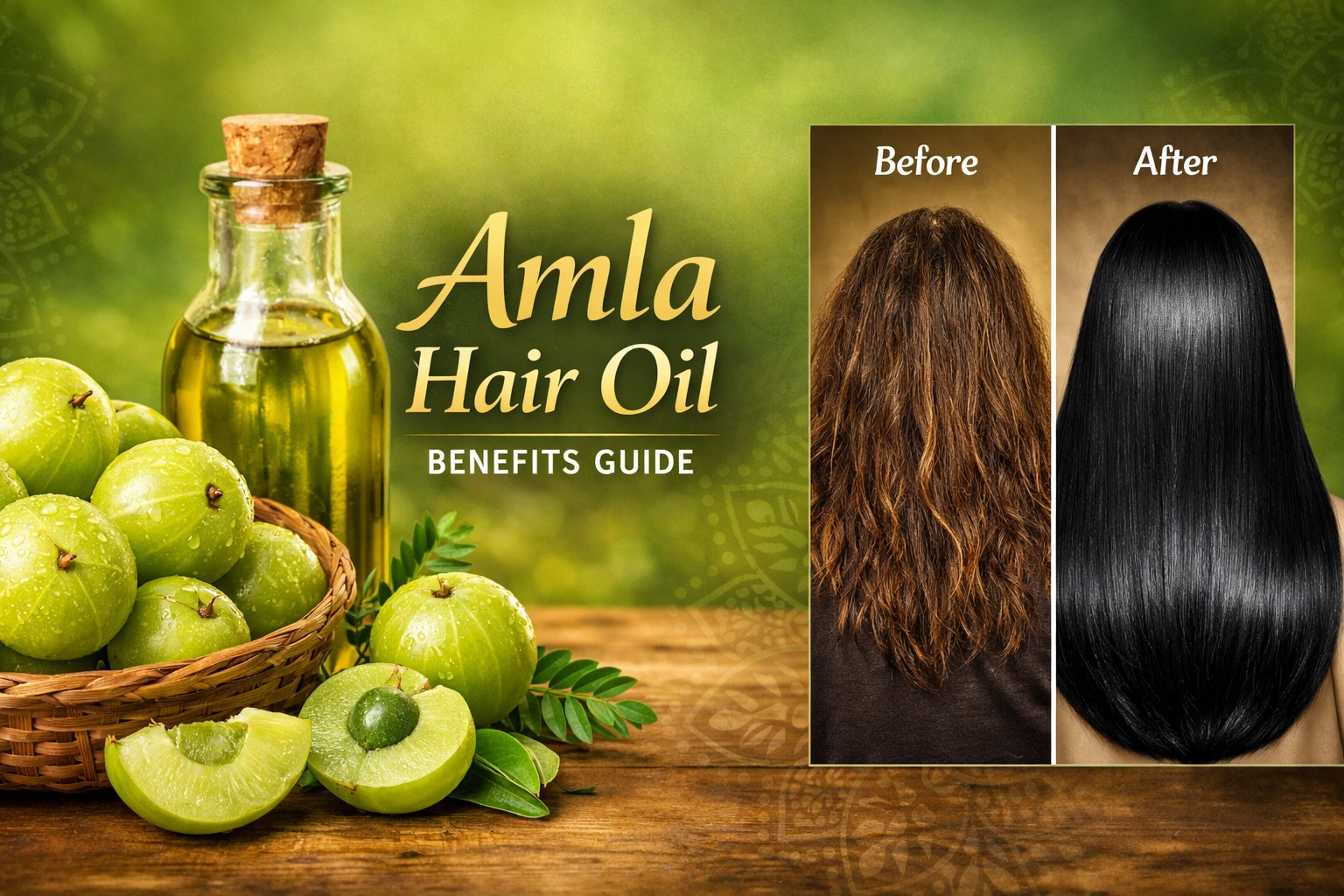
Quick Answer: Amla hair oil promotes faster hair growth (works like 2% minoxidil), reduces hair fall, prevents premature greying, and improves scalp health. Rich in vitamin C (600-800% daily value) and antioxidants. Use 2-3 times weekly: massage into scalp for 5-10 minutes, leave 30 minutes to overnight, then shampoo out.
Tired of hair fall and dull, lifeless hair? You’re not alone. For centuries, people in India have turned to a simple, natural fix: amla hair oil. Made from the Indian gooseberry, this oil is packed with nutrients that can seriously transform your hair. Here’s the deal: amla oil promotes growth, strengthens roots, fights greying, and boosts scalp health. It’s all thanks to its crazy-high vitamin C and antioxidant levels.
With the Indian hair oil market growing fast, more folks are discovering its power. Whether you’re battling hair loss or just want shinier locks, this guide has you covered. Let’s dive in.
What is Amla Hair Oil? (Indian Gooseberry Benefits)
Amla hair oil comes from the Indian gooseberry. It’s loaded with vitamin C, antioxidants, and fatty acids that feed your hair from root to tip. People have used this Ayurvedic remedy for over 5,000 years. And it’s still a superstar today.
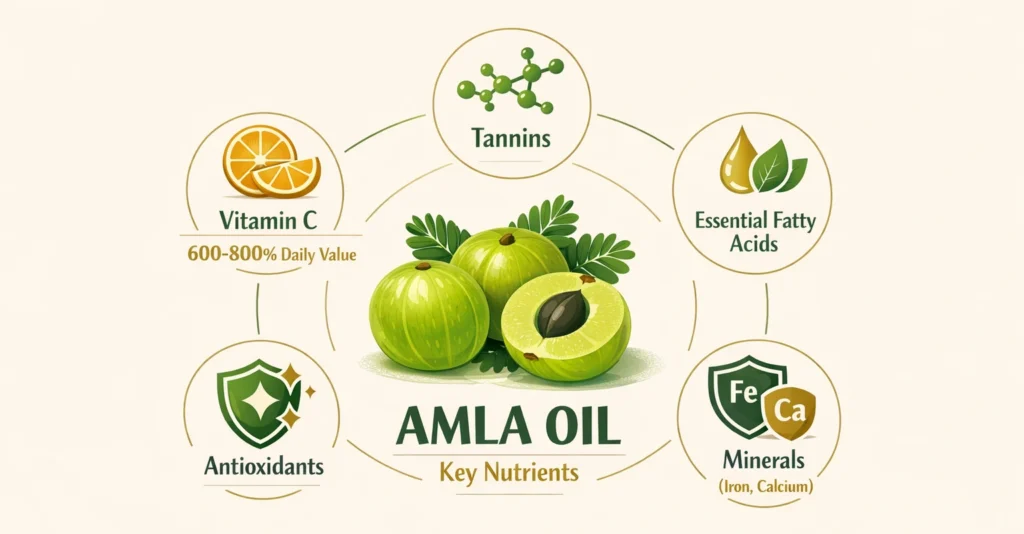
Why does it work so well? One amla fruit gives you 600-800% of your daily vitamin C. That’s a massive antioxidant punch. This vitamin C protects hair follicles and helps make collagen, which is crucial for strong hair.
Here’s what’s inside that helps your hair:
- Vitamin C: Boosts collagen and fights damage.
- Tannins: These bind to your hair’s keratin, creating a shield against heat and sun. (Source: kamaayurveda.in)
- Essential Fatty Acids: They nourish your scalp and strengthen hair shafts.
- Antioxidants: They fight the stress that causes hair to age and go grey.
- Minerals: Like iron and calcium for overall hair health.
Here’s a key fact: amla oil can block an enzyme linked to hair loss. Research shows it works similarly to some prescription medications. That makes it a great natural option.
You’ll find two main types: pure amla oil and amla-infused oils mixed with carriers like coconut oil. Pure oil is more concentrated. Popular Indian brands like Dabur and Khadi Natural make quality products that are easy to find.
Combine amla oil with bhringraj oil for enhanced darkening effects and kalonji oil for pigmentation protection. Add castor oil for simultaneous growth.
10 Powerful Benefits of Amla Hair Oil for Your Hair
Amla oil tackles multiple hair problems at once. It speeds up growth, reduces hair fall, prevents early greying, and makes your scalp healthier. Your hair gets shinier and stronger, too.
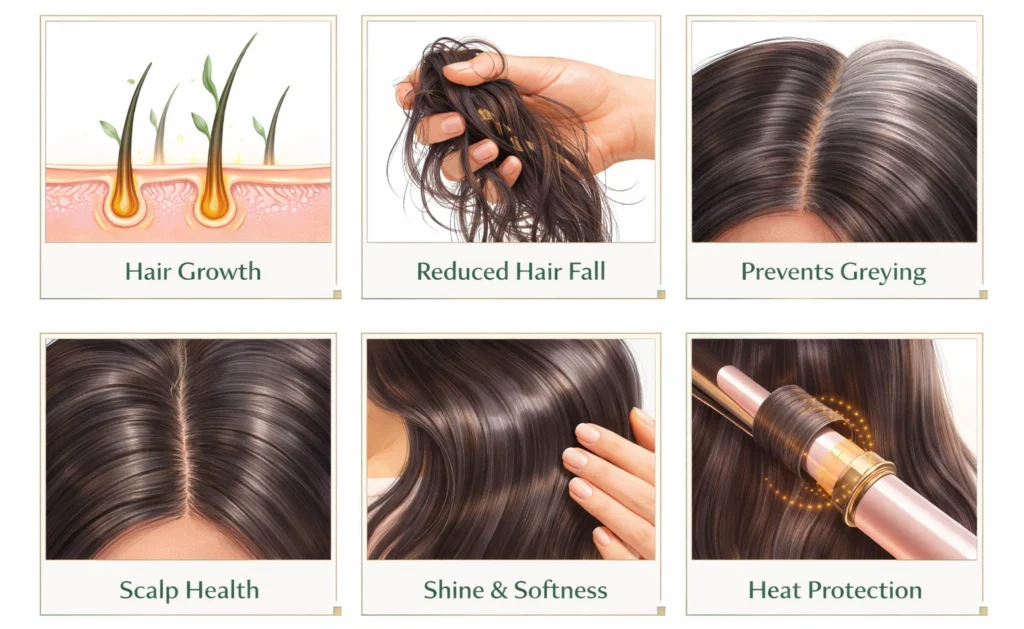
Let’s break down the top benefits:
1. Promotes Faster Hair Growth
Amla oil wakes up your hair follicles and gets blood flowing to your scalp. That’s perfect for growth. A study on rabbits showed fur growth similar to a 2% minoxidil treatment. The ideal concentration is about 7.5% amla oil. (Source: healthline.com)
2. Reduces Hair Fall and Strengthens Roots
The vitamin C and fatty acids in amla oil fortify your hair right at the root. This means less breakage and shedding. Studies show many users see better hair health with regular use.
3. Prevents Premature Greying
Amla oil doesn’t dye your hair. Instead, its antioxidants protect the cells that give your hair its color. This helps you keep your natural shade longer. (Source: hennasooq.com)
4. Improves Scalp Health
It has antimicrobial powers that fight dandruff and calm irritation. It balances your scalp’s pH and controls oil, creating a healthy base for growth.
5. Adds Natural Shine and
Softness An amla fruit is 80% water. That’s why the oil is such a good conditioner. It smooths your hair cuticle for serious shine without heaviness. (Source: kamaayurveda.in)
6. Protects Against Heat and UV Damage
Those tannins we mentioned? They bind to your hair’s protein, forming a barrier against sun and styling tools. (Source: kamaayurveda.in)
7. Treats Dandruff and Scalp Infections
It fights the fungi and bacteria that cause dandruff. In India, it’s even a traditional, chemical-free way to tackle head lice.
8. Conditions and Detangles Hair
It acts as a deep treatment, soaking into hair shafts with moisture. This makes combing easier and prevents snaps.
9. Balances Scalp Oil Production
Got an oily or dry scalp? Amla oil helps regulate your natural oil, so your scalp finds its happy balance.
10. Enhances Hair Thickness and Volume
Regular use strengthens each strand and encourages new growth. Over time, your hair looks visibly thicker and fuller.
For maximum hair fall control, pair amla with onion oil’s sulfur compounds or rosemary oil for improved circulation.
How to Use Amla Hair Oil: Step-by-Step Application Guide
For the best results, use amla oil 2-3 times a week. Massage it in for 5-10 minutes, leave it for 30 minutes to overnight, then shampoo it out. Sounds simple, right? Here’s your foolproof guide.

Basic Method (30-60 Minutes):
- Start with dry or slightly damp hair. Don’t apply it to soaking wet hair.
- Warm 2-3 tablespoons of oil slightly. Just place the bowl in warm water for a minute.
- Section your hair into 4-6 parts with clips. This ensures even coverage.
- Apply the oil directly to your scalp. Focus on thin spots or problem areas.
- Massage in circular motions for 5-10 minutes. This step is crucial—it boosts blood flow.
- Coat the lengths and ends of your hair with the leftover oil. A little goes a long way.
- Let it sit for at least 30 minutes. For deeper conditioning, leave it for 1-2 hours.
- Wash it out with a mild, sulfate-free shampoo.
You might need to shampoo twice.
Overnight Treatment (Maximum Benefits): Want intensive care? Apply it before bed.
- Follow steps 1-6 above. Cover your hair with a shower cap or soft towel.
- Sleep with it in.
- Wash thoroughly in the morning.
- Do this 1-2 times a week for best results.
Quick Pre-Shampoo Treatment (15-20 Minutes): Short on time? No problem.
- Apply oil 15-20 minutes before your shower.
- Focus on your
- scalp and roots.
- Massage for just 2-3 minutes.
- Wash out as usual.
How often should you really use it?
- For Hair Growth: 2-3 times per week.
- For Maintenance: Once a week is plenty.
- For Severe Hair Fall: Start with 3-4 times a week, then drop to 2-3.
- Daily Use: Don’t do it.
It’ll make your hair greasy and attract dirt.
Pro Tips for Success:
- Always massage your scalp. This stimulates follicles.
- Don’t overdo the oil. Excess won’t absorb and is hard to wash out.
- Use lukewarm water to wash, not hot.
- Be patient. You’ll typically see results after 4-8 weeks of regular use.
- You can mix amla oil with coconut or castor oil for extra benefits.
Amla Oil vs Coconut, Castor & Rosemary Oil
So, which oil should you choose? It depends on your hair’s needs. Amla oil is best for growth and preventing greying. Coconut oil gives superior moisture. Castor oil adds thickness. Rosemary oil boosts circulation.
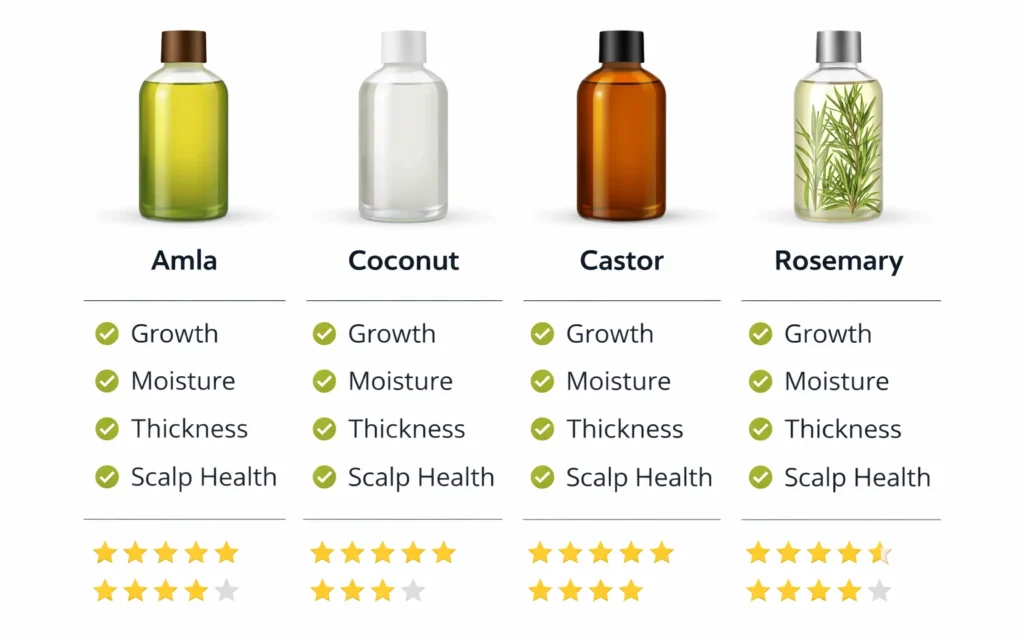
| Oil Type | Best For | Hair Growth | Anti-Greying | Moisture | Thickness | Price (₹/100ml) |
|---|---|---|---|---|---|---|
| Amla | Overall health, growth, anti-greying | ⭐⭐⭐⭐⭐ | ⭐⭐⭐⭐⭐ | ⭐⭐⭐ | ⭐⭐⭐ | ₹150-400 |
| Coconut | Deep conditioning, shine | ⭐⭐⭐ | ⭐⭐ | ⭐⭐⭐⭐⭐ | ⭐⭐ | ₹80-250 |
| Castor | Thickness, density | ⭐⭐⭐⭐ | ⭐⭐ | ⭐⭐⭐ | ⭐⭐⭐⭐⭐ | ₹120-350 |
| Rosemary | Clinical growth boost | ⭐⭐⭐⭐⭐ | ⭐⭐ | ⭐⭐ | ⭐⭐⭐ | ₹300-800 |
| Argan | Frizz control, heat protection | ⭐⭐⭐ | ⭐⭐ | ⭐⭐⭐⭐ | ⭐⭐ | ₹400-1200 |
Here’s a quick comparison:
Amla Oil vs Coconut Oil: Which wins? According to a Times of India comparison, amla oil is better for growth and fighting greys. Coconut oil is better for intense moisture. Pick amla if growth is your goal. Choose coconut if your hair is dry and damaged. (Source: timesofindia.indiatimes.com)
Amla Oil vs Rosemary Oil: Both promote growth, but differently. Amla nourishes follicles and blocks DHT. Rosemary increases scalp blood flow. Rosemary has more science behind it, but amla offers extra perks like scalp health. You can mix them for a powerful blend.
Amla Oil vs Castor Oil: Castor oil is thicker and better for density. Amla oil is lighter and better for overall scalp health and reducing fall. Want thicker strands? Go for castor. Want to tackle multiple issues? Choose amla. Many people mix them 1:1.
Best Combos:
- Amla + Coconut Oil: Balanced moisture and growth.
- Amla + Castor Oil: Maximum growth and thickness.
- Amla + Rosemary Oil: A powerful growth-stimulating mix.
- Amla + Bhringraj Oil: A classic Ayurvedic pair for hair fall.
As haircare pro Himmie Lau says, amla oil can be a tool for healthier hair—if you choose your formula carefully. (Source: viori.com) Look for pure oil or high-quality infused oils from trusted Indian brands.
Amla Hair Oil Benefits and Side Effects
Amla oil is generally safe, but you should know the possible side effects. These include allergic reactions, scalp irritation, dryness from overuse, and greasy buildup.
Common Side Effects:
- Allergic Reactions: Some people are allergic to amla. Look for itching, redness, or swelling.
- Scalp Irritation: Concentrated oil can burn or irritate sensitive scalps.
- Excessive Dryness: Using too much pure amla oil can actually dry out your hair and scalp.
- Greasy Buildup: Too much oil or poor washing leads to heavy, dirty hair.
- Staining: Pure oil has a green tint that might stain light hair or pillowcases.
Who Should Avoid It?
- People allergic to amla.
- Those with very oily scalps (it might make it worse).
- Anyone with open wounds or severe scalp conditions.
- People on blood thinners (amla can affect clotting).
Safety Tips:
- Always do a patch test first. Put a little on your inner elbow and wait a day.
- Dilute it if needed. Mix pure amla oil with coconut oil (1:1) for sensitive skin.
- Don’t overuse it. Stick to 2-3 times a week max.
- Wash it out thoroughly to prevent buildup.
- Keep it away from your eyes. If it gets in, rinse with water immediately.
- Check the ingredients list for additives.
- If you’re pregnant or breastfeeding, talk to your doctor first.
When to Stop Using It: Stop right away if you get:
- Persistent itching or burning.
- Severe redness or swelling.
- More hair fall (this is rare).
- A scalp rash or hives.
- Trouble breathing (get medical help immediately).
Remember: This info is for education. If you have scalp issues or take meds, chat with a dermatologist before using amla oil.
Amla Hair Oil Benefits for Curly Hair
Curly hair benefits immensely from amla oil’s unique properties:
Why It Works for Curls:
- Deeply moisturizes without weighing down curls
- Defines curl pattern while reducing frizz
- Strengthens hair from root to tip (curly hair is more fragile)
- Seals hair cuticles for enhanced shine
Application for Curly Hair:
- Apply to damp (not wet) hair after washing
- Use the “praying hands” method to coat each curl
- Scrunch gently to encourage curl formation
- Leave as overnight treatment 1-2x weekly
- For daily use: 2-3 drops on ends only
Best Results: Mix amla oil with argan or jojoba oil (1:1) for lighter consistency perfect for curly hair.
Best Amla Hair Oil Brands in India (2026)
Looking to buy? Top brands in India include Dabur, Khadi Natural, Parachute Advansed, and Avimee Herbal. You can find them in local stores, pharmacies, and online.

Top 5 Brands:
- Dabur Amla Hair Oil (₹150-300 for 200ml): Best for general care and preventing hair fall. It’s the most trusted and affordable brand. But it contains mineral oil and isn’t 100% pure amla.
- Khadi Natural Pure Amla Oil (₹180-350 for 210ml): Best if you want paraben-free and mineral-free. It’s all-natural but a bit pricier and less common.
- Parachute Advansed Amla Hair Oil (₹120-250 for 200ml): Best for reducing hair fall and strengthening roots. It mixes coconut oil with amla and is great value. But it has added fragrance.
- Avimee Herbal Pure Amla Oil (₹200-400 for 100ml): Best for organic, chemical-free care. It’s 100% pure and cold-pressed. The downside? It’s more expensive for less product.
- Kama Ayurveda Bringadi Intensive Hair Treatment (₹900-1,200 for 100ml): Best for premium Ayurvedic treatment of severe hair fall. It’s high quality and effective, but it’s expensive and has a strong herbal smell.
How to Spot the Real Deal:
- Check Ingredients: Look for ‘Phyllanthus emblica’ or ‘Emblica officinalis’.
- Color: Real amla oil has a greenish tint.
- Smell: It should smell herbal and slightly sour.
Consistency: It’s lighter than castor oil but thicker than coconut oil.
- Price: If it’s super cheap, it’s probably diluted.
- Certifications: Look for organic or Ayurvedic labels.
Where to Shop:
- Local Stores: Most grocery stores, supermarkets, and pharmacies carry it.
- Online: Try Amazon India, Flipkart, Nykaa, or the brand’s own website.
- Ayurvedic Stores: These often have pure, high-quality options.
- Health Food Stores: They stock chemical-free versions.
Price Tips:
- Compare price per ml, not just the bottle price.
- Look for online discounts and combo offers. Subscribe-and-save on Amazon can save you 5-10%.
- Buy during big sales like Diwali for the best deals.
Frequently Asked Questions
Yes, it’s excellent for hair growth. It wakes up your hair follicles, gets blood flowing to your scalp, and acts as a natural DHT blocker. Research shows it works as well as 2% minoxidil. One amla fruit has a huge amount of vitamin C, which boosts collagen for healthy follicles. For best results, use it 2-3 times a week with a good scalp massage. You should see a difference in 4-8 weeks. (Source: healthline.com)
No, don’t use it every day. That can make your hair greasy, attract dirt, and cause scalp problems. The sweet spot is 2-3 times a week for growth. If you have bad hair fall, you can start with 3-4 times a week, then cut back. Want to use oil daily? Try a lighter oil like argan, or use just a tiny bit of amla on your ends, not your scalp.
The main downsides are possible allergies, scalp irritation, greasy buildup if you overdo it, and a strong herbal smell. It can also stain light hair temporarily. Some people find it too heavy or drying. Plus, it can be sticky and tough to wash out completely. Always do a patch test first and start with a small amount to see how your hair reacts.
It depends on what you need. Amla oil is better for hair growth and preventing grey hair. Coconut oil is better for deep conditioning and adding shine. A Times of India comparison backs this up. (Source: timesofindia.indiatimes.com) Choose amla if growth is your goal. Choose coconut if your hair is dry and damaged. You can also mix them for the best of both worlds.
No, it doesn’t dye your hair black. But it helps keep your natural color longer by protecting the pigment cells in your follicles. Its antioxidants slow down premature greying. So it won’t cover existing grey hair, but it might prevent new ones. If you want to darken grey hair, you’d need to use amla powder with henna, not the oil alone. (Source: hennasooq.com)
Here’s the right way: Warm 2-3 tablespoons of oil. Apply it to your scalp in sections. Massage for 5-10 minutes in circles. Then coat the lengths of your hair. Leave it for 30 minutes to overnight. Finally, wash it out with a mild shampoo. Do this 2-3 times a week. The massage is key—it boosts circulation. Don’t use too much oil, and be patient. You’ll need 4-8 weeks of regular use to see real results.
It can help regrow hair if the loss is from stress, diet, or weak follicles. But it can’t bring back hair from permanently dead follicles. Studies show it works like 2% minoxidil and blocks DHT naturally. (Source: healthline.com) However, if you have genetic baldness or scarring, it won’t regrow hair on its own. It’s best for strengthening hair, preventing more loss, and waking up sleepy follicles. For severe loss, see a dermatologist.
Leave it in for at least 30 minutes for basic benefits. For deeper conditioning, go for 1-2 hours. For the most intensive treatment, leave it overnight (1-2 times a week). The longer it’s in, the more it soaks in. If you’re in a rush, even 15-20 minutes before shampooing helps. But don’t leave it in for days without washing—that’ll attract dirt and could cause scalp issues.
Both are excellent but work differently. Amla oil nourishes follicles, blocks DHT naturally, and prevents premature greying with high vitamin C content. Rosemary oil primarily increases scalp blood circulation and has more clinical research backing for growth (studies show results similar to 2% minoxidil). Choose amla for overall scalp health, anti-greying, and Ayurvedic benefits. Choose rosemary for scientifically-proven growth stimulation. Many people mix them (2 parts amla + 5 drops rosemary essential oil) for combined benefits.
Amla oil is better for overall scalp health, reducing hair fall, and preventing greying. It’s lighter and absorbs faster. Castor oil excels at increasing hair thickness and density due to ricinoleic acid, which penetrates deep into follicles. It’s also excellent for eyebrows and lashes. Amla is easier to wash out and suitable for daily use. Castor is very thick and best as a weekly intensive treatment. For best results, mix them 1:1 – you get amla’s nutrients plus castor’s thickening power.
Yes, but gently. After applying amla oil and massaging your scalp, use a wide-tooth comb to distribute the oil evenly from roots to ends. This ensures every strand gets coated and helps detangle hair before washing. Always comb from ends to roots to prevent breakage. Avoid aggressive brushing or fine-tooth combs which can damage oil-coated hair. The gentle combing also stimulates scalp circulation, enhancing the oil’s benefits.
You’ll see initial improvements in 2-4 weeks – reduced hair fall, better scalp health, and increased shine. Significant hair growth and thickness improvements typically appear after 6-8 weeks of consistent use (2-3 times weekly). For preventing premature greying and regrowing hair from dormant follicles, give it 3-4 months. Results depend on your hair’s current condition, consistency of application, and overall hair care routine. The key is patience and regular use.
Amla is excellent for hair when used correctly. It’s backed by both 5,000 years of Ayurvedic use and modern scientific research showing benefits for growth, reducing fall, and preventing greying. However, it can be “bad” if you: use it daily (causes greasiness), skip patch tests (risk allergic reactions), use low-quality fake products, or have a specific amla allergy. For 95% of people, amla oil is safe and highly beneficial. Always start with small amounts and quality products for best results.
Conclusion
Amla hair oil is a proven, natural solution that really works. It’s backed by both ancient Ayurveda and modern science. It helps your hair grow faster, stay stronger, and fight off greys. Plus, it makes your scalp healthier.
The secret? Consistency. Use it 2-3 times a week, massage it in well, and give it a couple of months. Whether you pick a trusted brand like Dabur or go for pure organic oil, make sure it’s the real deal.
Remember, it’s not a magic potion. Pair it with a good diet and proper hair care. And if you’re dealing with serious hair loss, talk to a pro. Start your amla oil routine today. Join the millions in India who’ve trusted it for centuries. Your journey to healthier hair is that simple.
References
- Healthline. “Amla Oil: Hair Growth and Hair Health” – Clinical studies on amla oil on hair effectiveness
- Kama Ayurveda. “Amla For Hair – Top 10 Benefits & Ways To Use It” – Tannin protection, moisture content
- Henna Sooq. “10 Powerful Benefits of Using Amla Oil for Hair” – Anti-greying mechanisms and hair color preservation
- Medical News Today. “Amla oil: Does it really work for hair growth?” – Natural DHT blockers and hair loss prevention research
- Times of India. “Amla Oil vs Coconut Oil: Which is better for hair?” – Head-to-head comparison of amla and coconut oil benefits
- Viori. “Unlocking the Real Power of Amla Oil for Hair Growth” – Expert guidance on choosing quality amla oil formulas and maximizing results
- Vedicline. “Using Amla for Hair – Top 8 Benefits & Ways to Use It” – Traditional Ayurvedic hair care practices and tannin heat protection