




Rice water toner has become a viral skincare sensation, but does it actually work? The answer is yes—and there’s science to back it up. This ancient Asian beauty secret, now validated by modern dermatology, offers a natural, affordable solution for glowing skin. Whether you’re looking to brighten your complexion, minimize pores, or achieve that coveted glass skin effect, rice water toner delivers real results.
In this comprehensive guide, you’ll learn exactly how to make rice water toner at home with three proven methods, discover the science-backed benefits, and find the best commercial products available in India. We’ll also cover critical storage guidelines, application techniques, and skin type recommendations—everything you need to transform your skincare routine.
What Is Rice Water Toner & How Does It Work?
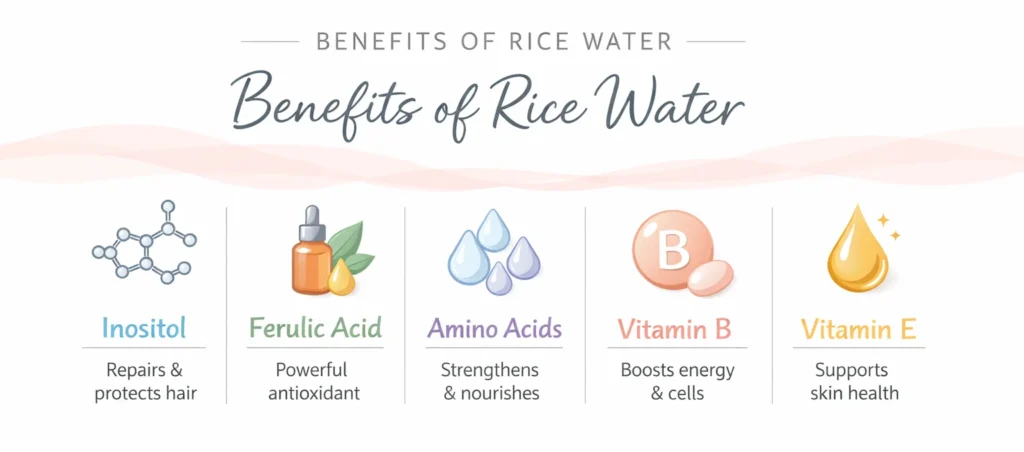
Rice water toner is the starchy liquid left behind after soaking or boiling rice, packed with vitamins, minerals, and antioxidants that benefit your skin. This simple yet powerful ingredient contains inositol (a carbohydrate that repairs damaged skin), ferulic acid (an antioxidant), amino acids, and vitamins B and E.
Historically, rice water has been a cornerstone of Asian beauty rituals for centuries. Japanese Geisha and Korean women have long used it to maintain their porcelain complexions. The Yao women of China’s Huangluo village—famous for their floor-length hair—attribute their beauty to fermented rice water.
Modern science confirms what ancient traditions knew intuitively. Research published in MDPI (2024) found that rice water exhibits antioxidant activity comparable to ascorbic acid (vitamin C) and reduces reactive oxygen species (ROS) by 80%. This means it effectively protects skin cells from oxidative stress and premature aging.
Key compounds in rice water:
- Inositol: Promotes cell growth and slows aging
- Ferulic acid: Powerful antioxidant that brightens skin
- Allantoin: Soothes inflammation and irritation
- Amino acids: Strengthen skin barrier function
- Vitamins B and E: Nourish and protect skin
When used as a toner, rice water balances your skin’s pH, tightens pores, and preps your face for better absorption of serums and moisturizers. It’s gentle enough for daily use yet effective enough to deliver visible results.
7 Rice Water Toner Benefits for Face: Science-Backed Guide
Rice water toner offers multiple scientifically-validated benefits that address common skin concerns from dullness to aging. Here’s what research reveals:
1. Brightens and Evens Skin Tone Rice water contains natural enzymes that gently exfoliate dead skin cells, revealing brighter skin underneath. The ferulic acid and allantoin work together to fade dark spots and hyperpigmentation. According to Dr. Hadley King, Board-Certified Dermatologist at Schweiger Dermatology Group, ‘Rice water helps to seal in moisture and contains enzymes that help exfoliate and brighten the skin’.
2. Deeply Hydrates and Plumps Skin A 2024 study measured a 10% increase in skin hydration after 28 days of using rice water gel, as measured by corneometry. The starch molecules in rice water create a protective film that locks in moisture, making it ideal for India’s dry winter months.
3. Minimizes Pores and Controls Oil Rice water’s astringent properties naturally tighten pores without stripping skin. It’s particularly effective for oily and combination skin types common in India’s humid climate. The toner balances sebum production while maintaining hydration.
4. Provides Powerful Antioxidant Protection With a total phenolic content of 3.33 mg/L, rice water delivers significant antioxidant benefits. It reduces oxidative stress by 80%, comparable to vitamin C, protecting your skin from pollution and UV damage—critical for Indian urban environments.
5. Soothes Inflammation and Irritation The allantoin in rice water has anti-inflammatory properties that calm redness, sunburn, and acne irritation. Research confirms cell viability remains above 50% after rice water treatment, indicating it’s non-cytotoxic and safe for sensitive skin.
6. Strengthens Skin Barrier Function Amino acids in rice water repair and reinforce your skin’s protective barrier, reducing moisture loss and environmental damage. This is especially beneficial during seasonal transitions when skin becomes vulnerable.
7. Delays Signs of Aging Inositol promotes cell regeneration and slows the aging process. Regular use can reduce fine lines and improve skin elasticity. The antioxidants combat free radicals that accelerate aging, keeping your complexion youthful.
How to Make Rice Water Toner at Home: 3 Easy Methods
Making rice water toner at home is incredibly simple and costs less than ₹20 per batch. Here are three proven methods, each with unique benefits:
Method 1: Soaking Method (Quickest & Easiest)
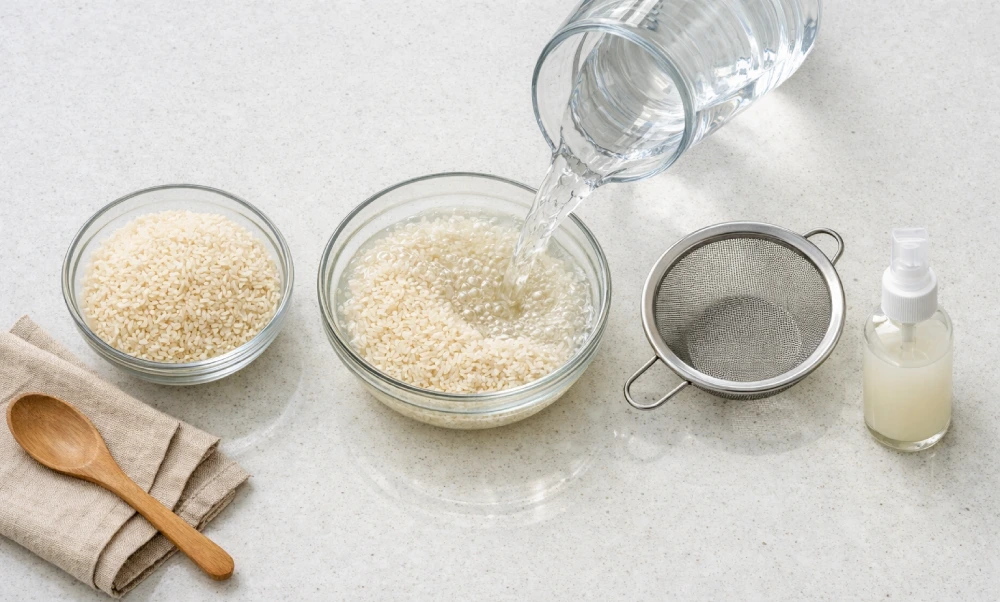
Best for: Beginners, sensitive skin, immediate use
Ingredients:
- ½ cup uncooked white rice (basmati or sona masoori)
- 1 cup distilled or filtered water
- Optional: 2-3 drops lavender essential oil
Steps:
- Rinse rice thoroughly to remove dirt and impurities
- Place rice in a clean bowl and add 1 cup water
- Let it soak for 30 minutes to 2 hours at room temperature
- Strain the milky water into a clean bottle
- Add essential oil if desired and shake well
- Store in refrigerator for up to 5 days
Pro tip: For India’s hot climate, don’t exceed 2 hours of soaking to prevent fermentation.
Method 2: Boiling Method (Most Concentrated)
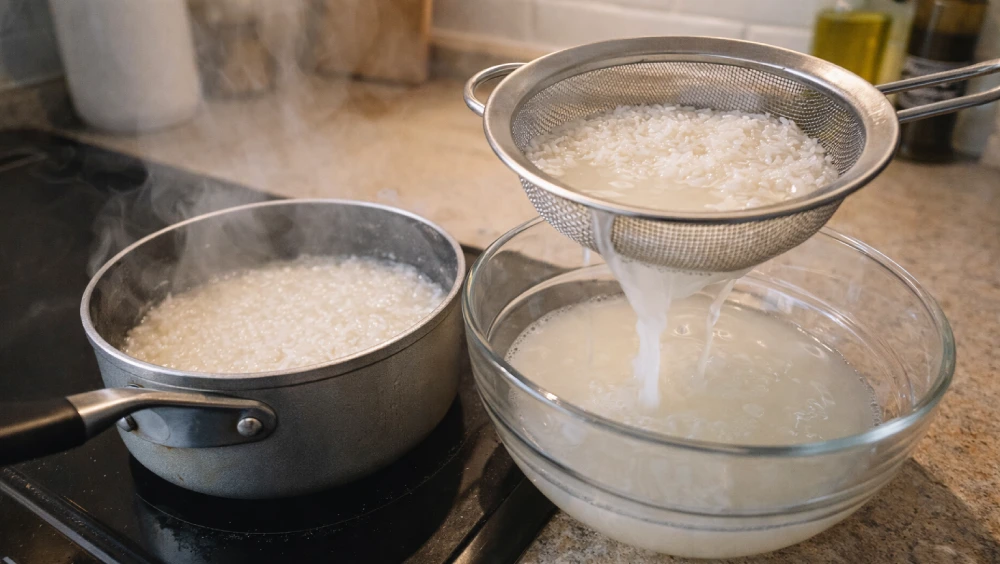
Best for: Oily skin, maximum nutrient extraction
Ingredients:
- ½ cup uncooked rice
- 2 cups water
- 1 teaspoon aloe vera gel (optional)
Steps:
- Rinse rice and place in a pot with 2 cups water
- Bring to a boil, then simmer for 15-20 minutes
- Strain the cloudy water and let it cool completely
- Mix in aloe vera gel for extra hydration
- Transfer to a spray bottle
- Refrigerate and use within 7 days
Note: Boiled rice water is more potent, so dilute with equal parts water if you have sensitive skin.
Method 3: Fermented Rice Water (Korean Method)
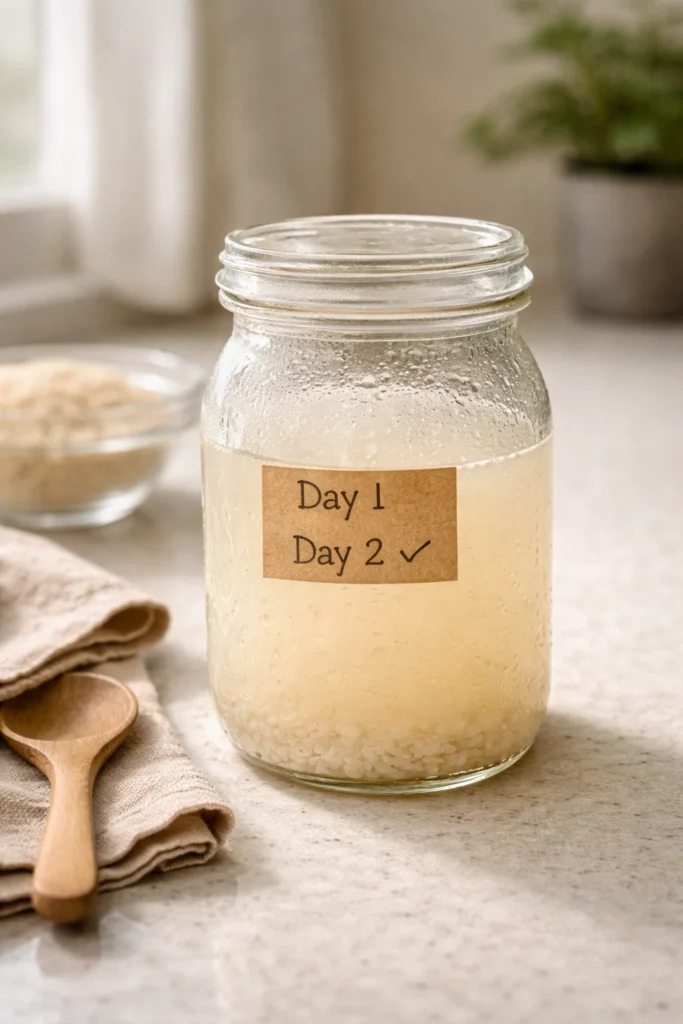
Best for: Anti-aging, brightening, glass skin effect
Ingredients:
- ½ cup uncooked rice
- 1 cup water
- Clean glass jar with lid
Steps:
- Follow soaking method steps 1-4
- Leave strained rice water at room temperature for 24-48 hours
- You’ll notice a slightly sour smell—this indicates fermentation
- Boil the fermented water for 1 minute to stop fermentation
- Cool and dilute with 1 cup fresh water (fermented rice water is very strong)
- Store in refrigerator for up to 2 weeks
Important: Fermented rice water has a pH closer to skin’s natural pH (4.5-5.5), making it more effective. However, the smell can be strong—add a few drops of rose or tea tree essential oil to mask it.
Climate Adaptation for India:
- Summer/Humid regions: Use soaking method; fermentation happens too quickly
- Winter/Dry regions: Boiling method provides extra hydration
- Monsoon season: Add 2-3 drops tea tree oil to prevent bacterial growth
Equipment needed: Clean bowl, strainer, glass bottle or spray bottle, refrigerator
How to Use Rice Water Toner for Face: Step-by-Step
Applying rice water toner correctly maximizes its benefits and prevents common mistakes that reduce effectiveness. Here’s your complete application guide:
Daily Application Technique
Step 1: Cleanse Your Face Start with a clean canvas. Use your regular cleanser to remove makeup, dirt, and oil. Pat dry with a clean towel—don’t rub.
Step 2: Apply Rice Water Toner You have three application options:
- Cotton pad method: Soak a cotton pad and gently swipe across face and neck in upward motions
- Spray method: Mist directly onto face from 6-8 inches away, then pat in
- Palm method: Pour a small amount into palms, press onto face and neck
Step 3: Pat Until Absorbed Gently pat your skin for 30-60 seconds to enhance absorption. Don’t let it air dry completely.
Step 4: Follow with Serum and Moisturizer Apply your regular serums and moisturizer while skin is still slightly damp for better penetration.
Frequency Guidelines
For normal to oily skin:
- Morning and night (twice daily)
- Can be used daily without breaks
For dry or sensitive skin:
- Once daily (preferably at night)
- Start with 3-4 times per week, then increase
For acne-prone skin:
- Once daily initially
- Monitor for any reactions before increasing
Overnight Application
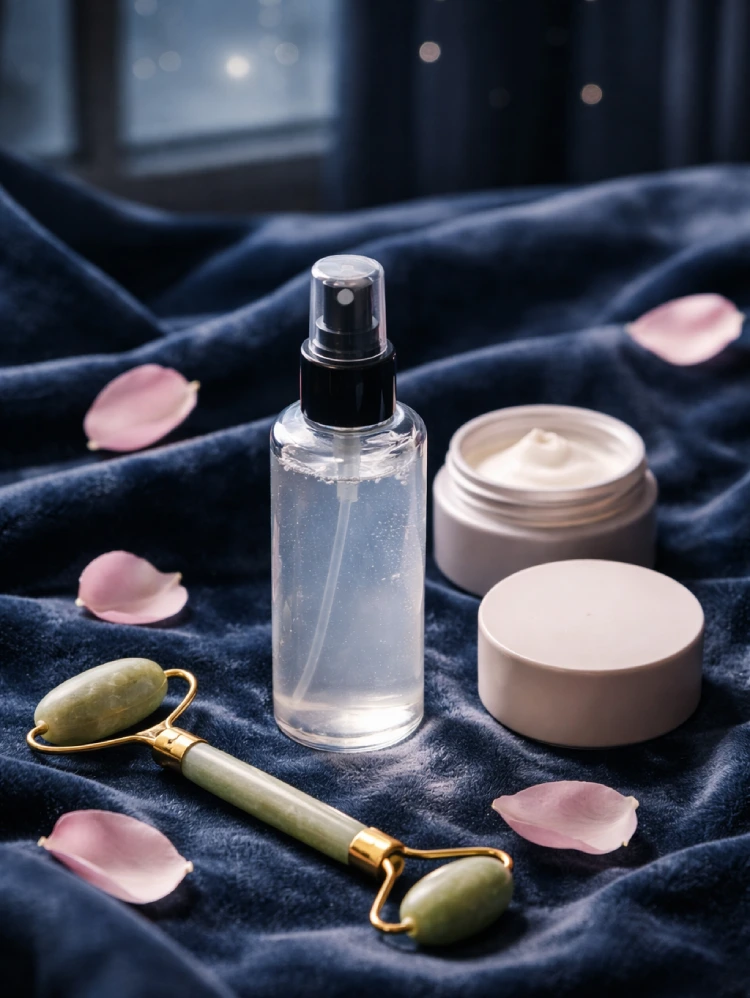
Many users ask: Can I use rice water toner overnight? Yes, but with precautions:
- Apply a thin layer 30 minutes before bed
- Let it absorb completely—don’t sleep with wet skin
- Follow with a light moisturizer to seal in benefits
- Use fermented rice water for overnight application (it’s more stable)
Important: Don’t leave rice water on skin for more than 20 minutes without rinsing if you have sensitive skin. Some people experience irritation from prolonged contact.
Patch Testing (MANDATORY)
Before first use:
- Apply small amount to inner wrist or behind ear
- Wait 24 hours
- Check for redness, itching, or irritation
- If clear, proceed with facial application
Integration with Other Products
Compatible with:
- Hyaluronic acid serums
- Niacinamide
- Vitamin C (use in AM)
- Moisturizers and sunscreen
Use caution with:
- Retinol (apply toner first, wait 20 minutes)
- AHAs/BHAs (may increase sensitivity)
- Prescription treatments (consult dermatologist)
Pro tip: For best results, use rice water toner as the first step after cleansing, before any active ingredients. This preps your skin for better absorption.
How to Store Rice Water Toner (Shelf Life + Fridge Tips)
Proper storage is critical—rice water can spoil quickly, especially in India’s warm climate.
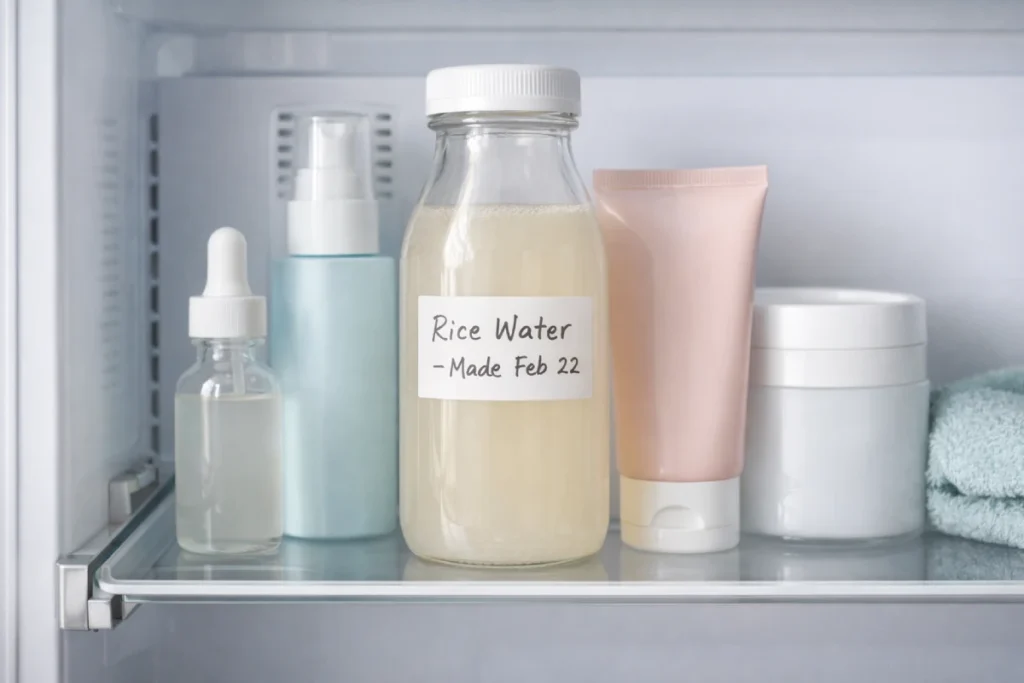
Here’s everything you need to know:
Shelf Life by Method
Soaking method:
- Refrigerated: 5-7 days maximum
- Room temperature: 24 hours only
- Signs of spoilage: Sour smell, cloudiness, mold
Boiling method:
- Refrigerated: 7-10 days
- Room temperature: Not recommended
- Lasts longer due to heat sterilization
Fermented method:
- Refrigerated: 2 weeks (after boiling to stop fermentation)
- Room temperature: 3-4 days before refrigeration
- Most stable option
Storage Best Practices
1. Always Refrigerate Store rice water in the refrigerator immediately after preparation. India’s temperatures (25-40°C) accelerate bacterial growth.
2. Use Glass Containers Avoid plastic bottles that can leach chemicals. Use:
- Glass spray bottles (₹100-200 on Amazon India)
- Amber glass bottles (protect from light)
- Sterilized containers only
3. Label with Date Write preparation date on bottle. Discard after maximum shelf life even if it looks fine.
4. Keep Away from Contamination
- Don’t dip fingers directly into bottle
- Use clean cotton pads or spray application
- Close lid tightly after each use
Preservation Techniques
Natural preservatives you can add:
- Vitamin E oil: 2-3 drops per 100ml (extends life by 3-4 days)
- Tea tree oil: 3-4 drops (antimicrobial properties)
- Grapefruit seed extract: 5-10 drops (natural preservative)
Important: These extend shelf life slightly but don’t replace refrigeration.
Signs Your Rice Water Has Gone Bad
Discard immediately if you notice:
- Foul or overly sour smell (different from fermented smell)
- Visible mold (white, green, or black spots)
- Separation that doesn’t mix when shaken
- Color change to yellow or brown
- Slimy texture
Freezing Rice Water
Yes, you can freeze rice water for extended storage:
- Pour into ice cube trays
- Freeze for up to 3 months
- Thaw one cube at a time in refrigerator
- Use within 3 days after thawing
Pro tip: Freeze in small portions so you’re not repeatedly thawing and refreezing.
Climate-Specific Storage for India
Summer months (March-June):
- Make smaller batches (use within 3-4 days)
- Store in coldest part of refrigerator
- Consider adding tea tree oil for extra protection
Monsoon season (July-September):
- High humidity increases contamination risk
- Use boiled method for longer shelf life
- Check daily for signs of spoilage
Winter months (November-February):
- Can make larger batches
- Still refrigerate—room temperature isn’t safe
Can we store rice water in fridge? Absolutely—it’s mandatory for safety. Room temperature storage is only acceptable for fermented rice water during the initial 24-48 hour fermentation period.
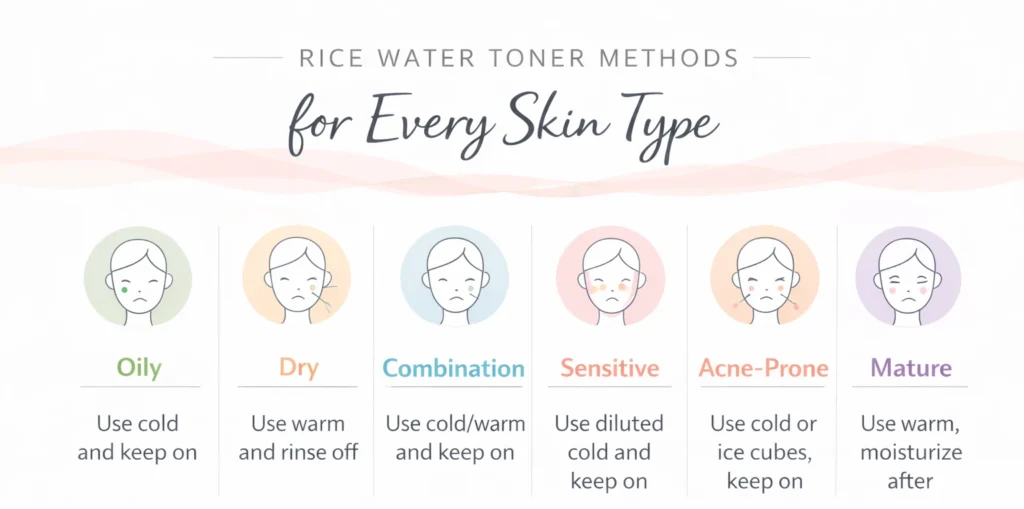
Which Rice Water Toner Method Works for Your Skin Type?
Rice water toner works for most skin types, but application and frequency vary based on your specific needs. Here’s your personalized guide:
Oily Skin
Suitability: Excellent ✓
Benefits:
- Controls excess sebum production
- Tightens enlarged pores
- Mattifies without over-drying
- Reduces shine throughout the day
Recommended method: Boiling method (more astringent)
Frequency: Twice daily (AM and PM)
Pro tip: Use fermented rice water for maximum pore-tightening effect
Dry Skin
Suitability: Very Good ✓
Benefits:
- Provides deep hydration
- Strengthens moisture barrier
- Reduces flakiness and tightness
- Plumps fine lines
Recommended method: Soaking method with aloe vera gel
Frequency: Once daily (preferably PM)
Pro tip: Follow immediately with a rich moisturizer to seal in hydration. Don’t let rice water air dry completely.
Combination Skin
Suitability: Excellent ✓
Benefits:
- Balances oil in T-zone
- Hydrates dry cheeks
- Evens out skin texture
- Minimizes pores selectively
Recommended method: Soaking or boiling method
Frequency: Twice daily
Pro tip: Apply more generously to oily areas, lighter on dry patches
Sensitive Skin
Suitability: Good (with precautions) ⚠
Benefits:
- Soothes inflammation and redness
- Gentle exfoliation without irritation
- Strengthens compromised barrier
- Calms reactive skin
Recommended method: Soaking method (least concentrated)
Frequency: Start 3x per week, increase gradually
Precautions:
- Always patch test for 48 hours
- Dilute with equal parts water initially
- Avoid fermented rice water (too acidic)
- Stop use if any irritation occurs
Acne-Prone Skin
Suitability: Very Good ✓
Benefits:
- Anti-inflammatory properties reduce redness
- Doesn’t clog pores (non-comedogenic)
- Balances pH to prevent breakouts
- Gentle enough for active acne
Recommended method: Boiling method with tea tree oil
Frequency: Once daily initially, then twice daily
Pro tip: Don’t use on open wounds or severe cystic acne without dermatologist approval
Mature/Aging Skin
Suitability: Excellent ✓
Benefits:
- Inositol promotes cell regeneration
- Antioxidants fight free radicals
- Improves elasticity and firmness
- Reduces appearance of fine lines
Recommended method: Fermented rice water (highest inositol content)
Frequency: Twice daily
Pro tip: Combine with retinol at night for enhanced anti-aging benefits
Who Should Avoid Rice Water Toner?
Contraindications:
- Active eczema or psoriasis flare-ups (consult dermatologist first)
- Known rice or grain allergies
- Extremely compromised skin barrier
- Open wounds or severe burns
Disclaimer: If you have any medical skin conditions, consult a dermatologist before incorporating rice water toner into your routine.
Skin Type Matrix
| Skin Type | Method | Frequency | Key Benefit |
|---|---|---|---|
| Oily | Boiling/Fermented | 2x daily | Oil control |
| Dry | Soaking + Aloe | 1x daily | Hydration |
| Combination | Soaking/Boiling | 2x daily | Balance |
| Sensitive | Soaking (diluted) | 3x weekly | Soothing |
| Acne-Prone | Boiling + Tea Tree | 1-2x daily | Anti-inflammatory |
| Mature | Fermented | 2x daily | Anti-aging |
Best Rice Water Toner in India (2026): Ranked by Price & Efficacy
If DIY isn’t your style, several excellent commercial rice water toners are available in India with proven formulations. Here are the top picks:
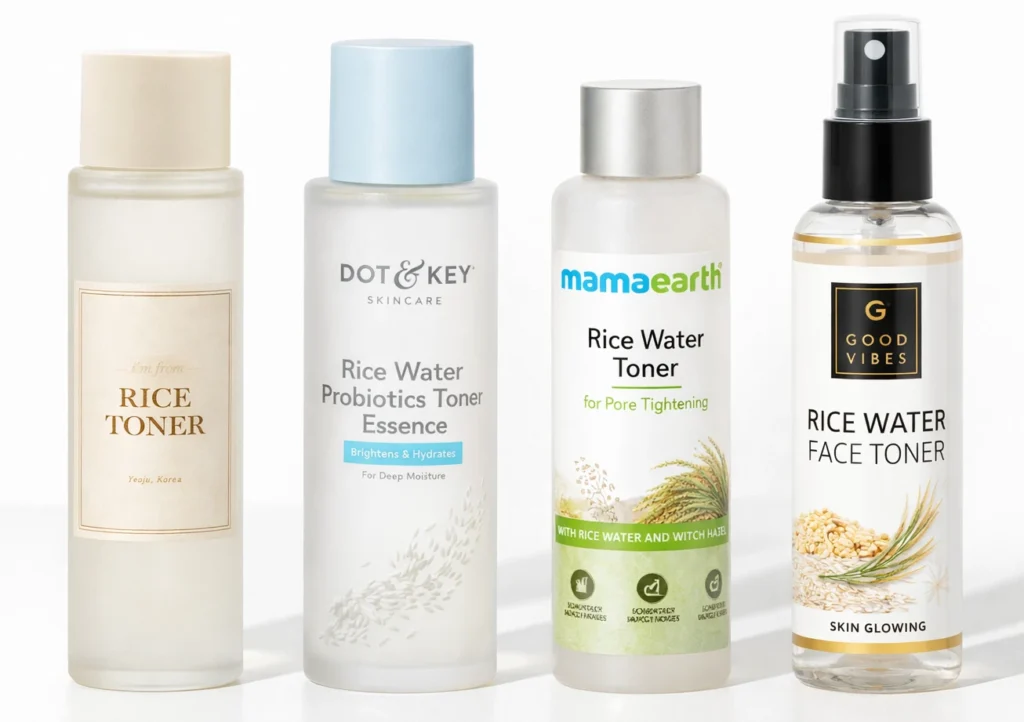
1. I’m From Rice Toner
Price: ₹1,800-2,200 (150ml) on Nykaa
Rice content: 77.78% Goami rice extract (per a 2-month user review of I’m From Rice Toner)
Pros:
- Highest rice concentration available
- Viral K-beauty favorite with proven results
- Brightens and hydrates simultaneously
- Suitable for all skin types
- Milky texture absorbs quickly
Cons:
- Premium pricing
- May be too rich for very oily skin in summer
- Limited availability (often sold out)
Best for: Those seeking maximum efficacy and willing to invest
2. Dot & Key Rice Water Toner
Price: ₹495 (100ml) on Dot & Key website, Nykaa
Key ingredients: Japanese rice water, hyaluronic acid, probiotics
Pros:
- Affordable Indian brand
- Alcohol-free formula
- Added hyaluronic acid for extra hydration
- Widely available online and in stores
- Lightweight texture
Cons:
- Lower rice concentration than I’m From
- Contains fragrance (may irritate sensitive skin)
Best for: Budget-conscious buyers wanting a reliable commercial option
3. Mamaearth Rice Water Toner
Price: ₹349 (150ml) on Mamaearth website, Amazon India
Key ingredients: 96% pure rice water extract, 4% niacinamide
Pros:
- Most affordable option
- High rice water percentage
- Added niacinamide for brightening
- Toxin-free, dermatologically tested
- Easy availability across India
Cons:
- Thinner consistency
- Less luxurious feel than premium brands
- May require more product per application
Best for: First-time users and those on a tight budget
4. Good Vibes Rice Brightening Toner
Price: ₹225 (120ml) on Good Vibes website, Flipkart
Key ingredients: Rice extract, witch hazel
Pros:
- Very affordable
- Minimizes pores effectively
- Removes leftover makeup and impurities
- Balances skin pH
Cons:
- Contains alcohol (may dry out skin)
- Lower rice concentration
- Basic formulation
Best for: Oily skin types needing pore control on a budget
Comparison Table: Commercial Rice Water Toners
| Product | Price (₹) | Rice % | Best For | Pros | Cons |
|---|---|---|---|---|---|
| I’m From Rice Toner | 1,800-2,200 | 77.78% | All skin types | Highest efficacy, viral favorite | Expensive, limited stock |
| Dot & Key | 495 | Moderate | Normal to dry | Hyaluronic acid boost, affordable | Contains fragrance |
| Mamaearth | 349 | 96% | Budget buyers | Niacinamide added, toxin-free | Thin consistency |
| Good Vibes | 225 | Low | Oily skin | Pore minimizing, very cheap | Contains alcohol |
Where to Buy in India
Trusted retailers:
- Nykaa: Widest selection, frequent sales
- Amazon India: Fast delivery, customer reviews
- Brand websites: Direct purchase, authenticity guaranteed
- Flipkart: Competitive pricing
- Purple: Curated K-beauty selection
Pro tip: Watch for sales during Nykaa’s Hot Pink Sale or Amazon’s Great Indian Festival to save 20-40% on premium toners.
Homemade vs. Commercial Rice Water Toner: Full Comparison
Choosing between homemade and store-bought rice water toner depends on your priorities: budget, convenience, and desired results.
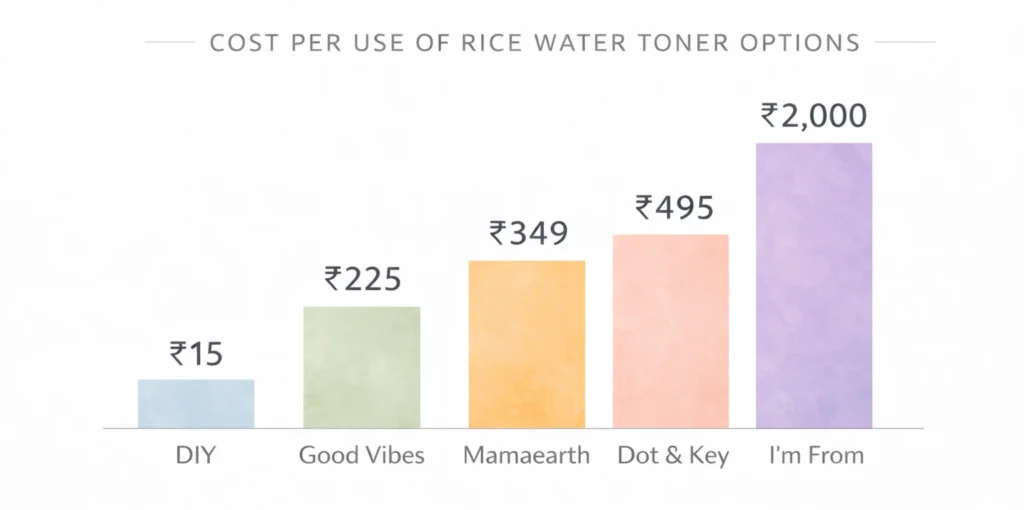
Here’s the complete breakdown:
Cost Comparison (3-Month Supply)
DIY Rice Water Toner:
- Rice (1.5 kg): ₹90
- Glass spray bottle: ₹150 (one-time)
- Optional essential oils: ₹200 (lasts 6+ months)
- Total: ₹440 for 3 months (₹147/month)
Commercial Toner (Mamaearth):
- 150ml bottle: ₹349
- Usage: 2 bottles needed for 3 months
- Total: ₹698 for 3 months (₹233/month)
Commercial Toner (I’m From):
- 150ml bottle: ₹2,000
- Usage: 2 bottles needed for 3 months
- Total: ₹4,000 for 3 months (₹1,333/month)
Savings with DIY: 58-89% compared to commercial options
Time Investment
DIY:
- Preparation: 5-10 minutes
- Frequency: Every 5-7 days
- Monthly time: ~30 minutes
Commercial:
- Preparation: 0 minutes
- Just open and use
Verdict: Commercial wins on convenience, but DIY requires minimal time
Efficacy Comparison
DIY Advantages:
- 100% pure rice water (no fillers)
- Customizable for your skin type
- Fresh batches ensure maximum potency
- Control over ingredients and concentration
Commercial Advantages:
- Stabilized formulations (longer shelf life)
- Added beneficial ingredients (niacinamide, hyaluronic acid)
- Consistent concentration and pH
- Dermatologically tested
- Convenient packaging (spray bottles, pumps)
Research insight: A 2024 study showed 10% hydration increase with rice water gel after 28 days (according to a 2024 MDPI study on rice water’s antioxidant activity). Both DIY and quality commercial products can deliver similar results.
Decision Matrix
Choose DIY if you:
- Want maximum cost savings
- Enjoy making your own skincare
- Have time for weekly preparation
- Prefer 100% natural ingredients
- Want to customize formulations
- Have access to refrigeration
Choose Commercial if you:
- Value convenience over cost
- Travel frequently
- Want longer shelf life
- Prefer tested formulations
- Don’t have time for DIY
- Want added active ingredients
Hybrid Approach (Best of Both Worlds)
Many users successfully combine both:
- Use DIY toner at home (morning routine)
- Keep commercial toner for travel and nights out
- Make DIY in winter, buy commercial in summer (spoilage concerns)
Pro tip: Start with DIY to test if rice water works for your skin. If you see results but find preparation tedious, invest in a quality commercial product.
Frequently Asked Questions
Is rice water toner good for your face?
Yes, rice water toner is excellent for your face and offers multiple scientifically-proven benefits. Research published in MDPI (2024) shows rice water increases skin hydration by 10% after 28 days and reduces oxidative stress by 80%.. It brightens skin, minimizes pores, provides antioxidant protection, and soothes inflammation. The vitamins, minerals, and amino acids in rice water nourish skin without harsh chemicals. It’s suitable for most skin types including sensitive skin, though you should always patch test first. Board-certified dermatologist Dr. Hadley King confirms that rice water ‘helps to seal in moisture and contains enzymes that help exfoliate and brighten the skin.’
How to make rice water as a toner?
Making rice water toner is simple: rinse ½ cup rice, soak it in 1 cup water for 30 minutes to 2 hours, then strain the milky liquid into a clean bottle. For best results, use distilled or filtered water and store in the refrigerator for up to 5-7 days. You can enhance it by adding 2-3 drops of essential oil or 1 teaspoon aloe vera gel. For a more potent version, try the boiling method (simmer rice in water for 15-20 minutes) or fermented method (let strained rice water sit at room temperature for 24-48 hours). Always use clean, sterilized containers and refrigerate immediately after preparation to prevent spoilage.
How do I apply toner correctly?
Apply rice water toner immediately after cleansing by soaking a cotton pad and gently swiping it across your face and neck in upward motions. Alternatively, pour a small amount into your palms and press it onto your skin, or use a spray bottle to mist your face from 6-8 inches away. Pat your skin for 30-60 seconds to enhance absorption—don’t let it air dry completely. Follow with your regular serums and moisturizer while skin is still slightly damp for better penetration. For normal to oily skin, use twice daily (morning and night). For dry or sensitive skin, start with once daily or 3-4 times per week, then increase frequency as your skin adjusts.
What are the disadvantages of rice toner?
Rice water toner has few disadvantages, but potential issues include short shelf life (5-7 days refrigerated), risk of bacterial contamination if not stored properly, and possible irritation for those with rice allergies. Some people with very sensitive skin may experience redness or itching, especially with fermented rice water which has a lower pH. The DIY version requires regular preparation and refrigeration, which can be inconvenient. Homemade rice water can also develop an unpleasant smell if it spoils. To minimize risks, always patch test before full application, store in the refrigerator, use within recommended timeframes, and discontinue use if any irritation occurs. People with eczema, psoriasis, or compromised skin barriers should consult a dermatologist before use.
Can I use rice toner every day?
Yes, you can safely use rice water toner every day—it’s gentle enough for daily application and won’t cause irritation for most skin types. For normal to oily skin, twice-daily use (morning and night) is ideal and helps control sebum production while maintaining hydration. If you have dry or sensitive skin, start with once daily or 3-4 times per week, then gradually increase frequency as your skin builds tolerance. Research shows that consistent daily use over 28 days produces the best results, including a 10% increase in skin hydration. However, always listen to your skin—if you notice any dryness, redness, or irritation, reduce frequency or dilute the toner with water.
How long should I leave rice water on my skin?
You don’t need to rinse rice water toner off—leave it on your skin and follow immediately with your regular serums and moisturizer. As a toner, rice water is designed to be absorbed into your skin, not washed away. Apply it after cleansing, pat gently for 30-60 seconds until mostly absorbed, then proceed with the rest of your skincare routine. If you’re using rice water as a face mask (a thicker application), you can leave it on for 15-20 minutes before rinsing. For overnight use, apply a thin layer 30 minutes before bed and let it absorb completely—don’t sleep with wet skin. If you have sensitive skin and experience any tingling, rinse after 10-15 minutes during your first few applications.
Can I use rice water as a toner?
Absolutely—rice water works excellently as a toner and has been used this way in Asian beauty routines for centuries. Its natural astringent properties help tighten pores, balance skin pH, and prep your face for better absorption of subsequent skincare products. Rice water contains inositol, ferulic acid, amino acids, and vitamins that provide the same benefits as commercial toners—hydration, brightening, and antioxidant protection—without harsh chemicals or alcohol. You can use it exactly like any other toner: apply after cleansing and before serums/moisturizers. Both homemade and commercial rice water toners are effective, with research confirming significant skin benefits including improved hydration and reduced oxidative stress.
How long can rice water be stored in the fridge?
Rice water can be stored in the refrigerator for 5-7 days when made using the soaking method, 7-10 days with the boiling method, and up to 2 weeks for fermented rice water. Always use clean, sterilized glass containers and refrigerate immediately after preparation. India’s warm climate makes refrigeration mandatory—never store rice water at room temperature for more than 24 hours as it will spoil quickly. Signs of spoilage include a foul smell (different from the natural fermented smell), visible mold, color changes, or slimy texture. For longer storage, you can freeze rice water in ice cube trays for up to 3 months, then thaw individual cubes as needed. Label your container with the preparation date and discard after the maximum shelf life even if it appears fine.
References & Sources
This article is grounded in peer-reviewed research and expert dermatology sources:
- MDPI Cosmetics (2024) — Rice Water Skin Benefits: Antioxidant Activity, Hydration & Safety Study — Peer-reviewed research confirming 10% hydration increase and 80% ROS reduction
- Allure Magazine — Best Rice Toners, Expert-Reviewed — Dr. Hadley King, Board-Certified Dermatologist at Schweiger Dermatology Group
- Healthline — Rice Water for Skin: Benefits and How to Use — Evidence review on historical and modern use
- Medical News Today — Rice Water for Skin — Clinical overview
- Kanvas Beauty — I’m From Rice Toner 2-Month Review — Product-specific user testing
Last reviewed: February 2026
Start Your Rice Water Routine: Quick-Start Checklist
Whether you’re a beginner or upgrading your skincare game, here’s your action plan:
If you’re trying rice water for the first time:
✅ Use soaking method (simplest, mildest)
✅ Patch test on inner wrist for 24 hours
✅ Apply once daily for first 2 weeks
✅ Store in glass bottle in refrigerator; use within 5 days
If you’ve already tried it and want better results:
✅ Switch to fermented method for glass skin effect
✅ Pair with Vitamin C (morning) + niacinamide (evening)
✅ Use overnight 3–4x weekly for accelerated brightening
✅ Consider I’m From Rice Toner for a commercial-grade option
Budget summary:
- DIY batch: ₹15–20 (lasts 5–7 days)
- Best budget commercial: Good Vibes at ₹225
- Best results: I’m From Rice Toner at ₹1,800–2,200