





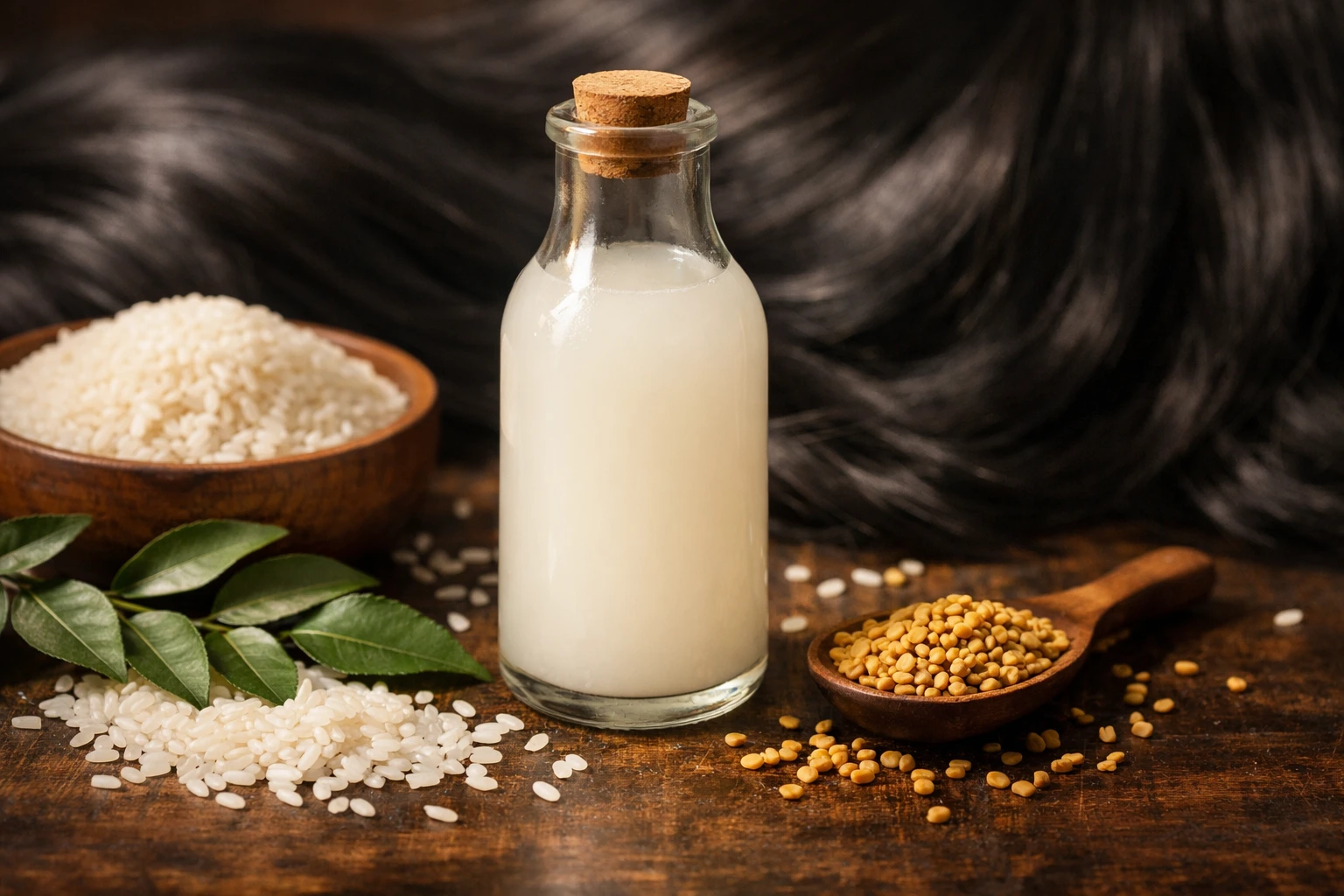
Rice water for hair has exploded from an ancient Asian beauty secret to a global haircare phenomenon, with the market reaching ₹10,800 crores (USD 1.30 billion) in 2024. But does this milky-white liquid really deliver on its promises of stronger, shinier, faster-growing hair? If you’re tired of hair fall, dullness, or slow growth, you’ve probably wondered whether rice water is the answer—or just another overhyped trend.
Here’s the truth: rice water contains amino acids, vitamins B and E, minerals, and a unique antioxidant called inositol that can strengthen hair strands and improve elasticity. However, scientific evidence on hair growth remains limited, and improper use can actually damage your hair.
This guide cuts through the noise with evidence-based insights, step-by-step DIY recipes tailored for Indian hair types, realistic results timelines, and expert warnings about side effects.
Whether you’re dealing with monsoon frizz in Mumbai or dry scalp in Delhi, you’ll learn exactly how to make, use, and store rice water safely—plus how homemade versions compare to commercial sprays and shampoos flooding Indian markets.
What Is Rice Water for Hair & How Does It Actually Work?
Rice water is the starchy, milky liquid left behind after soaking or boiling rice—and it’s packed with nutrients that can benefit your hair. When you rinse rice, the water absorbs vitamins (B, C, E), minerals (magnesium, manganese, zinc), amino acids, and a carbohydrate called inositol that penetrates damaged hair shafts and repairs them from within.
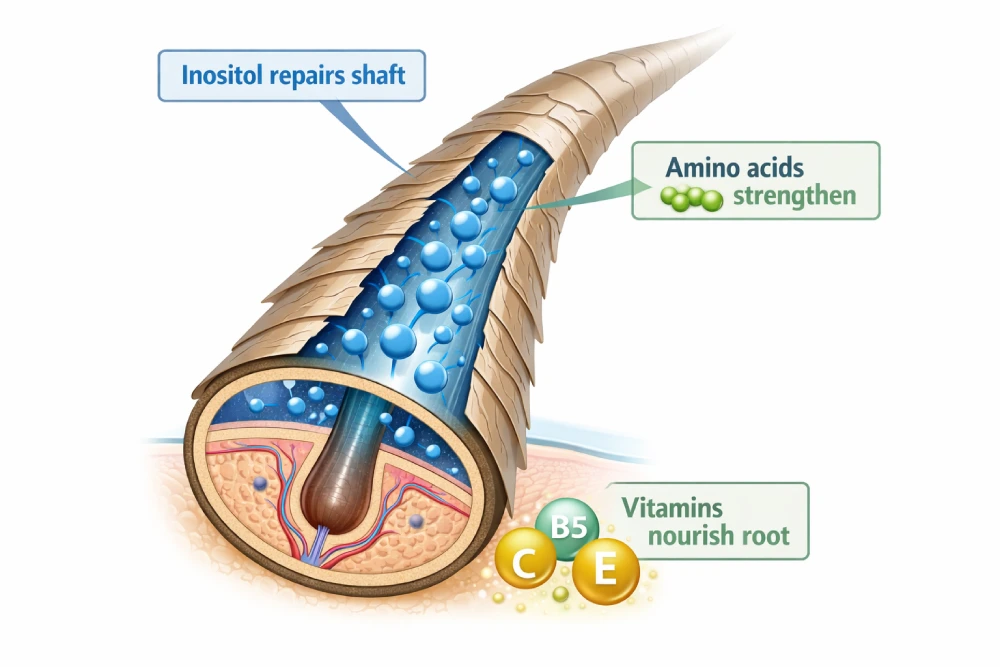
Here’s how rice water works on your hair:
- Inositol (the star ingredient): This antioxidant remains inside hair even after rinsing, creating a protective shield that reduces surface friction and prevents future damage. Dr. Shilpi Khetarpal, a board-certified dermatologist at Cleveland Clinic, explains: ‘Rice water contains an antioxidant called inositol, which is considered to be a hair rejuvenator.’
- Amino acids: These protein building blocks strengthen hair strands, reduce breakage, and improve elasticity—crucial for Indian hair exposed to harsh sun, pollution, and chemical treatments.
- Starch: Acts as a natural conditioner, smoothing the hair cuticle and adding shine without weighing hair down.
- Vitamins and minerals: Support scalp health, reduce inflammation, and create an optimal environment for hair growth.
The traditional method comes from the Yao women of Huangluo village in China, famous for their floor-length hair that stays dark well into old age. They’ve used fermented rice water (called Yu-Su-Ru) for centuries. While this cultural practice is compelling, it’s important to note that individual results vary based on hair type, porosity, and existing damage.
Important: Rice water isn’t a miracle cure. It works best as a complementary treatment alongside a healthy diet, proper hair care routine, and addressing underlying issues like nutritional deficiencies or hormonal imbalances.
Rice Water for Hair Growth: What Science Actually Says
The honest answer: There’s limited scientific research specifically proving rice water causes hair growth, but existing studies show promising benefits for hair strength and damage repair. Let’s separate myth from reality.
What the research shows:
A 2010 study published in the International Journal of Cosmetic Science found that inositol (the key compound in rice water) can penetrate hair shafts and remain inside even after rinsing, providing ongoing protection against damage. However, this study didn’t specifically measure hair growth rates.
The Wimpole Clinic’s clinical review states: ‘Unfortunately, there is no scientific evidence to support any hair growth effect of rice water hair treatments at this time’ (as the Wimpole Clinic’s clinical review concludes).
What rice water CAN do (backed by evidence):
- Reduce breakage: By strengthening hair strands and improving elasticity
- Improve shine and smoothness: The starch coating reflects light better
- Repair surface damage: Inositol fills in gaps in damaged cuticles
- Reduce friction: Less tangling means less mechanical breakage during combing
The growth connection: Here’s the nuance—rice water doesn’t make hair grow faster from the follicle, but by preventing breakage and improving retention length, you’ll notice longer hair over time. It’s about keeping the hair you grow, not accelerating the growth cycle itself.
Expert caution: Dr. Ronda Farah, Associate Professor of Dermatology at University of Minnesota Medical School, warns: ‘Just because you like that person’s hair, that does not mean the method they use is going to work on your hair’ (per Dr. Ronda Farah, University of Minnesota Dermatology).
Bottom line: Rice water is a legitimate hair-strengthening treatment with centuries of traditional use and some scientific backing for damage repair. But if you’re expecting dramatic growth in 7 days, you’ll be disappointed. Realistic expectations are key.
7 Rice Water Benefits for Hair: What’s Proven, What’s Not
Rice water offers multiple proven benefits that go far beyond the growth hype—here’s what you can realistically expect:
1. Enhanced Shine and Smoothness The starch in rice water coats each hair strand, creating a reflective surface that makes hair look glossier. This is especially noticeable on dull, chemically-treated hair common in Indian salons.
2. Reduced Hair Fall and Breakage By strengthening the hair shaft and improving elasticity, rice water helps hair withstand daily stress from combing, styling, and environmental damage. With 86.4% of surveyed users reporting visible hair loss (per a Dermatology Times analysis of 1 million users), strengthening treatments are crucial.
3. Improved Manageability Rice water acts as a natural detangler, reducing friction between strands. This means less breakage during combing and easier styling—a game-changer for thick, coarse Indian hair.
4. Frizz Control The smoothing effect helps seal the cuticle, reducing moisture loss and controlling frizz—particularly helpful during monsoon season.
5. Scalp Health The vitamins and minerals in rice water can soothe irritated scalps and reduce inflammation, though it’s not a treatment for conditions like dandruff or psoriasis.
6. Natural Conditioning Unlike heavy commercial conditioners that can build up on hair, rice water provides lightweight conditioning that doesn’t weigh hair down.
7. Damage Repair Inositol penetrates damaged areas of the hair shaft, filling in gaps and preventing further splitting—especially beneficial for heat-damaged or chemically-treated hair.
How to Make Rice Water for Hair: 3 Methods (Soaking, Boiling & Fermented)
Making rice water at home is simple, but the method you choose affects the nutrient concentration and effectiveness. Here are three proven techniques:
Method 1: Soaking (Easiest for Beginners)
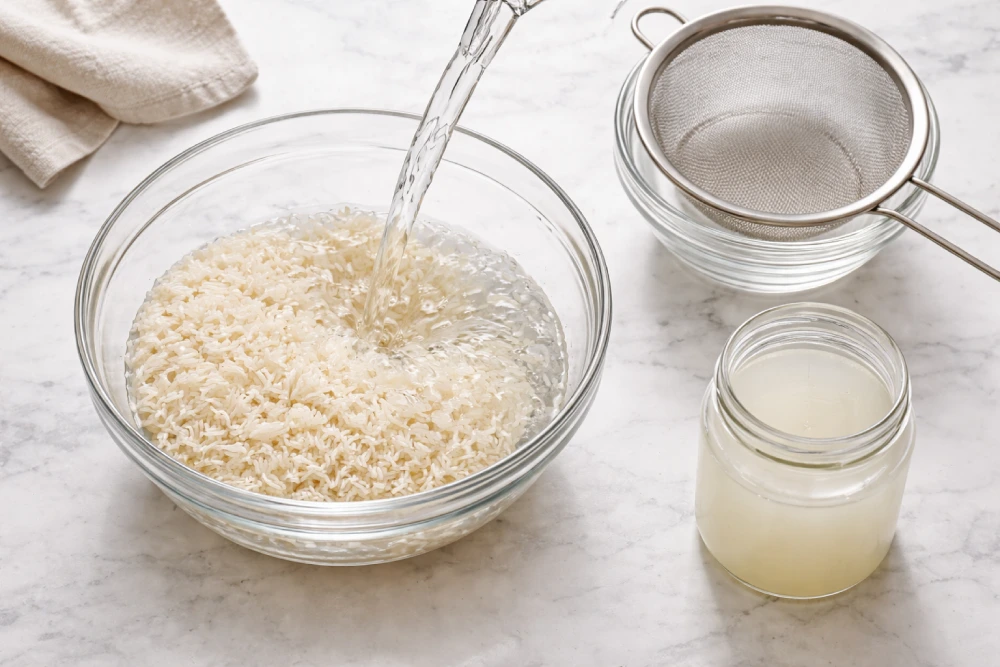
- Take ½ cup of uncooked rice (basmati, sona masoori, or any variety available in India)
- Rinse thoroughly to remove dirt and impurities
- Place rice in a bowl with 2-3 cups of water
- Let it soak for 30 minutes at room temperature
- Swirl and squeeze the rice to release nutrients
- Strain the milky water into a clean container
- Use immediately or refrigerate for up to 5 days
Method 2: Boiling (Highest Concentration)
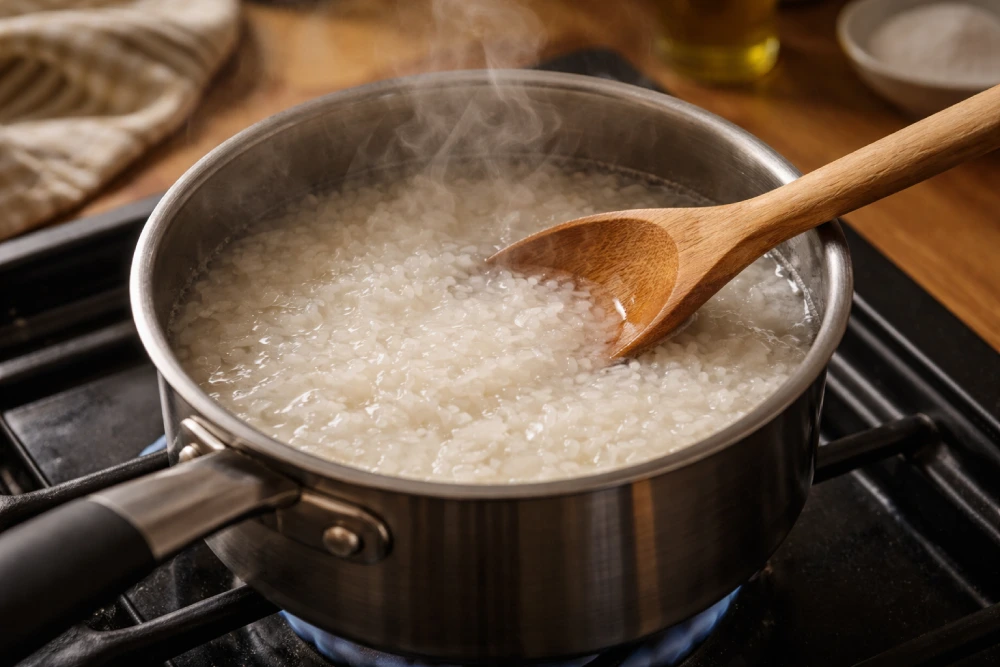
- Take ½ cup rice and rinse well
- Boil in 3 cups of water (more than you’d normally use for cooking)
- Once rice is cooked, strain the excess water
- Let it cool completely before use
- Dilute with 1-2 cups of plain water (boiled rice water is very concentrated)
- Store in the fridge for up to 1 week
Method 3: Fermentation (Most Potent—Traditional Yao Method)
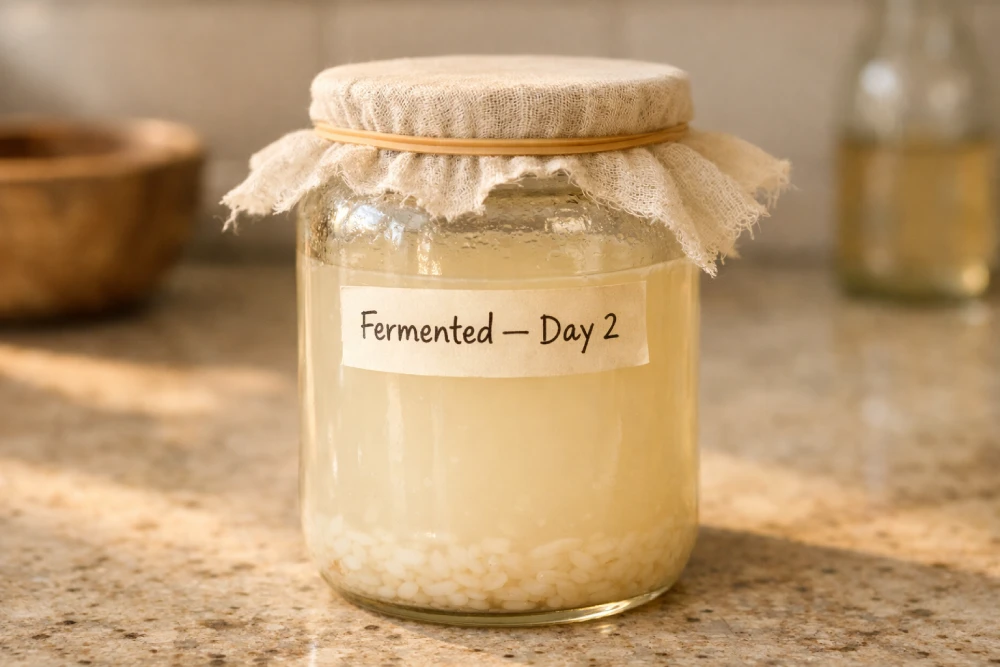
- Follow the soaking method above
- Instead of using immediately, leave the strained rice water at room temperature for 24-48 hours
- You’ll notice a slightly sour smell—this means fermentation has occurred
- The pH drops, making it closer to your hair’s natural pH (4.5-5.5)
- Dilute with 1-2 cups of water before use (fermented rice water is strong)
- Store in the fridge for up to 1 week
Which rice is best? Any rice works, but here’s the breakdown:
- Basmati/Sona Masoori (white rice): Most commonly used, good starch content
- Brown rice: Higher in vitamins and minerals but takes longer to release nutrients
- Sticky rice: Highest starch content, creates thicker rice water
DIY Boost Recipes for Indian Hair:
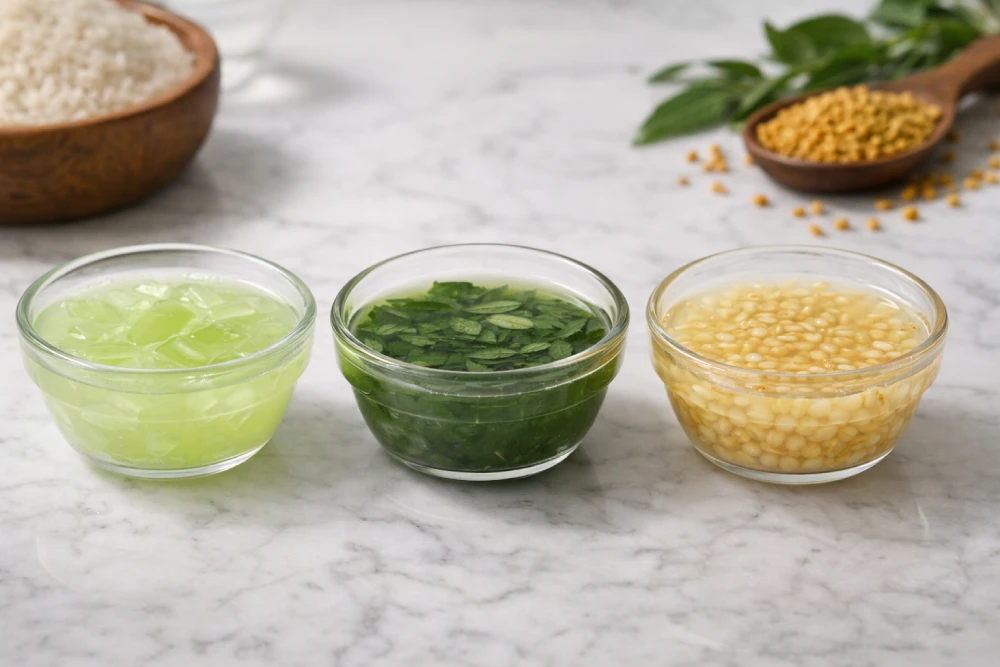
1. Rice Water + Aloe Vera (for dry, damaged hair): Mix 1 cup rice water with 4-5 tablespoons fresh aloe vera gel. Blend until smooth. Apply as a mask for 20 minutes.
2. Rice Water + Curry Leaves (for hair fall): Boil 10-12 curry leaves in your rice water for 5 minutes. Strain and cool. The vitamins in curry leaves complement rice water’s strengthening effects.
3. Rice Water + Fenugreek (for growth): Soak 2 tablespoons fenugreek seeds in rice water overnight. Blend into a paste and use as a scalp mask.
Storage tips: Always use clean containers, refrigerate after making, and discard if you notice any off smell or mold.
How to Make a Rice Water Hair Spray (Step-by-Step)
A rice water hair spray is the easiest way to make rice water part of your daily routine — no mess, no bowls, no waiting. Here’s exactly how to make one:
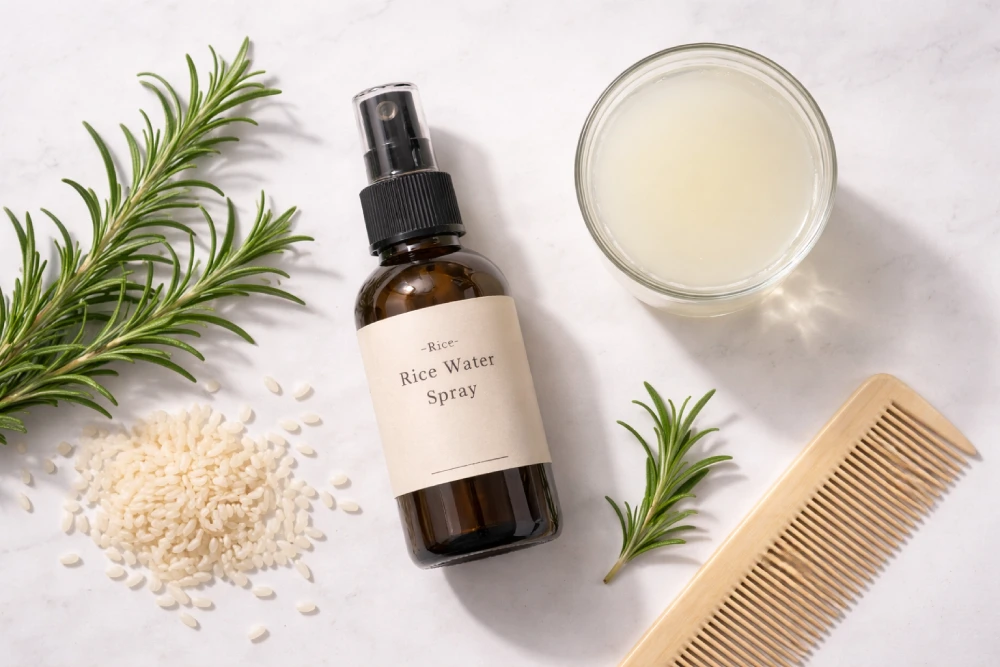
What You Need:
- 1 cup soaked or boiled rice water (cooled completely)
- 1 small spray bottle (100–150ml, preferably dark glass)
- Optional: 2 drops rosemary essential oil (boosts scalp circulation), 2 drops lavender (adds fragrance)
Steps:
- Strain your rice water thoroughly — any rice particles will clog the spray nozzle
- Pour cooled rice water into the spray bottle using a small funnel
- Add essential oils if desired; shake gently to combine
- Label with preparation date
- Store in the refrigerator; shake before each use
How to Use the Spray:
- Dilute before spraying: mix 1 part rice water with 2 parts plain water directly in the bottle
- Section dry or damp hair and spray lightly on lengths and ends
- Avoid the scalp unless you have a dry scalp issue — for oily scalp, keep it on strands only
- Gently comb through; do not rinse
- Use maximum 3 times per week
Pro Tip for Indian Climate:
- Summer (March–June): Use within 3 days even when refrigerated
- Monsoon (July–Sept): Make fresh batches every 2 days — humidity accelerates spoilage
- Winter (Oct–Feb): Safe for 5–6 days refrigerated
How to Use Rice Water for Hair: Rinse, Spray & Mask Methods
The application method matters as much as the preparation—here’s how to use rice water correctly for maximum benefits without damage:
Method 1: Hair Rinse (Most Popular)
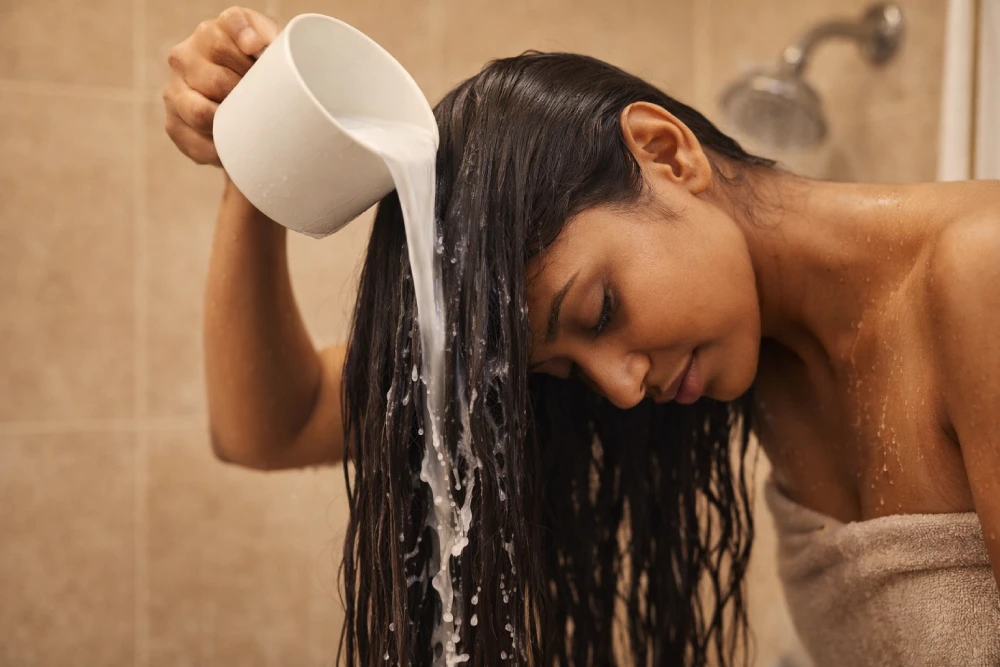
- Shampoo your hair as usual and rinse thoroughly
- Pour rice water over your hair, ensuring it saturates from roots to tips
- Gently massage your scalp for 2-3 minutes
- Leave on for 10-20 minutes (don’t exceed 30 minutes)
- Rinse with cool or lukewarm water
- Follow with a light conditioner on the ends if needed
Method 2: Spray Application (For Daily Use)
- Pour rice water into a clean spray bottle
- Spritz onto dry or damp hair, focusing on lengths and ends
- Don’t rinse out—leave it in
- Style as usual
- Use 2-3 times per week maximum
Method 3: Hair Mask (For Deep Treatment)
- Apply rice water to clean, damp hair
- Cover with a shower cap
- Leave on for 20-30 minutes
- Rinse thoroughly with cool water
- Use once a week for intensive treatment
Frequency Guidelines (CRITICAL):
- Normal hair: 1-2 times per week
- Dry/damaged hair: Once per week (rice water can be drying)
- Oily hair: 2 times per week (rice water can help balance oil)
- Fine hair: Once per week (too much protein can make hair stiff)
For Oily Hair (Common Question): Yes, you can use rice water on oily hair! The starch can actually help absorb excess oil. Apply mainly to lengths and ends, use the rinse method, and don’t leave it on too long. Some users in humid cities like Kolkata and Chennai report better oil control with rice water rinses.
Do you wash hair after rice water? If you use it as a rinse or mask, yes—rinse with plain water after 10-30 minutes. If you use it as a leave-in spray, no rinsing needed, but use sparingly.
Pro tips:
- Always do a patch test first (apply to a small section and wait 24 hours)
- Don’t use rice water on the same day as protein treatments or hair color
- If your hair feels stiff or dry after use, you’re using it too often or leaving it on too long
- Dilute fermented rice water more than regular rice water—it’s very potent
Can We Apply Rice Water on Oily Hair?
Yes — and it might actually help. Here’s what oily-hair users in India need to know:
Rice water’s natural astringent properties help balance sebum production without stripping hair. The starch absorbs excess oil at the scalp surface, similar to how dry shampoo works — but gentler and without buildup risk if used correctly.
For Oily Hair Specifically:
- Best method: Simple soaking method (not fermented — too potent for already-reactive scalps)
- Application: Focus on lengths and ends; apply to the scalp only once a week maximum
- Leave-on time: 10–15 minutes only; rinse thoroughly with cool water
- Frequency: 2x per week for lengths, 1x per week for scalp
- Best addition: Mix 1 teaspoon apple cider vinegar into your rice water rinse — the mild acidity helps remove oil buildup and balances scalp pH
What to avoid if you have oily hair:
- Fermented rice water on the scalp (too acidic, can trigger more oil production)
- Leaving rice water on overnight (starch builds up, attracts more dirt)
- Using commercial rice water products that contain silicones or heavy oils — defeats the purpose
City-specific note: Users in Mumbai, Chennai, and Kolkata (high humidity) report best results using rice water right before shampooing, rather than as a post-shampoo rinse — it helps lift oil from the scalp when shampooed out.
Rice Water for Hair Growth Results: Realistic Week-by-Week Timeline
Let’s set realistic expectations—rice water isn’t a magic potion, and results vary based on your hair’s starting condition, porosity, and how consistently you use it.
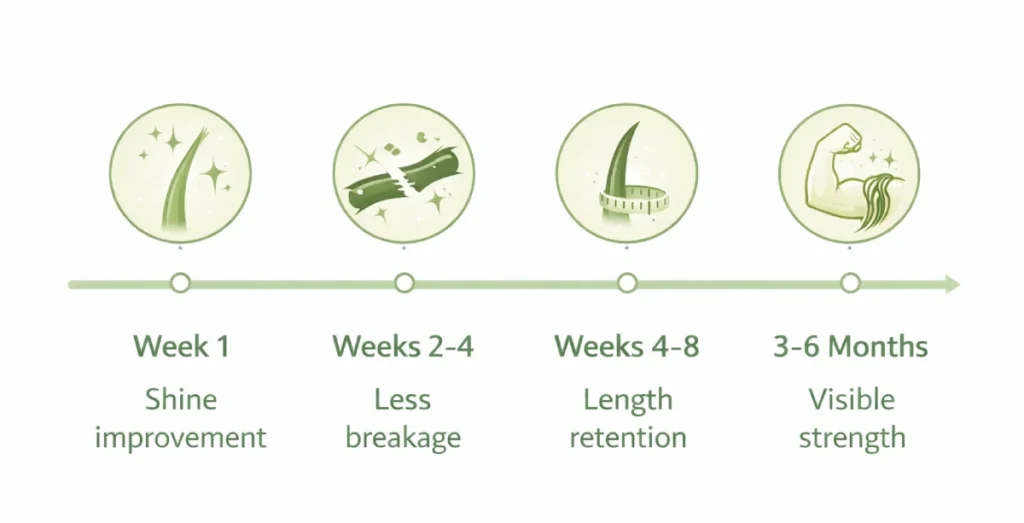
Week 1: Initial Changes
- Improved shine and smoothness (most noticeable benefit)
- Easier detangling and manageability
- Hair feels slightly thicker to the touch
- Some users notice reduced frizz
Weeks 2-4: Strengthening Phase
- Less breakage during combing and styling
- Reduced hair fall in the shower and on your pillow
- Improved elasticity (hair stretches without snapping)
- Ends look healthier with less splitting
Weeks 4-8: Visible Improvements
- Noticeable increase in hair length retention (not faster growth, but less breakage)
- Overall hair looks fuller and healthier
- Scalp feels more balanced
- Consistent shine and smoothness
3-6 Months: Long-Term Benefits
- Maximum strengthening effects
- Significant reduction in split ends
- Hair appears longer due to better retention
- Improved overall hair health
Reality check on ‘7-day results’: You’ll see some improvement in shine and texture within a week, but dramatic growth or transformation in 7 days is unrealistic. Hair grows about 1-1.5 cm per month on average—rice water can’t change your biological growth cycle.
Before-and-after expectations:
- Best results: Fine to medium hair with mild damage
- Moderate results: Thick, coarse hair (may need more frequent use)
- Limited results: Severely damaged hair (needs professional treatment first)
- Possible negative results: Low-porosity hair or protein-sensitive hair (can become stiff)
Important: If you don’t see any improvement after 8 weeks, rice water might not be right for your hair type. Consider consulting a dermatologist or trichologist.
Side Effects of Rice Water on Hair: How to Avoid Protein Overload
Rice water isn’t risk-free—improper use can actually damage your hair. Here’s what you need to know to avoid common pitfalls:
Potential Side Effects:
1. Protein Overload (Most Common Issue) Rice water is rich in protein. Too much protein makes hair stiff, brittle, and prone to breakage. Signs include:
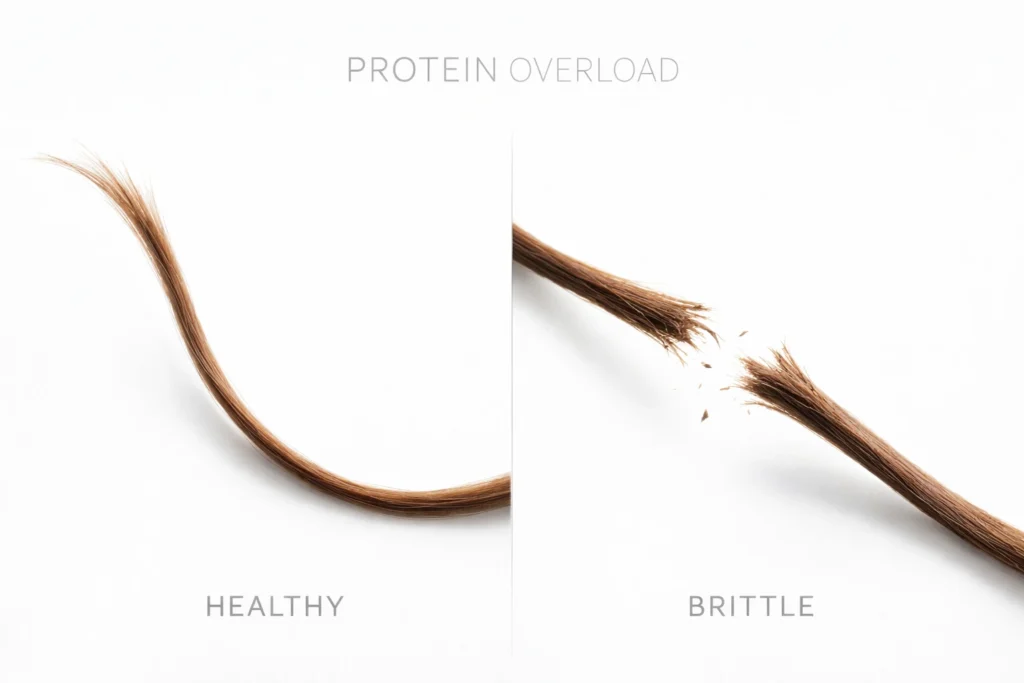
- Hair feels dry and straw-like
- Increased breakage despite treatment
- Hair won’t hold moisture
- Tangles more than before
Solution: Reduce frequency to once every 2 weeks and alternate with deep moisturizing treatments.
2. Dryness and Flaking Fermented rice water has a low pH that can be drying if overused. Some users experience scalp flaking or itchiness.
Solution: Always dilute fermented rice water, don’t leave it on longer than 20 minutes, and follow with a moisturizing conditioner.
3. Buildup The starch in rice water can accumulate on hair over time, making it look dull and feel heavy.
Solution: Use a clarifying shampoo once a month to remove buildup. Don’t use rice water more than twice weekly.
4. Unpleasant Smell Fermented rice water has a sour, pungent smell that some find off-putting.
Solution: Add a few drops of essential oil (lavender, rosemary, or peppermint) to mask the smell. The scent fades after rinsing.
Can too much rice water damage your hair? Yes! Daily use or leaving it on for hours can lead to protein overload, dryness, and breakage. More isn’t better with rice water.
Common Mistakes to Avoid:
- Using it every day: This is the #1 mistake. Even if you see good results initially, daily use will eventually cause protein overload
- Not diluting fermented rice water: It’s very concentrated and can be harsh
- Skipping the rinse: Always rinse rice water out unless using a very diluted spray
- Using on low-porosity hair too often: Low-porosity hair doesn’t absorb protein well, leading to surface buildup
- Expecting it to cure hair loss: Rice water strengthens existing hair but won’t treat medical conditions like alopecia or hormonal hair loss
- Not patch testing: Some people are sensitive to rice proteins
When to stop using rice water:
- If your hair becomes increasingly dry or brittle
- If you develop scalp irritation or redness
- If you notice more breakage than before
- If your hair feels coated or heavy
Disclaimer: Rice water is a cosmetic treatment, not a medical solution. If you’re experiencing severe hair loss, thinning, or scalp conditions, consult a dermatologist or trichologist before relying on home remedies.
How to Wash Hair with Rice Water (Complete Shampoo + Rinse Routine)
Many people confuse “using rice water” with “washing hair with it.” Here’s the exact difference and how to incorporate it into your full wash day routine:
Full Rice Water Wash Day Routine:
Step 1: Pre-Shampoo Treatment (15–20 mins)
- Mix rice water with 1 tablespoon coconut oil
- Apply to scalp and lengths; massage scalp for 3–5 minutes
- Leave for 15–20 minutes (no longer)
Step 2: Shampoo Normally
- Use a mild, sulphate-free shampoo
- The shampoo will remove excess rice water starch so there’s no buildup
Step 3: Rice Water Rinse (Post-Shampoo)
- After conditioning and rinsing your conditioner out, do a final rice water rinse
- Pour diluted rice water (1:1 with plain water) over hair from roots to tips
- Gently massage through strands
- Leave for 3–5 minutes
- Rinse with cool water — cool water seals the cuticle and boosts shine
Step 4: Air Dry or Blow Dry
- Pat gently with a microfiber towel — don’t rub
- If blow drying, use medium heat; rice water temporarily increases protein in strands, so high heat can cause brittleness
Frequency: Do this complete routine once per week. Do not use rice water at both the pre-shampoo AND rinse stage in the same wash — this doubles protein exposure and leads to overload.
Can you use rice water as shampoo?
Not directly — it lacks the cleansing agents (surfactants) needed to remove oil and dirt effectively. Some commercial rice water shampoos (like Naturali) add mild surfactants to address this. Homemade rice water is best used as a rinse or mask, not a shampoo replacement.
Best Rice Water Products in India vs. Homemade: Honest Comparison
With the rice water haircare market in India booming (part of the global ₹10,800 crore industry), should you make it at home or buy ready-made products? Here’s an honest comparison.
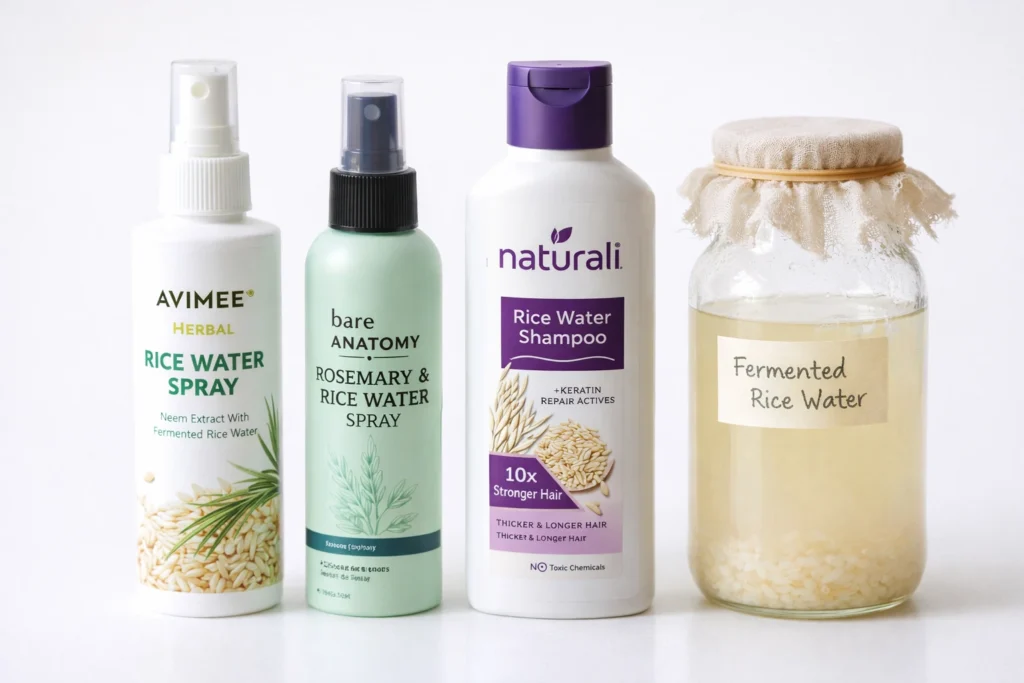
Homemade Rice Water:
Pros:
- Cost-effective (₹5-10 per batch)
- No preservatives or additives
- You control the concentration and ingredients
- Fresh nutrients
- Can customize with herbs like curry leaves or fenugreek
Cons:
- Time-consuming to prepare
- Short shelf life (5-7 days refrigerated)
- Inconsistent concentration
- Fermentation can be tricky
- Unpleasant smell
Commercial Rice Water Products:
Pros:
- Convenient and ready-to-use
- Longer shelf life
- Consistent formulation
- Often combined with other beneficial ingredients
- Pleasant fragrance
Cons:
- More expensive (₹200-800 per bottle)
- May contain preservatives, fragrances, or fillers
- Lower concentration of actual rice water
- Marketing hype can be misleading
Comparison Table: Popular Rice Water Products in India
| Product | Price (₹) | Best For | Pros | Cons |
|---|---|---|---|---|
| Avimee Herbal Rice Water Spray | 299 | All hair types | Herbal blend, easy spray application | Contains preservatives |
| Bare Anatomy Rosemary & Rice Water Spray | 549 | Hair growth focus | Combines rosemary benefits, good reviews | Pricey for 100ml |
| Naturali Rice Water Shampoo | 399 | Daily cleansing | Gentle formula, frizz control | Shampoo form may be less concentrated |
| Fortunate Rice Water (Flipkart) | 399 | Budget-friendly | Affordable, multi-use (hair & skin) | Limited ingredient transparency |
| Homemade Rice Water | 5-10 | Customization | Freshest, most natural | Requires effort and time |
Which should you choose?
Choose homemade if:
- You have time to prepare it weekly
- You want the most natural, additive-free option
- You’re on a tight budget
- You want to customize with Indian herbs
Choose commercial if:
- You need convenience and consistency
- You travel frequently
- You can’t stand the fermented smell
- You want a product with complementary ingredients (like rosemary or biotin)
Pro tip: Start with homemade rice water for 4-6 weeks to see if your hair responds well. If you get good results but find it too time-consuming, then invest in a quality commercial product. Don’t buy expensive products without knowing if rice water works for your hair type first.
Red flags in commercial products:
- Rice water listed far down the ingredient list (meaning low concentration)
- Excessive fragrance or alcohol
- Unrealistic claims like ‘grow 5 inches in a month’
- No ingredient transparency
Bottom line: Homemade is more authentic and cost-effective, but commercial products offer convenience. Your choice depends on your lifestyle, budget, and commitment level.
Frequently Asked Questions
How long should I leave rice in water for my hair?
For soaking method, leave rice in water for 30 minutes at room temperature to extract nutrients. If you’re making fermented rice water, leave the strained liquid at room temperature for 24-48 hours until it develops a slightly sour smell. When applying rice water to your hair, leave it on for 10-20 minutes maximum—never exceed 30 minutes as this can lead to protein overload and dryness. For daily leave-in spray applications, use a heavily diluted version (1 part rice water to 2 parts plain water).
Can we use rice water in hair every day?
No, you shouldn’t use rice water on your hair every day—this is one of the most common mistakes that leads to protein overload and damage. Rice water is protein-rich, and daily use can make hair stiff, brittle, and prone to breakage. For best results, use rice water 1-2 times per week for normal hair, once per week for dry or damaged hair, and up to twice weekly for oily hair. If you want to use it more frequently, opt for a very diluted leave-in spray (1:3 ratio) applied to lengths only, not the scalp, and limit this to 3 times per week maximum.
How long does it take for rice water to show results on hair?
Most people notice visible improvements in shine and smoothness within 1 week, but significant strengthening and length retention take 4-8 weeks of consistent use. In the first week, you’ll see improved manageability and shine. By weeks 2-4, you’ll notice less breakage and hair fall. Visible improvements in hair length retention (not faster growth) typically appear after 4-8 weeks. For maximum benefits, continue using rice water for 3-6 months. Remember, rice water doesn’t accelerate hair growth from the follicle—it prevents breakage, allowing you to retain more length over time.
Which rice is best for rice water?
Any rice variety works for making rice water, but white rice (basmati, sona masoori) is most commonly used and easiest to work with. White rice releases starch quickly and has good nutrient content. Brown rice contains more vitamins and minerals but takes longer to release nutrients into the water. Sticky rice (glutinous rice) has the highest starch content, creating thicker, more concentrated rice water—ideal if you want maximum smoothing effects. For most Indian users, regular basmati or sona masoori rice available in your kitchen works perfectly fine. The preparation method (soaking, boiling, or fermenting) matters more than the rice variety.
Do I wash my hair after rice water?
Yes, if you use rice water as a rinse or mask, you should rinse it out with plain cool or lukewarm water after 10-20 minutes. Don’t leave concentrated rice water on your hair for extended periods as it can cause protein buildup and dryness. However, if you’re using a heavily diluted rice water spray as a leave-in treatment, you don’t need to rinse it out—just spray lightly on lengths and ends, avoiding the scalp. After rinsing out rice water, you can follow with a light conditioner on the ends if your hair feels dry, but many people find rice water conditioning enough on its own.
Can too much rice water damage your hair?
Yes, excessive rice water use can absolutely damage your hair through protein overload, leading to dryness, brittleness, and increased breakage. Signs of rice water damage include straw-like texture, hair that won’t hold moisture, increased tangling, and more breakage than before treatment. This typically happens when people use rice water daily, leave it on for hours, or don’t dilute fermented rice water properly. To avoid damage, limit use to 1-2 times per week, never exceed 30 minutes of application time, always dilute fermented rice water, and alternate with deep moisturizing treatments. If you notice negative changes, stop using rice water immediately and focus on moisture-rich treatments to restore balance.
Can we apply rice water on oily hair?
Yes, rice water can actually benefit oily hair by helping to balance oil production and absorb excess sebum from the scalp. The starch in rice water can help control oiliness without stripping your hair completely. For oily hair, use rice water as a rinse 2 times per week, focusing application on the lengths and ends rather than saturating the scalp. Don’t leave it on longer than 15-20 minutes, and always rinse thoroughly with cool water. Many users in humid Indian cities like Mumbai and Chennai report that rice water helps their hair stay fresher longer between washes. If your scalp is very oily, avoid fermented rice water as it can be too heavy—stick with the simple soaking method instead.
References & Sources
This article draws from peer-reviewed research and licensed medical experts:
- International Journal of Cosmetic Science (2010) — Inositol Penetration and Hair Shaft Repair Study — Foundational study confirming inositol penetrates and remains in hair strands
- Grand View Research (2024) — Rice Water Haircare Products Market Report — Global market size and trend data
- Wimpole Clinic — Rice Water for Hair Growth: Evidence Review — Clinical review on hair growth claims
- University of Minnesota Medical School — Does Rice Water Help Hair Growth? Dermatologists Weigh In — Expert commentary from Dr. Ronda Farah
- Dermatology Times — AI-Powered Insights: Hair Loss Trends from 1 Million Users — User hair loss prevalence data
- USA Today / Health — Rice Water Inositol Benefits — Consumer-facing expert review
Last reviewed: February 2026
Your Rice Water Hair Routine — Quick-Start Checklist
First time using rice water?
✅ Start with the soaking method — simplest and gentlest
✅ Patch test on a small section of hair first
✅ Use once a week for the first month
✅ Refrigerate in a glass bottle; use within 5–7 days
✅ Track with photos every 2 weeks to measure progress
Want to upgrade your routine?
✅ Switch to fermented method for maximum strengthening
✅ Add curry leaves or fenugreek for added hair fall benefits
✅ Make a diluted spray bottle (1:2) for mid-week refreshing
✅ Pair with a scalp oil massage the night before wash day
Budget summary:
- Homemade rice water: ₹5–10 per batch
- Best budget commercial: Avimee Herbal Spray at ₹299
- Best premium option: Bare Anatomy Rosemary & Rice Water at ₹549
Remember: If your hair feels stiff or dry after 3–4 weeks, it’s a protein overload signal. Switch to deep moisturizing masks for 2 weeks, then reintroduce rice water at a lower frequency.