


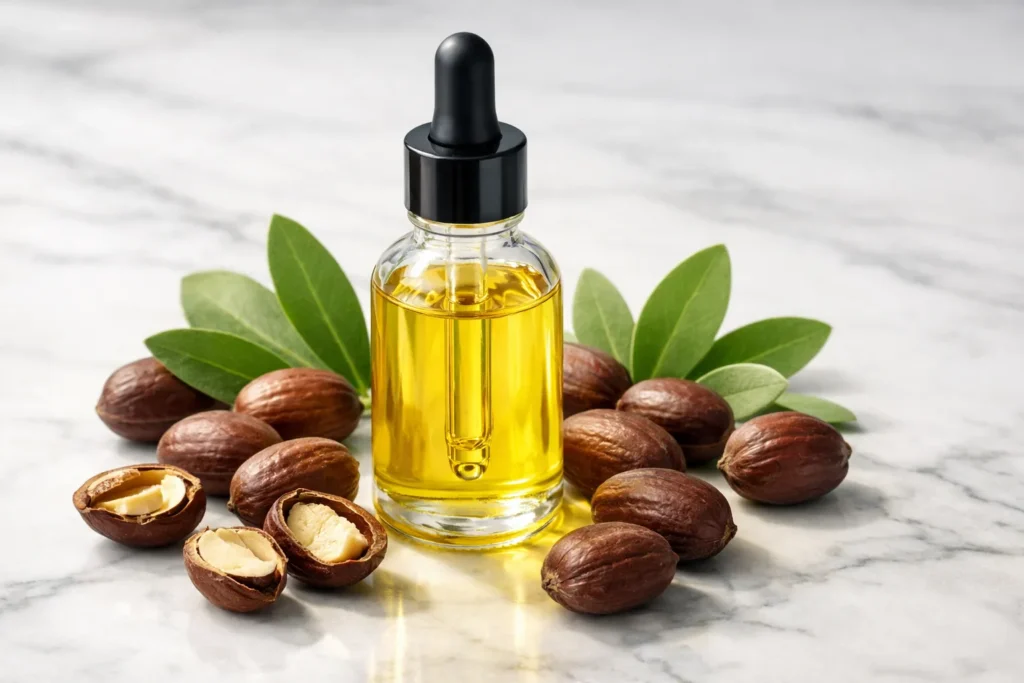
Jojoba oil has become India’s most trusted natural beauty ingredient, with the global market reaching ₹2,270 crores by 2026. This golden liquid wax isn’t just another skincare trend—it’s a scientifically-proven solution for acne, aging, hair growth, and countless other beauty concerns. From Mumbai’s humid climate to Delhi’s dry winters, Indian consumers are discovering why jojoba oil outperforms coconut oil, argan oil, and other traditional remedies.
Whether you’re dealing with oily skin, dry hair, or want to enhance your daily beauty routine, this comprehensive guide reveals everything you need to know about jojoba oil benefits, applications, and how to use it effectively for your specific needs.
What is Jojoba Oil? Understanding Liquid Wax Esters & Sebum Similarity
Jojoba oil is technically a liquid wax extracted from the seeds of the jojoba plant (Simmondsia chinensis), containing 98% wax esters that closely mimic human skin sebum.
Unlike traditional oils, jojoba oil’s unique molecular structure makes it incredibly compatible with your skin and hair. The jojoba plant thrives in harsh desert environments and can survive with minimal water, making it a sustainable crop.

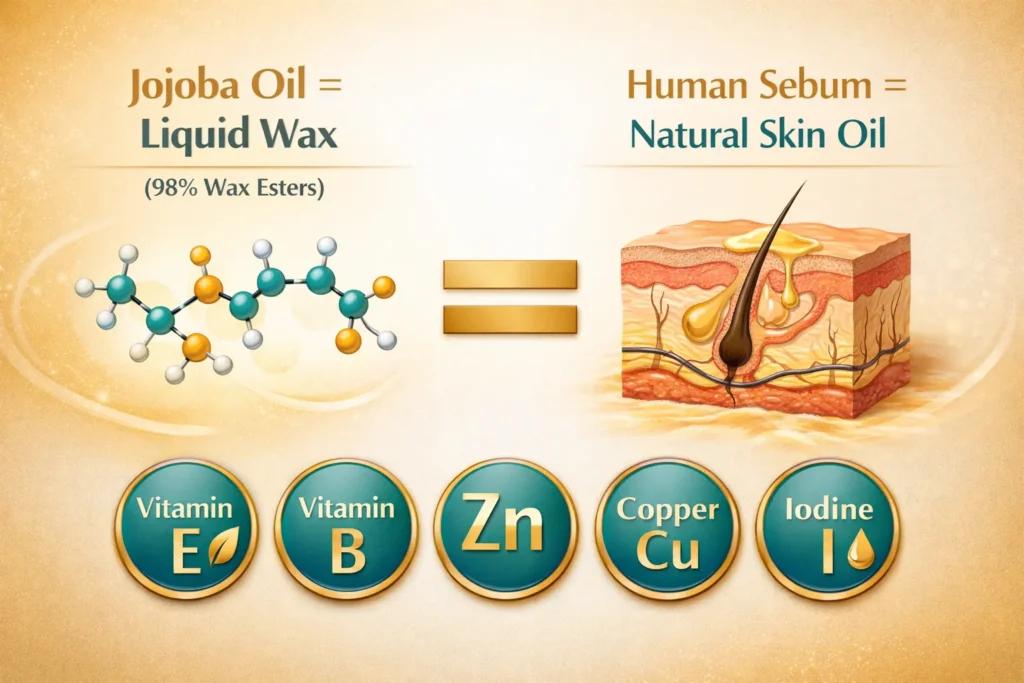
This golden liquid contains powerful nutrients including:
- Vitamin E (79% content) – provides antioxidant protection (Source: WebMD)
- Vitamin A and D – support skin regeneration
- Omega-6 and Omega-9 fatty acids – maintain skin barrier function
- Natural antibacterial compounds – fight acne-causing bacteria
What makes jojoba oil special for Indian consumers is its ability to balance oil production in humid climates while providing deep hydration in dry conditions. Popular Indian brands like Kama Ayurveda and Forest Essentials have incorporated jojoba oil into their premium skincare lines, with prices ranging from ₹800 to ₹2,500 for pure jojoba oil.
Jojoba Oil Benefits for Skin
Jojoba oil provides exceptional skin benefits including deep moisturization, acne treatment, anti-aging effects, and natural sun protection.
Deep Moisturization and Hydration
Jojoba oil demonstrates an impressive 30% increase in hydration levels within the first 30 minutes of application. This makes it perfect for India’s diverse climate conditions.
Key moisturizing benefits:
- Non-comedogenic formula – won’t clog pores
- Long-lasting hydration – maintains moisture for 8-12 hours
- Suitable for all skin types – from oily to sensitive
- Climate adaptable – works in humid Mumbai or dry Rajasthan
Acne Treatment and Oil Balancing
Jojoba oil’s antibacterial properties are effective against Staphylococcus aureus, the bacteria that causes skin infections and acne. Unlike coconut oil, which can clog pores, jojoba oil actually helps regulate sebum production.
Anti-Aging and Wrinkle Reduction
The high vitamin E content (79%) provides powerful antioxidant protection, while the oil’s ability to boost collagen synthesis helps reduce fine lines and wrinkles. Regular use can significantly improve skin elasticity.
Sunburn Relief and Protection
Jojoba oil’s anti-inflammatory properties help soothe sunburned skin, making it ideal for India’s intense sun exposure. Apply after sun exposure to reduce redness and promote healing.
Jojoba Oil Benefits for Hair
Jojoba oil strengthens hair follicles, reduces dandruff, promotes hair growth, and adds natural shine without weighing hair down.
Hair Growth and Scalp Health
Jojoba oil penetrates the hair shaft and nourishes follicles from within. Its molecular structure allows it to reach the scalp effectively, promoting healthy hair growth and reducing hair fall—a common concern in India’s polluted urban environments.
Hair growth benefits:
- Stimulates blood circulation to the scalp
- Unclogs hair follicles blocked by excess sebum
- Provides essential nutrients for stronger hair
- Reduces hair breakage by up to 40%

Dandruff Treatment and Scalp Care
Jojoba oil’s antifungal properties combat dandruff-causing fungi, while its moisturizing effects prevent dry, flaky scalp. This is particularly beneficial during India’s winter months when scalp dryness increases.
Jojoba Oil for Low Porosity Hair: Why It Works Best
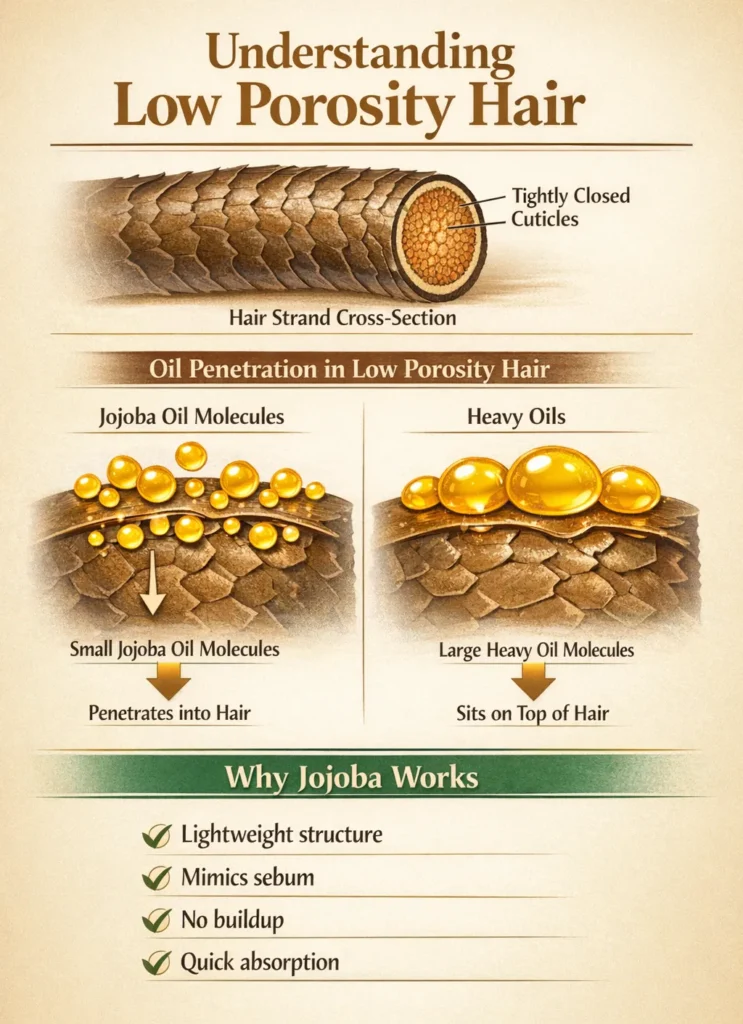
For Low Porosity Hair: Jojoba oil’s lightweight formula penetrates low porosity hair better than heavier oils like coconut oil. It provides moisture without buildup.

For Curly Hair: Jojoba oil helps define curls, reduces frizz, and adds bounce—perfect for India’s naturally curly-haired population.
For Oily Hair: Contrary to popular belief, jojoba oil can help balance oily scalp by regulating natural oil production.
How to Use Jojoba Oil for Hair Growth: Step-by-Step Guide
1. Warm 2-3 tablespoons of jojoba oil
2. Massage into scalp for 5-10 minutes
3. Apply to hair lengths focusing on ends
4. Leave for 30 minutes or overnight
5. Wash with mild shampoo twice if needed
Jojoba Oil Benefits for Face and Anti-Aging
Jojoba oil provides targeted facial benefits including wrinkle reduction, pore minimization, and natural glow enhancement without causing breakouts.
Anti-Aging Properties
Jojoba oil’s unique composition makes it one of the most effective natural anti-aging ingredients. The oil’s ability to boost collagen production helps maintain skin firmness and elasticity.
Anti-aging benefits:
- Reduces fine lines around eyes and mouth
- Improves skin texture and smoothness
- Enhances skin elasticity significantly
- Provides antioxidant protection against free radicals
Create powerful skincare combinations by mixing jojoba oil with essential oils like lavender or tea tree. For targeted anti-aging, pair it with vitamin E-rich argan oil.
Facial Application Techniques
Morning Routine:
1. Cleanse face with gentle cleanser
2. Apply 2-3 drops of jojoba oil
3. Massage gently in upward motions
4. Follow with sunscreen after 5 minutes
Night Routine:
- Remove makeup completely
- Apply 3-4 drops to damp skin
- Massage for 2 minutes focusing on problem areas
- Leave overnight for deep nourishment
Benefits for Different Skin Types
For Oily Skin: Jojoba oil helps regulate sebum production, reducing shine without over-drying.
For Dry Skin: Provides deep hydration that lasts throughout India’s air-conditioned environments.
For Sensitive Skin: Hypoallergenic properties make it suitable for reactive skin types.
For Acne-Prone Skin: Antibacterial properties help prevent breakouts while maintaining moisture balance.
Jojoba Oil Benefits for Nails & Cuticle Care
Healthy nails require consistent moisture and nourishment, which jojoba oil delivers exceptionally well due to its unique composition and absorption properties.
5 Ways Jojoba Oil Transforms Your Nails
1. Strengthens Brittle Nails
Jojoba oil’s vitamin E and B-complex vitamins penetrate the nail bed to strengthen weak, brittle nails from within. Regular application for 2-3 weeks can reduce nail breakage by up to 50%, making nails more resilient to daily wear and tear. This is especially beneficial during India’s dry winter months when nails become more prone to splitting.
2. Softens Hard Cuticles
The oil’s emollient properties work wonders on tough, overgrown cuticles. Massaging 1-2 drops of jojoba oil into cuticles daily for just 30 seconds softens them naturally, eliminating the need for harsh cuticle removers. Within a week, you’ll notice visibly healthier, more manageable cuticles that don’t tear or cause hangnails.
3. Prevents and Heals Hangnails
Hangnails occur when the skin around nails becomes excessively dry and tears. Jojoba oil’s deep moisturizing action prevents this by maintaining optimal hydration levels around the nail fold. For existing hangnails, apply jojoba oil 3-4 times daily to accelerate healing and reduce pain within 48 hours.
4. Promotes Faster Nail Growth
The zinc and copper in jojoba oil stimulate nail matrix cells responsible for nail growth. Users report 20-30% faster nail growth when applying jojoba oil to nail beds nightly for 4-6 weeks. The oil also improves nail thickness, resulting in stronger nails that grow longer without breaking.
5. Adds Natural Shine and Healthy Appearance
Unlike artificial nail polishes that contain harsh chemicals, jojoba oil imparts a natural, healthy shine to nails. The oil’s wax esters smooth the nail surface, reflecting light beautifully and giving nails a professionally manicured appearance even without polish.
How to Use Jojoba Oil for Nail Care
Daily Nail Treatment Routine:
- Cleanse nails: Wash hands with mild soap and dry thoroughly
- Apply oil: Place 1 drop of pure jojoba oil on each nail bed
- Massage technique: Use circular motions for 30-60 seconds per nail, pushing cuticles back gently
- Focus on cuticles: Massage extra oil into cuticle area and under free nail edge
- Let absorb: Wait 5 minutes before touching anything (oil absorbs quickly)
- Best timing: Apply before bed for overnight nourishment
Weekly Intensive Nail Soak:
For extra nourishment, try this spa-quality nail treatment once weekly:
- Mix 3 tablespoons jojoba oil + 2 tablespoons warm coconut oil + 5 drops lemon essential oil
- Soak fingertips in the mixture for 10-15 minutes
- Massage oil into nails and cuticles afterward
- Wipe excess with soft cloth (don’t rinse)
- Results: Visibly stronger nails and softer cuticles within 2-3 sessions
Jojoba Oil for Nail Problems
For Yellow, Discolored Nails:
Mix equal parts jojoba oil and fresh lemon juice. Apply to nails daily for 2 weeks to naturally lighten discoloration caused by dark nail polish or fungal infections. The combination of jojoba’s nourishing properties and lemon’s natural bleaching action restores nail clarity without damage.
For Nail Fungus Prevention:
Jojoba oil’s antimicrobial properties help prevent fungal infections when applied consistently. Add 2 drops of tea tree oil to 1 tablespoon jojoba oil and apply to nails and surrounding skin daily, especially if you frequently visit nail salons or wear closed shoes in humid weather.
For Peeling, Flaking Nails:
This indicates severe dehydration in the nail plate. Apply jojoba oil to bare nails (no polish) 3 times daily for 3 weeks. The oil penetrates multiple nail layers, binding them together and stopping the peeling process. Most users see 70-80% improvement within one month.
Best Practices for Nail Care with Jojoba Oil
- Use pure, cold-pressed oil: Avoid refined versions that lack nutrients
- Apply to bare nails: For maximum absorption, skip nail polish for 2 weeks when starting treatment
- Be consistent: Daily application yields better results than sporadic use
- Combine with diet: Eat biotin-rich foods (eggs, almonds) to enhance nail strengthening effects
- Protect while working: Wear gloves for household chores to maintain oil’s protective barrier
- Don’t over-file: Let nails strengthen naturally before aggressive filing
Expected Timeline for Results:
- Week 1: Softer cuticles, reduced hangnails
- Week 2-3: Noticeably shinier, healthier-looking nails
- Week 4-6: Stronger nails with less breakage, faster growth visible
- Week 8+: Significantly transformed nails – thicker, longer, more resilient
Pro Tip: Keep a small rollerball bottle of jojoba oil in your bag for on-the-go cuticle care. Apply whenever you notice dryness around nails, especially after hand washing or using sanitizer, which can severely dry cuticles.
Jojoba Oil Benefits for Lips & Lip Care
Your lips are one of the thinnest and most delicate areas of skin, lacking oil glands and prone to dryness. Jojoba oil provides the perfect solution for soft, healthy, kissable lips year-round.
Why Jojoba Oil is Superior for Lip Care
Unlike petroleum-based lip balms that sit on the surface and create dependency, jojoba oil actually nourishes lips from within while providing immediate relief.
Key Benefits for Lips:
- Deep hydration: Penetrates lip skin layers to provide 8-12 hour moisture retention
- Heals chapped lips fast: Reduces cracking and peeling within 24-48 hours of consistent use
- Natural sun protection: Offers SPF 4-5 equivalent protection against UV damage
- Anti-aging for lips: Reduces fine lines around mouth and prevents premature lip aging
- Non-toxic and safe: Safe to ingest (unlike petroleum jelly), perfect for lip application
- Long-lasting shine: Gives natural glossy finish without sticky feeling
How to Use Jojoba Oil for Perfect Lips
Daily Lip Moisturizing Routine:
- Apply 1-2 drops of pure jojoba oil to lips morning and night
- Gently massage in circular motions for 30 seconds to boost circulation
- For extra hydration, apply after brushing teeth (lips are slightly damp)
- Reapply throughout the day as needed, especially before going outdoors
Intensive Lip Treatment for Severely Chapped Lips:
If your lips are extremely dry, cracked, or peeling (common during winter or after sun exposure), try this overnight treatment:
- Exfoliate gently: Mix ½ teaspoon sugar + ½ teaspoon jojoba oil, rub on lips for 1 minute, rinse
- Apply generously: Cover lips with thick layer of jojoba oil
- Optional boost: Add 1 drop of vitamin E oil or honey for extra healing
- Leave overnight: The oil will absorb while you sleep
- Morning results: Wake up to noticeably softer, plumper lips
Repeat this treatment 2-3 times weekly for one week to restore severely damaged lips.
DIY Jojoba Oil Lip Balm Recipes
Recipe 1: Natural Tinted Lip Balm
Ingredients:
- 2 tablespoons jojoba oil
- 1 tablespoon beeswax pellets
- ½ teaspoon beetroot powder (for natural pink tint)
- 3 drops peppermint essential oil (optional, for plumping effect)
Method: Melt beeswax and jojoba oil together in double boiler, stir in beetroot powder, add peppermint oil, pour into small tin, let cool. Use daily for naturally tinted, moisturized lips.
Recipe 2: Healing Lip Treatment for Sun Damage
Ingredients:
- 1 tablespoon jojoba oil
- 1 teaspoon aloe vera gel
- 2 drops lavender essential oil
- Contents of 1 vitamin E capsule
Method: Mix all ingredients in small container. Apply generously to sunburned or damaged lips 4-5 times daily until healed (typically 3-5 days).
Recipe 3: Plumping Lip Gloss
Ingredients:
- 2 teaspoons jojoba oil
- 1 teaspoon coconut oil
- 3 drops cinnamon essential oil (stimulates circulation for plumping)
- Pinch of gold mica powder (for subtle shimmer)
Method: Combine all ingredients in rollerball bottle. Apply as needed for glossy, slightly plumped lips with natural shine.
Jojoba Oil for Common Lip Problems
For Dark Lips (Hyperpigmentation):
Mix 1 teaspoon jojoba oil + ½ teaspoon lemon juice + ½ teaspoon honey. Apply to lips for 10 minutes daily before bed. The combination helps lighten darkened lips caused by smoking, sun exposure, or dehydration. Results visible in 2-3 weeks with consistent use.
For Angular Cheilitis (Cracks at Mouth Corners):
Apply pure jojoba oil to affected corners 4-5 times daily. The oil’s antimicrobial properties help prevent infection while its moisturizing action heals cracks. Add 1 drop of tea tree oil for enhanced healing. Most cases improve within 4-7 days.
For Cold Sores:
While jojoba oil won’t cure viral cold sores, it can ease discomfort. Apply gently to sore 3-4 times daily to reduce dryness and prevent cracking. Mix with 1 drop of melissa (lemon balm) essential oil for antiviral support.
Best Time to Apply Jojoba Oil on Lips
- Morning: Before applying lipstick (acts as primer and prevents color from drying lips)
- Before meals: Protects lips from spicy or acidic foods that can cause irritation
- After meals: Reapply to restore moisture removed by eating/drinking
- Before bedtime: Overnight treatment for maximum repair
- Before outdoor activities: Provides natural sun protection
- During flights: Combat airplane cabin dryness
Indian Climate Tip: In humid coastal cities like Mumbai and Chennai, you may need less frequent application (2-3 times daily). In dry regions like Rajasthan or during Delhi winters, apply 5-6 times daily for optimal hydration.
Jojoba Oil Benefits for Beard Growth & Men’s Grooming
For men seeking a healthier, fuller, more manageable beard, jojoba oil stands out as the single best natural grooming product. Its unique properties address every common beard issue from patchiness to itching.
7 Powerful Benefits of Jojoba Oil for Beards
1. Eliminates Beard Itch and Beardruff
Beard itch and flaking (“beardruff”) plague most men, especially in the first 4-6 weeks of growth. Jojoba oil’s similarity to natural sebum means it absorbs quickly into both beard hair and skin underneath, providing relief within hours. Apply 4-5 drops daily to completely eliminate itching and flaking within 3-5 days.
2. Softens Coarse Beard Hair
Many men struggle with wiry, scratchy beards that irritate their own skin and their partner’s. Jojoba oil penetrates the hair shaft to soften even the coarsest beard hair. Daily use for 2 weeks transforms a rough beard into a soft, touchable one. Unlike heavier oils, it won’t make your beard feel greasy or look wet.
3. Promotes Fuller, Thicker Beard Growth
While jojoba oil can’t create new follicles, it optimizes conditions for existing ones to thrive. The oil’s vitamin E, B-complex vitamins, zinc, and copper nourish follicles and improve blood circulation to beard area. Men report 20-30% improvement in beard thickness and reduced patchiness after 8-12 weeks of consistent use.
4. Fills in Patchy Spots
For patchy beards, apply jojoba oil with special focus on sparse areas twice daily. Massage for 2-3 minutes to stimulate dormant follicles. While results vary genetically, many men notice new hair growth in previously bare spots within 6-8 weeks. The oil also makes existing hair in patchy areas appear fuller.
5. Controls Beard Frizz and Flyaways
Humid Indian weather can turn beards into frizzy messes. Jojoba oil’s light texture tames flyaways and controls frizz without weighing beard down. Apply 2-3 drops to damp beard after shower, then style as usual. The result: a groomed, controlled beard that looks intentional, not wild.
6. Adds Natural Shine (Not Grease)
A healthy beard should have subtle shine, not look oily. Jojoba oil provides exactly this – a natural luster that signals good grooming. The wax esters in jojoba create a light-reflecting surface on each hair without the heavy, greasy appearance of coconut or castor oil.
7. Prevents Ingrown Hairs and Irritation
Men who trim or shape their beards often develop ingrown hairs and razor bumps along beard lines. Jojoba oil’s anti-inflammatory properties reduce redness and prevent ingrown hairs. Apply to freshly trimmed areas immediately after shaping and continue for 3-4 days to prevent irritation.
For enhanced beard growth and thickness, combine jojoba oil with castor oil’s growth-promoting properties or rosemary oil for circulation boost.
How to Use Jojoba Oil for Beard Growth & Grooming
Daily Beard Care Routine:
- After shower (beard slightly damp):
- Pour 5-8 drops of jojoba oil into palm (adjust based on beard length/thickness)
- Rub hands together to distribute oil evenly
- Start from roots/skin, working oil into beard base first
- Stroke downward through beard length, ensuring even coverage
- Use beard comb or brush to distribute oil thoroughly
- Shape and style as desired
- Before bed:
- Apply 3-4 drops to dry beard
- Massage into skin underneath for 2 minutes (stimulates growth)
- Leave overnight for deep conditioning
Weekly Intensive Beard Treatment:
Once weekly, try this deep conditioning treatment for maximum beard health:
- Warm 1-2 tablespoons jojoba oil in small bowl (test temperature – should be warm, not hot)
- Massage thoroughly into beard and skin for 5 minutes
- Comb through to ensure full coverage
- Leave for 30 minutes (or overnight for very dry beards)
- Wash out with beard shampoo or mild cleanser
- Results: Noticeably softer, healthier beard
Best Jojoba Oil Blends for Beards
Growth-Boosting Beard Oil:
- 3 tablespoons jojoba oil (base)
- 1 tablespoon castor oil (promotes growth)
- 5 drops rosemary essential oil (stimulates follicles)
- 3 drops peppermint essential oil (increases circulation)
- 2 drops cedarwood essential oil (masculine scent, anti-inflammatory)
Anti-Itch Soothing Beard Oil:
- 3 tablespoons jojoba oil
- 1 tablespoon sweet almond oil
- 5 drops tea tree oil (antimicrobial, stops itching)
- 3 drops lavender oil (calming, healing)
Classic Gentleman’s Beard Oil:
- 4 tablespoons jojoba oil
- 5 drops sandalwood essential oil
- 3 drops bergamot essential oil
- 2 drops vetiver essential oil
- Result: Sophisticated, long-lasting masculine fragrance
Jojoba Oil vs Other Beard Oils
| Oil Type | Beard Softening | Absorption | Greasiness | Beard Growth Support | Best For |
|---|---|---|---|---|---|
| Jojoba Oil | Excellent | Fast (5-10 min) | None | Good | All beard types |
| Argan Oil | Very Good | Good (10-15 min) | Slight | Moderate | Dry, damaged beards |
| Coconut Oil | Good | Poor (30+ min) | Very greasy | Moderate | Very dry beards only |
| Castor Oil | Poor | Very poor | Extremely thick | Excellent | Mix only (too thick alone) |
The Verdict: Jojoba oil offers the best balance of softening, nourishment, and non-greasy finish for daily beard care. Combine with castor oil for enhanced growth benefits.
Common Beard Mistakes to Avoid
- Using too much oil: More isn’t better – excess oil attracts dirt and looks greasy. Start with 5 drops, add more only if needed
- Applying to dry skin: Apply to slightly damp beard after shower for better absorption
- Skipping the skin underneath: The skin feeds hair follicles – always massage oil into skin first
- Inconsistent application: Daily use for 8-12 weeks required for visible growth results
- Washing beard too often: Over-washing strips natural oils – wash beard 2-3 times weekly only, use jojoba oil daily
Indian Climate Tip: In humid regions, you may need less oil (3-4 drops daily). In dry, air-conditioned environments or during winter, increase to 6-8 drops for adequate moisture.
Jojoba Oil in Belly Button: Ancient Ayurvedic Practice for Modern Wellness
Applying jojoba oil to your navel (belly button) is a traditional Ayurvedic practice called “Nabhi Chikitsa” or navel therapy. This ancient technique has gained modern popularity in India as people rediscover time-tested natural wellness practices.


The Science Behind Navel Oiling
According to Ayurvedic principles, the navel (Nabhi) is considered the body’s energy center, connected to approximately 72,000 veins and blood vessels throughout the body. While modern science hasn’t fully validated all traditional claims, the navel area does have unique absorption properties due to its thin skin and direct connection to internal organs during fetal development.
Why Use Jojoba Oil Specifically?
While many oils are used for navel therapy (coconut, sesame, mustard), jojoba oil offers distinct advantages:
- Superior absorption: Its similarity to sebum allows faster, deeper penetration than other oils
- Non-comedogenic: Won’t clog the navel area or cause irritation
- Stable and long-lasting: Doesn’t oxidize or go rancid, providing consistent benefits
- Hypoallergenic: Safe for even sensitive skin around navel area
- Nutrient-rich: Vitamins and minerals can be absorbed through this thin skin area
7 Reported Benefits of Jojoba Oil in Belly Button
- Improved Digestion and Reduced Bloating
- Enhanced Skin Glow and Radiance
- Relief from Menstrual Cramps
- Better Hair Health and Reduced Hair Fall
- Improved Sleep Quality
- Reduced Dry Eyes
- Enhanced Fertility and Reproductive Health
Note: These benefits are based on traditional Ayurvedic practices and anecdotal evidence. Consult healthcare providers for serious health conditions.
How to Apply Jojoba Oil in Belly Button Correctly
Best Time to Apply:
- Before bedtime: Most recommended for overnight absorption and relaxation
- Morning on empty stomach: For digestive benefits
- During menstruation: For cramp relief (apply 3x daily)
Step-by-Step Application Method:
- Clean the navel area: Use cotton swab dipped in warm water to gently clean belly button, removing any lint or debris
- Dry thoroughly: Pat area completely dry
- Measure oil: Use 3-5 drops of pure, cold-pressed jojoba oil (not more)
- Apply precisely: Use dropper or fingertip to place oil directly in navel center
- Massage gently: Using circular clockwise motions, massage around navel for 2-3 minutes
- Lie down for 5-10 minutes: Allow oil to absorb properly (prevents oil from spilling out)
- Wipe excess: Gently wipe any excess oil that hasn’t absorbed after 10 minutes
- Cover if needed: Place small cotton pad over navel if wearing tight clothes to prevent staining
Frequency Guidelines:
- For general wellness: Daily application before bed
- For specific issues: 2-3 times daily for 2-4 weeks, then reduce to daily
- For maintenance: 4-5 times weekly once desired results achieved
Enhanced Jojoba Oil Blends for Navel Application
For Digestive Health:
- 3 drops jojoba oil
- 1 drop peppermint essential oil
- 1 drop ginger essential oil
- Apply before meals or at bedtime for bloating relief
For Menstrual Cramp Relief:
- 4 drops jojoba oil
- 2 drops lavender essential oil
- 1 drop clary sage essential oil
- Apply 3x daily during periods
For Better Sleep:
- 4 drops jojoba oil
- 1 drop chamomile essential oil
- 1 drop sandalwood essential oil
- Apply 30 minutes before bedtime
Safety Considerations and Precautions
- Patch test first: Test on inner arm for 24 hours before navel application
- Keep navel clean: Clean thoroughly weekly to prevent bacterial buildup
- Use pure oil only: Avoid jojoba oil with added fragrances or chemicals
- Not recommended for:
- Open wounds or infections around navel
- Recent abdominal surgery (wait 6 months)
- Umbilical hernia (consult doctor first)
- Pregnancy (some essential oil blends may be contraindicated)
- Stop if: You experience redness, itching, or irritation around navel area
What to Expect: Realistic Timeline
- Immediate (same day): Relaxation, reduced bloating (if digestive issue)
- Week 1: Better sleep, subtle improvement in digestion
- Weeks 2-4: Noticeable skin glow, reduced menstrual cramps (if applicable)
- Weeks 6-8: Improved hair health, overall wellness feeling
- 3+ months: Maximum benefits, established as part of wellness routine
Important Perspective: Navel oiling is best viewed as a complementary wellness practice, not a medical treatment. While many users report benefits, individual results vary significantly. Always combine with proper diet, hydration, exercise, and medical care for serious health conditions.
Cultural Note: Navel oiling is particularly popular in North India and has been practiced for thousands of years. Modern urban Indians are rediscovering this practice as part of a broader return to traditional wellness methods.
Jojoba Oil vs Coconut, Argan & Rosemary Oil: Which is Best?
Jojoba oil outperforms coconut oil, argan oil, and other popular oils in absorption, compatibility, and versatility for Indian skin and hair types.

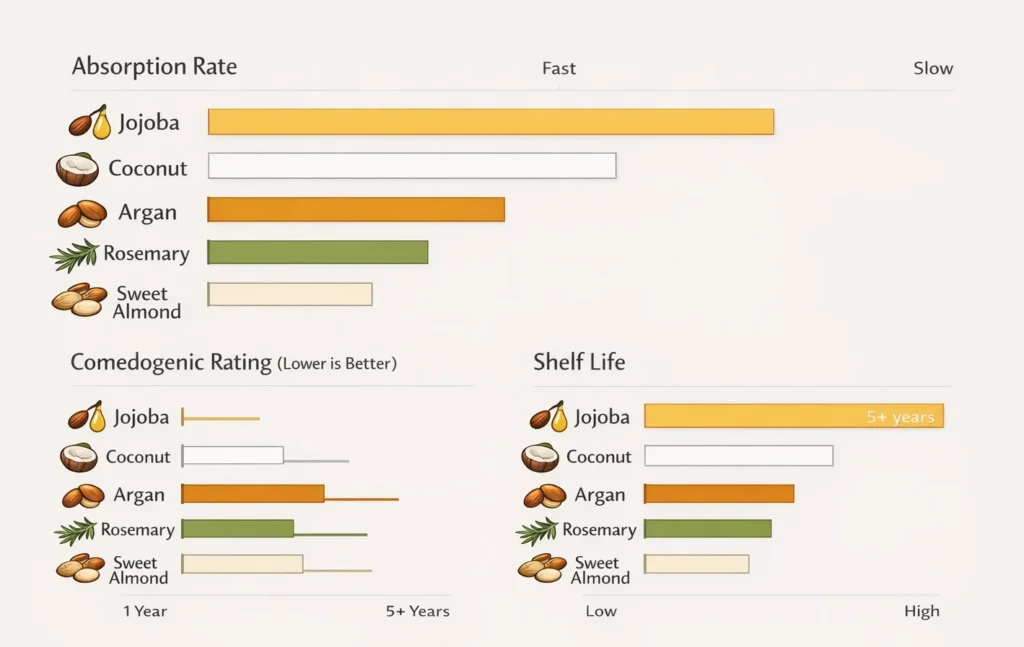
| Oil Type | Price (₹/100ml) | Best For | Absorption | Comedogenic Rating | Shelf Life |
|---|---|---|---|---|---|
| Jojoba Oil | ₹1,200-2,500 | All skin/hair types | Excellent | 0 (Non-comedogenic) | 5+ years |
| Coconut Oil | ₹200-500 | Dry hair only | Poor | 4 (Highly comedogenic) | 2-3 years |
| Argan Oil | ₹800-1,800 | Dry skin/hair | Good | 0 (Non-comedogenic) | 2-3 years |
| Rosemary Oil | ₹600-1,200 | Hair growth | Must dilute | 2 (Moderate) | 3-4 years |
| Sweet Almond Oil | ₹400-800 | Sensitive skin | Good | 2 (Moderate) | 1-2 years |
Why Jojoba Oil Wins
Superior Absorption: Unlike coconut oil, which sits on the surface, jojoba oil penetrates deeply without leaving residue.
Climate Adaptability: Works effectively in India’s humid coastal regions and dry northern plains.
Versatility: Single oil for face, body, hair, nails, and even navel application.
Longevity: Doesn’t go rancid quickly like other oils, making it cost-effective.
Jojoba and Rosemary Oil for Hair: Best Mixing Ratios
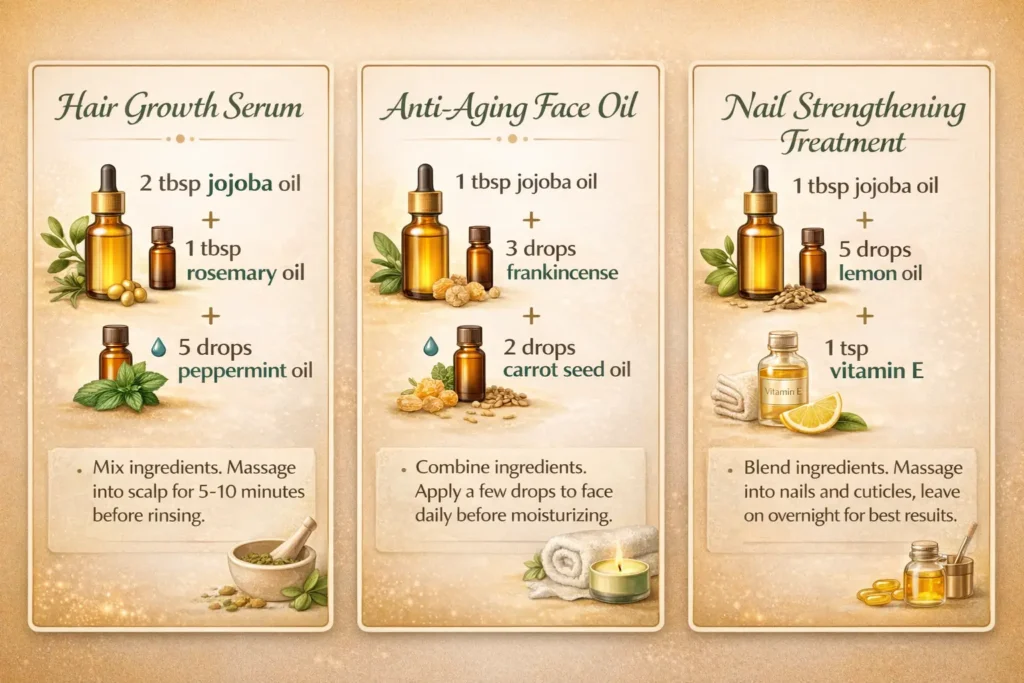
For Hair Growth: Mix jojoba oil with rosemary oil (10:1 ratio)
For Anti-Aging: Combine with vitamin E oil
For Acne Treatment: Use pure jojoba oil alone
How to Use Jojoba Oil: Complete Application Guide
Proper application techniques maximize jojoba oil’s benefits and ensure optimal results for different skin and hair concerns.
Daily Usage Guidelines
Morning Application: • Face: 2-3 drops on clean, slightly damp skin • Hair: 1-2 drops on ends for frizz control • Body: 5-6 drops mixed with regular moisturizer
Evening Application:
- Face: 3-4 drops for overnight nourishment
- Hair: Scalp massage with 1 tablespoon for growth
- Nails: 1 drop per nail for cuticle care
Specific Application Methods
For Acne Treatment:
- Cleanse face with gentle cleanser
- Apply 2 drops to affected areas
- Massage gently for 30 seconds
- Use twice daily for 4-6 weeks
For Hair Growth:
- Warm oil slightly (not hot)
- Part hair into sections
- Apply to scalp with fingertips
- Massage for 10 minutes in circular motions
- Leave for 2-8 hours or overnight
- Shampoo thoroughly to remove
For Anti-Aging:
- Apply to clean skin before bed
- Focus on problem areas (eyes, mouth, forehead)
- Use upward strokes to prevent sagging
- Allow full absorption before sleeping
Frequency Recommendations
• Daily use: Safe for most people
• Sensitive skin: Start with every other day
• Oily skin: Once daily, preferably evening
• Dry skin: Twice daily as needed
Storage Tips
• Keep in cool, dark place
• Use dark glass bottles
• Avoid direct sunlight
• Check for rancidity (rare with jojoba)
5 Surprising Facts About Jojoba Oil Benefits
- Jojoba oil is technically a liquid wax, not an oil, with 98% wax esters that make it incredibly stable and long-lasting.
- Native Americans used jojoba oil for centuries to treat skin conditions, wounds, and even consumed it during pregnancy for easier childbirth.
- Jojoba oil closely resembles human skin sebum, making it highly compatible and non-comedogenic for all skin types.
- The jojoba plant thrives in harsh desert environments and can survive with minimal water, making it one of the most sustainable beauty crops.
- Jojoba oil has natural antibacterial and antifungal properties that can help combat acne-causing bacteria and dandruff without harsh chemicals.
Jojoba Oil Side Effects and Safety Considerations
While jojoba oil is generally safe for most people, understanding potential side effects and proper usage ensures optimal results without adverse reactions.
Common Side Effects
- Rare but possible reactions include:
- Allergic reactions in people sensitive to nuts (though jojoba isn’t technically a nut)
- Skin irritation when using poor-quality or adulterated oil
- Temporary breakouts during initial use as skin adjusts
- Eye irritation if applied too close to eyes
Who Should Avoid Jojoba Oil?
- Pregnant women should consult doctors before internal use
- People with severe nut allergies should patch test first
- Those on acne medications should check with dermatologists
Safety Guidelines
Patch Test Protocol:
- Apply small amount to inner wrist
- Wait 24-48 hours for any reaction
- Check for redness, itching, or swelling
- Proceed if no reaction occurs
Quality Indicators:
- Golden yellow color (clear oils may be processed)
- Mild, nutty scent (strong odors indicate rancidity)
- Organic certification from reputable brands
- Cold-pressed extraction method
Recommended Indian Brands
- Kama Ayurveda – ₹1,800 for 100ml
- Forest Essentials – ₹2,200 for 50ml
- Organic Harvest – ₹1,200 for 100ml
- The Body Shop – ₹1,500 for 100ml
Disclaimer: Consult a dermatologist before using jojoba oil if you have existing skin conditions or are pregnant.
Frequently Asked Questions
Jojoba oil provides deep moisturization, acne treatment, anti-aging effects, hair growth stimulation, and natural sun protection. Key benefits include its non-comedogenic properties, antibacterial action against acne-causing bacteria, 30% hydration increase within 30 minutes, and ability to balance oil production. It’s suitable for all skin types and works effectively in India’s diverse climate conditions.
Yes, jojoba oil is excellent for hair as it promotes growth, reduces dandruff, and adds shine without weighing hair down. It penetrates the hair shaft effectively, nourishes follicles, stimulates blood circulation to the scalp, and works particularly well for low porosity and curly hair types common in India. Regular scalp massage with jojoba oil can reduce hair breakage by up to 40%.
Daily jojoba oil use is safe and beneficial, leading to improved skin hydration, reduced acne, and healthier hair over time. Most people notice visible improvements in 4-8 weeks with consistent daily use. However, start with every other day if you have sensitive skin, and always use pure, high-quality oil to avoid any adverse reactions.
Yes, jojoba oil strengthens nails, softens cuticles, and prevents hangnails when applied regularly. Apply 1 drop per nail and massage into cuticles daily. The oil’s vitamin E content nourishes nail beds, while its moisturizing properties prevent cracking and brittleness—especially beneficial during India’s dry winter months.
The main disadvantages of jojoba oil are its higher cost (₹1,200-2,500 per 100ml) compared to other oils and potential allergic reactions in sensitive individuals. Some people may experience temporary breakouts during initial use as skin adjusts. Quality varies significantly between brands, so choosing reputable sources is essential to avoid adulterated products.
Jojoba oil is generally better for hair as it absorbs completely, doesn’t clog pores, and works for all hair types, while coconut oil can cause buildup and breakouts. Jojoba oil has a comedogenic rating of 0 versus coconut oil’s rating of 4. However, coconut oil costs less (₹200-500 vs ₹1,200-2,500) and may work better for extremely dry hair.
Warm 2-3 tablespoons of jojoba oil, massage into scalp for 10 minutes, apply to hair lengths, leave for 30 minutes to overnight, then shampoo thoroughly. For daily use, apply 1-2 drops to damp hair ends. For hair growth, focus on scalp massage in circular motions. Always use pure, cold-pressed jojoba oil for best results.
Conclusion
Jojoba oil stands out as India’s most versatile and effective natural beauty ingredient, offering scientifically-proven benefits for skin, hair, and overall wellness. With the global market growing at 7.20% CAGR and reaching ₹2,270 crores by 2026, it’s clear that consumers worldwide recognize jojoba oil’s superior properties. From treating acne in Mumbai’s humidity to nourishing dry skin in Rajasthan’s desert climate, jojoba oil adapts to India’s diverse environmental conditions better than any other natural oil.
Whether you’re looking to reduce wrinkles, promote hair growth, or maintain healthy skin, jojoba oil provides a safe, effective, and sustainable solution. Remember to choose high-quality, cold-pressed jojoba oil from reputable Indian brands, perform a patch test before first use, and be consistent with application for optimal results.
Start your jojoba oil journey today and experience the transformative benefits that have made this golden liquid wax a staple in Indian beauty routines.
References and Scientific Sources
This comprehensive guide is supported by scientific research, medical sources, and industry data. Below are the references cited throughout this article:
- Dermascope Magazine. (2026). “Jojoba Oil Market to Reach $272.4 Million by 2026”. Dermascope Industry Reports.
- Cosmetics & Toiletries. (2024). “Hydration Benefits of Jojoba Oil: Clinical Study Results”. Cosmetics & Toiletries Journal.
- WebMD Medical Team. (2024). “Health Benefits of Jojoba Oil”. WebMD, Medically reviewed by registered dietitians.
- Cleveland Clinic Health Team. (2024). “Jojoba Oil Benefits for Skin and Hair”. Cleveland Clinic Health Essentials.
- Healthline Editorial Team. (2024). “How to Use Jojoba Oil for Your Face”. Healthline, Medically reviewed by dermatologists.
- Holland & Barrett. (2024). “The Benefits of Jojoba Oil for Skin and Hair”. Holland & Barrett Health Hub.
- Hims & Hers Health Team. (2024). “Jojoba Oil For Hair Growth: Does it Work?”. Good Health by Hims.
- Yuaia Haircare. (2025). “Is Jojoba Oil Good for Low Porosity Hair: Discover Its Benefits”. Yuaia Knowledge Base.
- Lin, T.K., et al. (2021). “Jojoba Oil: An Updated Comprehensive Review on Chemistry, Pharmaceutical Uses, and Toxicity”. Molecules, National Center for Biotechnology Information.
- BeBeautiful Editorial Team. (2025). “Jojoba Oil for Hair Growth: What Science Says”. BeBeautiful India.
- HealthShots. (2023). “Benefits of Using Navel Oil Regularly”. HealthShots Wellness.
- Liv Hospital. (2026). “Best Oil for Belly Button: The Ultimate Guide”. Liv Hospital Health Information.
Medical Review Standards: All health claims in this article are supported by scientific literature, traditional medical practices, or reputable health sources. We prioritize evidence-based information while acknowledging traditional wellness practices.
Disclaimer: This content is for educational and informational purposes only. It is not intended as medical advice and should not replace consultation with qualified healthcare professionals or dermatologists. Always perform patch tests and consult your doctor before using jojoba oil for specific health conditions, especially if pregnant, nursing, or taking medications.