





Hair oiling has been a cornerstone of Indian beauty traditions for centuries, but is it truly beneficial for your hair?
With modern dermatology questioning some traditional practices, many Indians are wondering whether their grandmother’s coconut oil ritual is helping or harming their locks. The answer isn’t simply yes or no – hair oiling can be incredibly beneficial when done correctly, but potentially damaging when done wrong.
Recent studies show that coconut oil can reduce protein loss in hair by up to 40%, while dermatologists warn that oiling dirty hair can cause folliculitis. This comprehensive guide combines scientific evidence with traditional Ayurvedic wisdom to help you make an informed decision about incorporating hair oiling into your routine.
We’ll explore the proven benefits, potential drawbacks, correct application methods, and how to choose the right oil for your specific hair type and concerns.
Benefits of Oiling Hair (What Science Says)
Hair oiling has been studied for potential benefits such as reducing protein loss from hair strands, helping protect the hair shaft and supporting scalp comfort, but results can vary widely between individuals and research is still evolving.
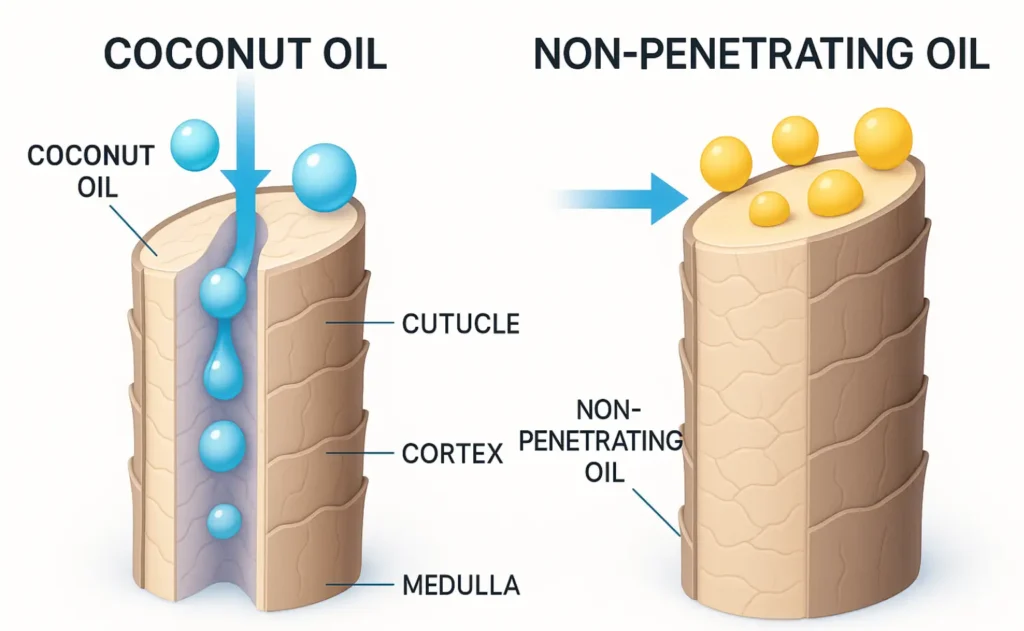
Modern research has validated many traditional claims about hair oiling. A comprehensive study published in PMC found that certain oils, particularly coconut oil, have unique molecular structures that allow them to penetrate the hair shaft effectively.
Key Scientific Benefits of Oiling Hair:
- Protein Loss Prevention: Some laboratory studies suggest that coconut oil may help reduce protein loss from hair under certain conditions, but exact percentages are study‑specific and may not reflect everyday real‑world results for everyone. This makes it particularly effective for both damaged and undamaged hair.
- UV Protection: Some studies suggest that certain oils, including coconut and almond oil, may help reduce some of the drying and damage associated with UV exposure when used as part of a broader hair‑care routine. They should not be viewed as a replacement for sun protection measures recommended by medical professionals, especially for the skin.
- Scalp Health Enhancement: According to Dr. Khushboo Garodia, a certified trichologist, “Oil helps in scalp health. When you gently massage the scalp it helps in exfoliation and sometimes that helps in reducing hair fall”.
- Moisture Retention: Oils create a protective layer that helps hair retain natural moisture, reducing dryness and brittleness common in Indian climates.
- Improved Hair Strength: Different oils contain various vitamins and nutrients that strengthen the hair shaft when applied directly.
Best Oils for Hair Oiling in India:
- Coconut Oil: Best for protein protection and deep conditioning
- Mustard Oil: Traditional choice for promoting circulation and warmth
- Sesame Oil: Contains natural antibacterial properties for scalp health
- Almond Oil: Rich in vitamin E, excellent for UV protection
- Brahmi Oil: Ayurvedic blend for stress-related hair loss

The global hair oil market, valued at $23.41 billion in 2024, continues growing at 7.9% annually, indicating widespread recognition of these benefits.
Disadvantages of Applying Oil to Hair (When Oiling Can Backfire)
While hair oiling offers benefits, it can cause significant problems when done incorrectly or by people with certain scalp conditions.
Dermatologist Dr. Rashmi warns against common oiling mistakes that can lead to serious scalp issues. “Applying oil on a dirty scalp can force bacteria and product buildup into follicles, potentially causing painful folliculitis,” she explains.
Major Disadvantages and Risks:
- Folliculitis and Scalp Infections: Oiling dirty hair can push bacteria into hair follicles, causing painful boils and infections. This is particularly common when people oil their hair right before washing.
- Clogged Hair Follicles: Excessive oil application can block follicles, leading to reduced hair growth and increased hair fall.
- Product Buildup: Heavy oils like coconut and mustard can accumulate on the scalp, attracting dirt and pollution – a major concern in Indian cities.
- Allergic Reactions: Some people experience sensitivity to specific oils. Vetpalai thailam, for instance, can cause scalp irritation in sensitive individuals.
- Weight and Greasiness: Over-oiling makes hair appear greasy and lifeless, especially problematic for fine or oily hair types.
When to see a doctor:
If you notice severe dandruff, intense itching, pain, pus‑filled bumps, sudden patches of hair loss, or any open wounds on your scalp, stop experimenting with oils and see a dermatologist as soon as possible. These signs can indicate underlying scalp or health issues that require proper medical evaluation and treatment, not just changes in your hair care routine.
- People with seborrheic dermatitis or fungal scalp conditions
- Those with naturally very oily scalps
- Individuals with fine, thin hair that gets weighed down easily
- People allergic to specific oil components
- Those with active scalp infections or wounds
Common Myths Debunked:
Contrary to popular belief, daily oiling isn’t necessary for most people. Research shows that oiling 1-3 times per week is generally sufficient for healthy hair. The myth that “more oil equals better results” often leads to the problems mentioned above.
Dr. Annika Smith, a dermatologist quoted in The Guardian, notes that “most perceived benefits of oiling are likely due to reduced breakage or improved shine, rather than true stimulation of hair follicles”.
How to Apply Oil on Hair: Step-by-Step
Proper hair oiling technique is crucial for maximizing benefits while avoiding common pitfalls that can damage your hair and scalp.

Pre-Oiling Preparation:
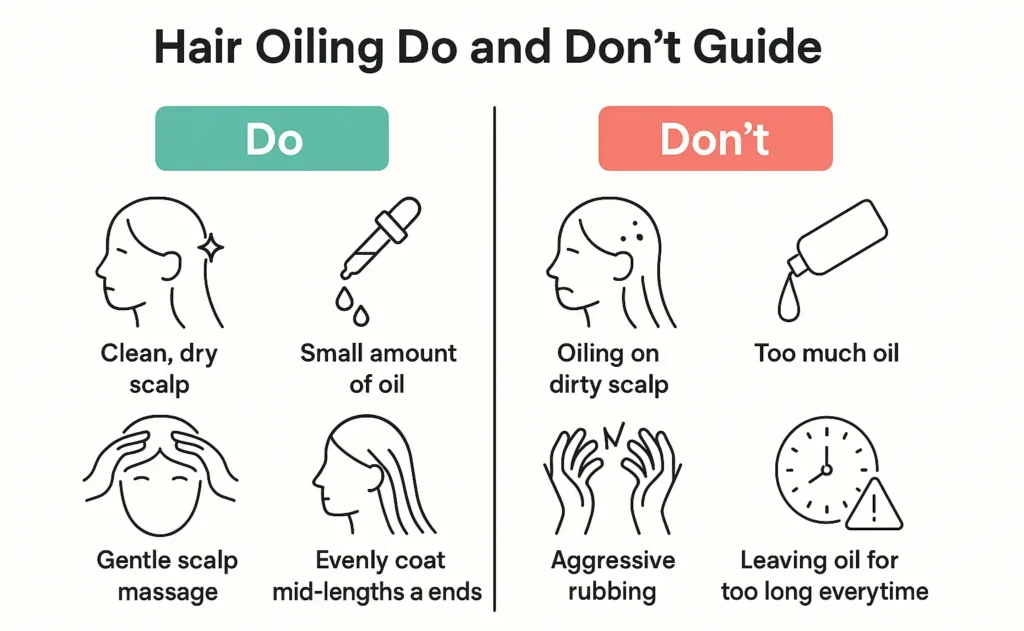
- Start with Clean Hair: Always oil freshly washed, dry hair. Never apply oil to dirty or product-laden hair, as this can cause folliculitis.
- Choose the Right Amount: Use 1-2 tablespoons for shoulder-length hair. More isn’t better – excess oil clogs follicles.
- Warm the Oil: Gently warm oil to body temperature for better penetration. Avoid overheating, which can damage hair proteins.
Step-by-Step Hair Oiling Method:
Step 1: Section Your Hair Divide hair into 4-6 sections using clips. This ensures even distribution and prevents missing spots.
Step 2: Apply to Scalp First Using fingertips (not nails), apply oil directly to the scalp in small amounts. Work section by section.
Step 3: Gentle Massage Technique Massage scalp using circular motions for 5-10 minutes. This improves blood circulation and helps oil penetration.
Step 4: Work Through Hair Lengths Apply remaining oil to mid-lengths and ends, avoiding the roots if you have oily hair.
Step 5: Comb Through Use a wide-tooth comb to distribute oil evenly from roots to tips.
Timing Guidelines:
- Quick Treatment: 30 minutes minimum for basic nourishment
- Deep Conditioning: 1-2 hours for damaged hair
- Overnight Treatment: Only for very dry hair, using lighter oils like argan
Important Don’ts:
- Don’t apply oil to wet hair – it won’t penetrate properly
- Don’t use excessive pressure during massage
- Don’t leave heavy oils overnight regularly
- Don’t oil more than 3 times per week
Washing Out the Oil:
Use a gentle, sulfate-free shampoo and wash twice if needed. Follow with a light conditioner only on the ends. Many Indians make the mistake of skipping conditioner after oiling, but hair still needs moisture balance.
Choosing the Right Oil for Your Hair Type
Selecting the appropriate oil based on your hair type and specific concerns is crucial for achieving optimal results from your oiling routine.
Hair Oil Comparison Table:
| Oil Type | Best For | Price Range (₹) | Pros | Cons |
|---|---|---|---|---|
| Coconut Oil | Protein-damaged hair, deep conditioning | ₹50–200/100ml | Penetrates hair shaft, reduces protein loss | Can be heavy, may cause buildup |
| Almond Oil | UV protection, fine hair | ₹150–400/100ml | Lightweight, rich in vitamin E | More expensive, less traditional |
| Sesame Oil | Dandruff, scalp issues | ₹80–250/100ml | Antibacterial properties, traditional | Strong smell, can stain |
| Mustard Oil | Hair growth, circulation | ₹60–150/100ml | Warming effect, promotes circulation | Very strong smell, can irritate |
| Argan Oil | Damaged, chemically treated hair | ₹300–800/100ml | Lightweight, non-greasy | Expensive, less readily available |
Matching Oil to Hair Type:
For Dry, Damaged Hair: Coconut oil remains the gold standard. Its unique molecular structure allows deep penetration and protein protection. Brands like Parachute and Dabur offer pure coconut oil options widely available across India.
For Fine, Thin Hair: Argan or almond oil work best as they’re lightweight and won’t weigh hair down. Apply only to mid-lengths and ends, avoiding the scalp.
For Oily Hair: Use oils sparingly and focus on the ends only. Jojoba oil (technically a wax) closely mimics natural sebum and won’t add excess oiliness.
For Scalp Issues: Sesame oil contains compounds that have shown antibacterial and antifungal activity in some laboratory and traditional contexts, so it is sometimes used to support scalp comfort in people with dandruff‑like symptoms. However, it is not a replacement for medical treatment.
For Hair Growth: Mustard oil has been traditionally used in many Indian households with the belief that its warming effect and massage can support scalp circulation and overall hair health. However, high‑quality clinical evidence for direct hair‑growth benefits is limited, and results can vary from person to person
Regional Preferences in India:
- North India: Mustard oil and coconut oil domination
- South India: Coconut oil and sesame oil preference
- West India: Coconut oil with modern additions like argan
- East India: Mustard oil traditional usage
Quality Indicators: Look for cold-pressed, unrefined oils. Avoid products with added fragrances or chemicals. Popular Indian brands like Kama Ayurveda, Forest Essentials, and traditional options like Dabur offer quality choices.
When to Apply Oil on Hair (and How Long to Leave It)
The timing and frequency of hair oiling significantly impact its effectiveness, with optimal schedules varying based on hair type, lifestyle, and climate conditions.

How Long Should Oil Stay in Hair?
Before Hair Wash (Recommended): Apply oil 1-2 hours before shampooing for best results. This allows sufficient penetration time while ensuring complete removal. Never oil immediately before washing – give it at least 30 minutes.
Oiling Hair Overnight: Is It Good or Bad?
Suitable only for very dry or damaged hair using lightweight oils like argan or almond. Avoid heavy oils like coconut overnight as they can clog follicles and attract dirt.
Post-Wash Application: Apply a few drops of light oil to damp hair ends for added protection and shine. This method works well for fine hair that gets weighed down easily.
Frequency Guidelines by Hair Type:
- Dry/Damaged Hair: 2-3 times per week
- Normal Hair: 1-2 times per week
- Oily Hair: Once per week, ends only
- Chemically Treated Hair: 2-3 times per week with protein-rich oils
- Fine Hair: Once per week, avoiding scalp
Seasonal Adjustments for Indian Climate:
Summer (March-June):
- Reduce frequency to prevent excess oiliness
- Use lighter oils like almond or argan
- Focus on UV protection properties
- Oil in evening to avoid daytime heat
Monsoon (July-September):
- Maintain regular schedule but ensure complete drying
- Use antifungal oils like neem if humidity causes scalp issues
- Avoid overnight oiling due to increased moisture
Winter (October-February):
- Increase frequency for extra moisture
- Warm oils slightly for better penetration
- Heavy oils like coconut work well in cooler weather
Common Timing Mistakes:
- Oiling Right Before Washing: Doesn’t allow penetration time
- Daily Oiling: Can lead to buildup and clogged follicles
- Inconsistent Schedule: Prevents hair from adapting to routine
- Wrong Time of Day: Oiling in morning heat can cause discomfort
Signs You’re Oiling Too Much:
- Hair feels constantly greasy
- Increased hair fall
- Scalp feels heavy or itchy
- Difficulty washing oil out completely
Creating Your Personal Schedule: Start with once per week and adjust based on your hair’s response. Keep a simple log noting oil type, duration, and results to find your optimal routine.
5 Common Oiling Mistakes to avoid
Avoiding these widespread oiling errors can transform your hair care routine from potentially harmful to genuinely beneficial.
Mistake #1: Oiling Dirty Hair
Oiling a very dirty scalp is one of the riskiest habits because it can trap sweat, product residue and microbes against the skin. In some people, this may contribute to scalp irritation or problems such as folliculitis (inflamed or infected hair follicles), especially if there are already underlying scalp issues. If you notice pain, redness or boils on your scalp after oiling, stop immediately and seek advice from a dermatologist.
Solution: Always start with freshly washed, completely dry hair.
Mistake #2: Using Too Much Oil
Many Indians believe “more oil equals better results,” but excess oil clogs follicles and prevents proper hair growth. The Times of India reports that thick layers of oil can actually slow down hair growth.
Solution: Use only 1-2 tablespoons for shoulder-length hair. Less is more.
Mistake #3: Aggressive Scalp Massage
Vigorous rubbing can damage hair follicles and cause breakage. Many people think harder massage means better circulation, but gentle pressure is more effective.
Solution: Use fingertips (not nails) with gentle circular motions for 5-10 minutes maximum.
Mistake #4: Wrong Oil for Hair
Type Using heavy coconut oil on fine hair or light argan oil on severely damaged hair won’t deliver optimal results. Each hair type requires specific oil properties.
Solution: Match oil weight and properties to your specific hair needs (refer to our oil selection guide above).
Mistake #5: Inconsistent Timing
Applying oil for random durations – sometimes 15 minutes, sometimes overnight – prevents your hair from adapting to a routine and maximizing benefits.
Solution: Establish a consistent schedule. If using coconut oil, stick to 1-2 hours before washing.
Additional Common Errors:
- Skipping the Ends: Many focus only on scalp, neglecting dry ends that need moisture most
- Not Sectioning Hair: Leads to uneven application and missed spots
- Using Hot Oil: Overheating can damage hair proteins
- Ignoring Allergies: Not patch-testing new oils, especially traditional blends
- Poor Washing Technique: Not using enough shampoo to remove oil completely
Red Flags to Watch For:
- Increased hair fall after oiling
- Scalp irritation or bumps
- Hair feeling constantly greasy
- Difficulty removing oil completely
- Worsening dandruff or scalp conditions
If you experience any of these issues, reassess your technique, oil choice, or frequency. Sometimes taking a break from oiling for 1-2 weeks can help reset your scalp’s natural balance.
Did You Know? Surprising Science & Cultural Insights About Hair Oiling
Discover surprising scientific and cultural insights about hair oiling that might change how you view this ancient practice.
Coconut Oil’s Molecular Magic: Unlike other oils, coconut oil has a unique straight-chain molecular structure that allows it to actually penetrate the hair shaft rather than just coating it, reducing protein loss by up to 40%.
UV Protection Power: Hair oils, particularly almond and coconut oil, can provide significant protection against UV radiation damage, acting like sunscreen for your hair – crucial in India’s intense sun exposure.
The Folliculitis Risk: Oiling dirty hair can force bacteria and product buildup into follicles, potentially causing painful scalp boils (folliculitis) – a serious medical condition that contradicts the common practice of oiling before washing.
Ayurvedic Mind-Body Connection: In traditional Ayurveda, hair oiling (Siro Abhyanga) isn’t just for beauty – it’s believed to calm the mind, reduce stress, and promote better sleep as part of the daily routine (Dinacharya).
Sesame Oil’s Hidden Powers: Beyond nourishment, sesame oil contains natural antibacterial and antifungal compounds like sesamol, making it a potential natural remedy for dandruff and scalp inflammation.
Dermatology vs Ayurveda: Finding a Balanced Hair Oiling Routine
Understanding both scientific and traditional perspectives helps create a balanced, effective approach to hair oiling.
The Dermatological View:
Modern dermatologists acknowledge hair oiling benefits while emphasizing proper technique. Dr. Khushboo Garodia, a certified trichologist, explains: “Different kinds of oils have different vitamins… and with direct application of these oils, the shaft of the hair gets strengthened”.
However, dermatologists also caution against overestimating results. Dr. Annika Smith notes that “most perceived benefits of oiling are likely due to reduced breakage or improved shine, rather than true stimulation of hair follicles”.
Key Dermatological Recommendations:
- Focus on scalp health through gentle massage
- Choose oils based on scientific properties, not just tradition
- Maintain hygiene to prevent infections
- Adjust frequency based on individual scalp condition
The Ayurvedic Perspective:
Ayurveda views hair oiling as part of holistic health, not just cosmetic care. According to traditional texts, regular oiling (Siro Abhyanga) balances the doshas, particularly Vata, which governs dryness and aging.
Ayurvedic Principles:
- Oil selection based on individual constitution (Prakriti)
- Timing aligned with natural rhythms
- Integration with overall wellness practices
- Use of herb-infused oils for specific conditions
Finding the Balance:
The most effective approach combines both perspectives:
- Use Scientific Evidence: Choose oils with proven benefits like coconut oil’s protein protection
- Honor Traditional Wisdom: Incorporate gentle massage and regular routine
- Personalize Based on Modern Understanding: Adjust for hair type and scalp condition
- Maintain Hygiene Standards: Follow dermatological safety guidelines
Popular Indian Ayurvedic Oil Blends:
- Brahmi Oil: For stress-related hair loss
- Bhringraj Oil: Traditional hair growth promoter
- Amla Oil: Rich in vitamin C for strength
- Neem Oil: For scalp infections and dandruff
The key is respecting both ancient wisdom and modern science to create a personalized, effective hair care routine.
Frequently Asked Questions
Yes, hair oiling can be very beneficial when done correctly. Scientific studies show that oils like coconut oil can reduce protein loss by up to 40% and provide UV protection. However, benefits depend on using the right oil for your hair type, proper application technique, and appropriate frequency. Oiling dirty hair or using too much oil can cause problems like folliculitis and clogged follicles.
Start with clean, dry hair and use 1-2 tablespoons of slightly warmed oil. Section your hair and apply oil to the scalp first using gentle circular massage motions for 5-10 minutes. Work remaining oil through mid-lengths and ends. Leave for 30 minutes to 2 hours before washing with a gentle shampoo. Never oil dirty hair or use excessive amounts.
Main disadvantages include clogged hair follicles from over-oiling, folliculitis from oiling dirty hair, product buildup, allergic reactions to certain oils, and hair appearing greasy or weighed down. People with naturally oily scalps, seborrheic dermatitis, or fine hair may experience more problems and should oil less frequently or avoid it altogether.
For most hair types, 30 minutes to 2 hours is optimal. Very dry or damaged hair can benefit from longer treatment (up to 4 hours), while fine hair should limit to 30-60 minutes. Overnight oiling should only be done occasionally with lightweight oils like argan or almond, never with heavy oils like coconut which can clog follicles.
Apply oil before showering, but only on clean, dry hair. Oil 1-2 hours before washing for best penetration and results. Never oil immediately before washing (give at least 30 minutes) or on dirty hair. Some people apply a few drops of light oil to damp hair after washing for added protection, but this is different from traditional oiling.
Before washing is generally better and safer. Apply oil 1-2 hours before shampooing for optimal penetration without risking clogged follicles. Overnight oiling should only be done occasionally for very dry hair using lightweight oils. Regular overnight oiling with heavy oils can cause buildup, attract dirt, and lead to scalp problems.
Frequency depends on hair type: dry/damaged hair 2-3 times per week, normal hair 1-2 times per week, oily hair once per week (ends only), and fine hair once per week avoiding the scalp. Daily oiling is unnecessary and can cause problems. Start with once per week and adjust based on your hair’s response.
Coconut oil remains the most popular and effective choice for Indian hair, offering deep penetration and protein protection. Mustard oil is traditional in North India for promoting circulation, while sesame oil works well for scalp issues. Almond oil is excellent for fine hair, and argan oil suits chemically treated hair. Choose based on your specific hair needs and climate.
Yes, incorrect oiling can increase hair fall. Common causes include oiling dirty hair (leading to folliculitis), using too much oil (clogging follicles), aggressive massage, or using the wrong oil type. However, proper oiling with gentle massage can actually reduce hair fall by strengthening hair and improving scalp health. If you experience increased hair fall, reassess your technique and frequency.
This article is for general informational and educational purposes only and is not a substitute for professional medical advice, diagnosis or treatment. Always consult a qualified dermatologist or healthcare provider about your scalp, hair loss or any medical condition before starting, stopping or changing your hair oiling routine. Never ignore professional medical advice or delay seeking it because of something you have read here.Conclusion
Hair oiling can be a helpful part of an overall hair‑care routine for many people when done carefully and in moderation. Some research supports potential benefits such as reduced protein loss and improved hair feel, but these effects are not guaranteed and depend on your hair type, scalp condition and overall routine. Anyone with ongoing scalp disease, significant hair loss or medical concerns should prioritise professional advice over self‑experimentation with oils.
The most important takeaway is that more isn’t always better. Many common problems arise from over-oiling, using dirty hair, or choosing the wrong oil type. Start conservatively with once-per-week oiling using 1-2 tablespoons of oil appropriate for your hair type, and adjust based on results.
Whether you choose traditional coconut oil, modern argan oil, or regional favorites like mustard or sesame oil, success depends on consistency, proper technique, and listening to your hair’s needs. Remember that hair oiling is just one part of a comprehensive hair care routine that should also include gentle cleansing, proper nutrition, and protection from environmental damage.
By combining ancient Ayurvedic wisdom with modern scientific understanding, you can create a personalized oiling routine that truly benefits your hair health. Pay attention to how your hair responds, avoid common mistakes, and don’t hesitate to adjust your approach as needed. With patience and proper technique, hair oiling can become a valuable tool in maintaining healthy, beautiful hair.