


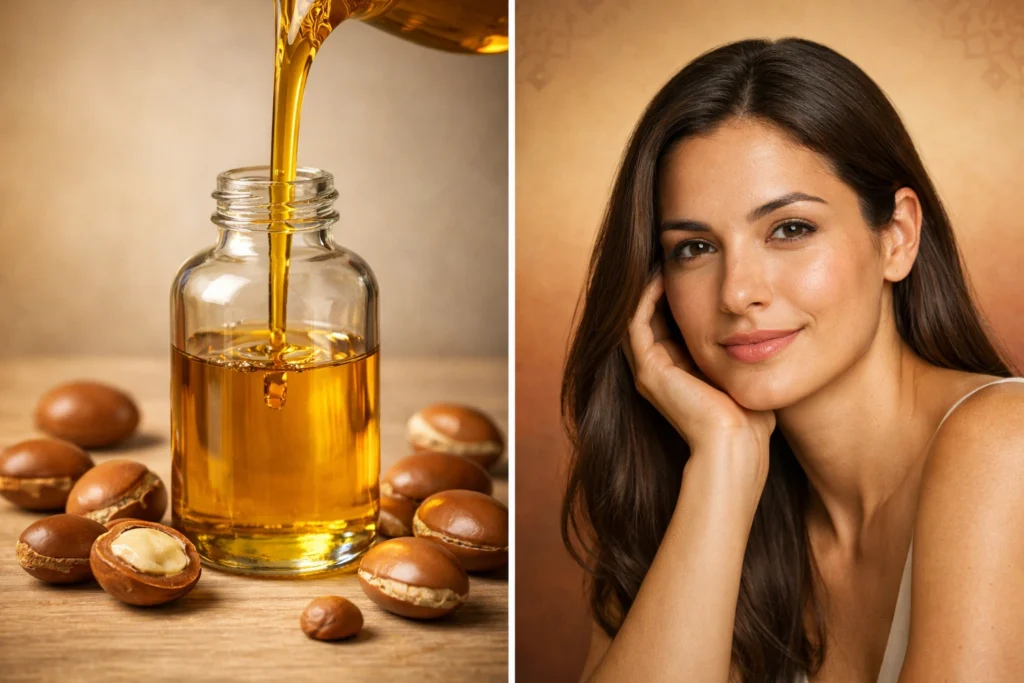
Quick Answer: Argan oil offers 30+ proven benefits including deep skin moisturization, anti-aging effects (boosts collagen), frizz control for hair, cardiovascular health support (reduces BP by 28.8%), and anti-inflammatory protection. Use 2-3 drops on face or hair, apply to damp skin for best absorption.
Ever heard of ‘liquid gold’? It’s not a myth. It’s argan oil. This rare oil from Morocco is taking India’s beauty scene by storm. The global market is huge, valued at over ₹3,100 crores and growing fast. Why the hype? It’s packed with vitamin E and antioxidants. It can seriously help your skin and hair. Whether you’re fighting dryness, damage, or just want a natural glow, this guide has you covered. We’ll show you the real benefits and how to spot the good stuff in India.
What is Argan Oil? (Moroccan Liquid Gold)
Argan oil comes from the kernels of the argan tree. This tree only grows in one place: southwestern Morocco. It’s so special that the forest there is a UNESCO World Heritage Site. That tells you how rare and important this oil is.


Here’s the deal: there are two main types you’ll find in India.
Cosmetic Argan Oil is cold-pressed from raw kernels. It’s lighter in color and has a mild scent. Culinary Argan Oil is made from roasted kernels. It’s darker and has a nutty flavor for cooking.
What makes it stand out? It has a light, non-greasy feel. It absorbs into your skin super fast. It’s a golden yellow color and smells faintly nutty. Plus, it’s packed with good fats—about 80% of it is unsaturated fatty acids. The harsh Moroccan climate forces these trees to pack powerful nutrients into their kernels. That’s the secret.
What Makes Argan Oil Special? Key Nutrients
So, what’s actually in this stuff? Argan oil is loaded with vitamin E and healthy fats like omega-6 and omega-9. This combo makes it a powerful antioxidant and anti-inflammatory. Its vitamin E content is seriously high, between 600-900 mg/kg.

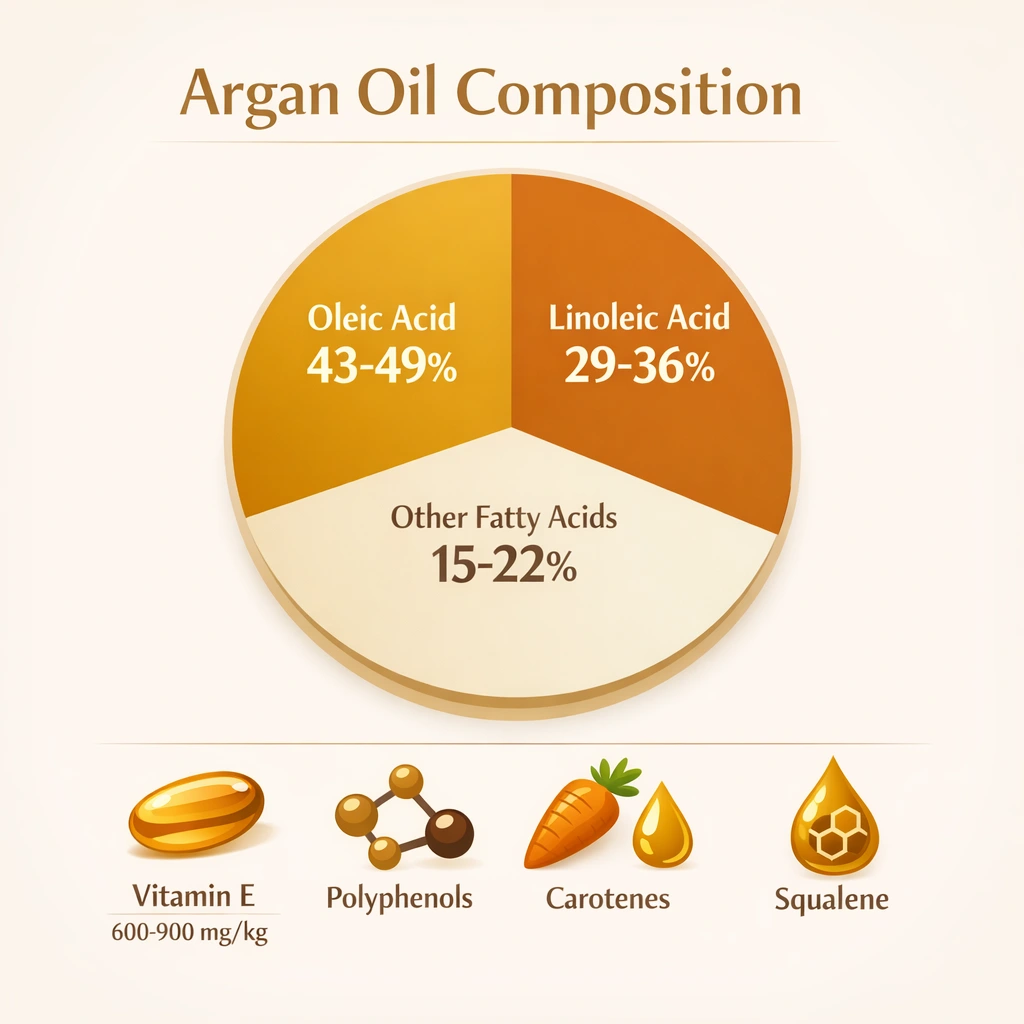
Let’s break down the fatty acids. You’ve got Oleic Acid (43-49%) for deep moisture and skin repair. Linoleic Acid (29-36%) fights inflammation and can help with acne. Palmitic and Stearic Acids round it out, providing protection and keeping your skin elastic.
But the magic doesn’t stop there. It’s also full of antioxidants.
- Vitamin E(Tocopherols): Shields your skin from damage.
- Polyphenols: Fight aging and calm inflammation.
- Carotenes & Squalene: Help your skin cells renew and stay moist.
- Phytosterols: Reduce redness and help your skin heal.
| Benefit Category | Top Benefits | Best For |
|---|---|---|
| Skin | Anti-aging, acne control, scar healing, eczema relief | All skin types, especially dry and mature skin |
| Hair | Frizz control, heat protection, split end repair, scalp health | Dry, damaged, color-treated, low porosity hair |
| Health | Heart health (-28.8% BP), gut bacteria boost, blood sugar regulation | Internal use, 1-2 tbsp daily |
| Face | Deep moisture, wrinkle reduction, dark spot fading | Morning & night routine, overnight treatment |
Argan oil even has some unique compounds you won’t find elsewhere, like Spinasterol for collagen and Schottenol for a bit of natural UV protection.
Here’s the thing: experts point to this rich profile as a key reason it works. As one researcher notes, these components help create a balanced environment for your skin. This unique mix is why it works so well, whether you put it on your skin or add it to your food.
Top 12 Benefits of Argan Oil for Skin
Argan oil is a skin superhero. Its antioxidants and fatty acids offer deep hydration, fight aging, and help your skin heal. Here are the top ways it can help you.
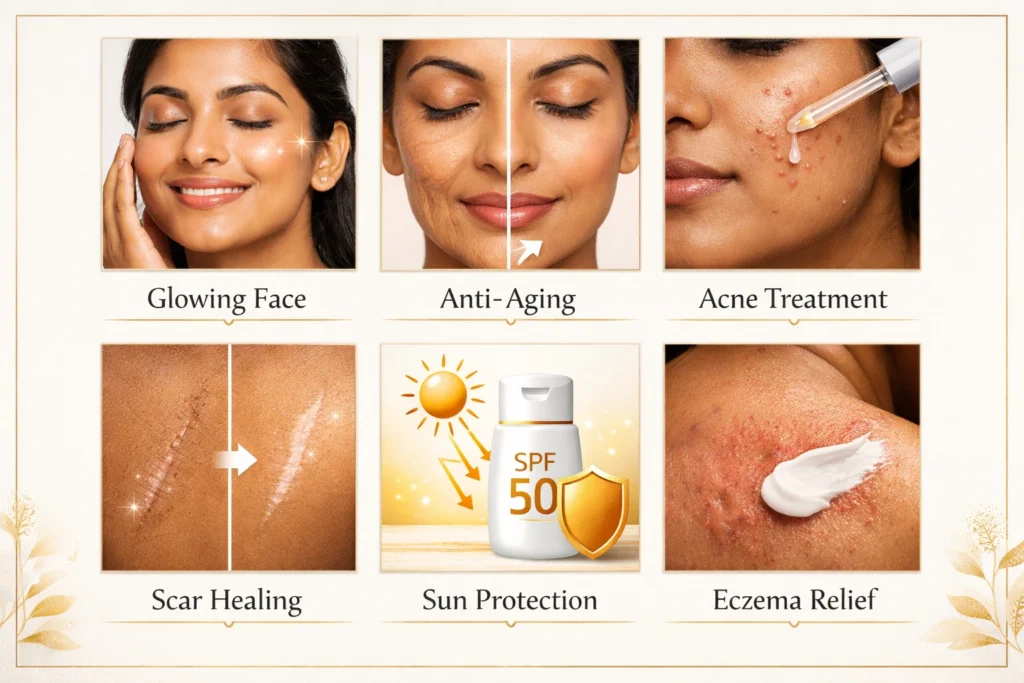
1. Deep Moisturization Without Greasiness Its lightweight formula sinks in deep. It won’t clog your pores. It’s perfect for dry, flaky skin. It can even help balance oily skin by regulating your natural oils.
2. Anti-Aging and Wrinkle Reduction All that vitamin E (600-900 mg/kg) is a powerhouse. It boosts collagen, smooths fine lines, and improves your skin’s elasticity. It also protects you from daily environmental damage.
Boost argan oil’s effects by combining with rosemary essential oil for improved elasticity or jojoba oil for enhanced absorption. Explore our DIY anti-aging recipes.
3. Acne and Blemish Control Surprised? The linoleic acid in argan oil reduces inflammation. It helps unclog pores naturally and balance oil production. Over time, it can even help fade those stubborn acne scars.

4. Scar and Stretch Mark Healing It promotes skin regeneration. This means better cell turnover and more collagen. The result? A visible reduction in the appearance of scars and stretch marks. Your skin texture and tone will improve.
5. Sun Damage Protection and Repair The antioxidants offer some natural SPF protection (but don’t skip your sunscreen!). They also help repair skin cells damaged by the sun and prevent premature aging from UV rays.
6. Eczema and Dermatitis Relief Its anti-inflammatory properties are a game-changer. They soothe irritated, inflamed skin, reduce redness and itching, and strengthen your skin’s natural barrier.
7. Lip Care and Protection For soft, healthy lips, it prevents chapping and heals cracks naturally. It provides long-lasting moisture and is safe for daily use.
8. Under-Eye Care It’s gentle enough for the delicate eye area. It can reduce puffiness and dark circles, minimize fine lines, and provide intensive hydration without causing milia.
9. Hyperpigmentation and Dark Spot Reduction It helps even out your skin tone. It promotes cell renewal and can gradually fade dark spots, giving you a more radiant complexion.
10. Wound Healing and Skin Repair It speeds up healing. Its antimicrobial properties, combined with better tissue regeneration and reduced inflammation, help your skin repair itself faster.
11. Pregnancy Skin Care It’s a safe, natural choice for expecting mothers. It can help prevent and reduce stretch marks, soothe pregnancy-related skin changes, and maintain your skin’s elasticity.
12. Anti-Inflammatory Benefits For sensitive or reactive skin, it calms irritation and redness. It can soothe conditions like rosacea and provide gentle, effective care.
Quick note: While argan oil is fantastic, always talk to a dermatologist for persistent skin issues or before using it during pregnancy.
Top 10 Benefits of Argan Oil for Hair
Your hair will love argan oil. Its fatty acids, antioxidants, and vitamin E nourish deeply, strengthen follicles, and boost overall health.
1. Deep Hair Moisturization It penetrates the hair shaft to restore moisture to dry, brittle hair. It seals the cuticle for lasting hydration and works on all hair types, even low porosity hair.
2. Frizz Control and Smoothing Tame unruly, frizzy hair. It creates a protective barrier against humidity, adds natural shine without weight, and makes your hair much easier to style.
3. Heat Protection Always use it before heat styling. It forms a protective layer on each strand. This reduces damage from blow dryers and straighteners and helps prevent protein loss.
4. Scalp Health and Dandruff Reduction Its anti-inflammatory properties soothe an itchy, irritated scalp. They reduce flakiness and dandruff and help balance your scalp’s oil production for a healthier environment.
5. Hair Growth Stimulation It supports growth by improving blood flow to your scalp. It feeds essential nutrients to your hair follicles, strengthens the roots, and reduces breakage and loss.
6. Split End Prevention and Repair Regular use seals existing split ends temporarily. More importantly, it prevents new ones from forming by strengthening the hair cuticles and improving the overall hair structure.
7. Color Protection For color-treated hair, it’s a lifesaver. It protects against fading, keeps your color vibrant longer, reduces damage from chemical treatments, and keeps your hair healthy and shiny.
8. Natural Shine Enhancement It adds a healthy, natural-looking shine. It improves how light reflects off your hair strands, enhancing your hair’s texture and appearance with a long-lasting glossy finish.
9. Hair Elasticity and Strength The nutrients improve your hair’s ability to stretch without breaking. They strengthen weak, damaged hair and reduce mechanical damage from brushing. Your hair becomes more resilient.
10. Styling Benefits As a styling aid, it provides light hold for natural styles. It reduces static and flyaways, enhances curl definition, and helps create smooth, polished looks.
Special Benefits for Indian Hair Types It works wonders for common Indian hair concerns.
- Thick, coarse hair: Provides deep moisturization without feeling heavy.
- Chemically treated hair: Repairs damage from frequent coloring or straightening.
- Monsoon hair care: Protects against humidity and frizz.
- Oil-loving traditions: It fits perfectly with traditional Indian hair oiling practices.
For best results, use it 2-3 times a week as a pre-shampoo treatment. You can also use a tiny bit daily as a leave-in conditioner on damp hair.
Argan Oil Health Benefits (Internal Use)
Research shows eating argan oil is good for your heart. One study found it reduced systolic blood pressure by 28.8% in people with hypertension. That’s a big deal.

1. Cardiovascular Health Benefits Experts confirm its potential. ‘Argan oil has demonstrated therapeutic potential for cardiovascular disorders linked to obesity, hypertension, and insulin resistance,’ says a Javier S. Perona.
The key benefits? It can lower blood pressure, help manage cholesterol levels, protect against heart disease, and improve your circulation.
2. Digestive Health and Gut Microbiota Here’s a cool fact: recent research shows it increases good gut bacteria like Lactobacillus and Bifidobacterium. This means better digestion, a balanced gut, reduced inflammation, and a stronger immune system.
3. Anti-Inflammatory Properties The polyphenols and vitamin E fight inflammation throughout your body. This can support joint health, protect your cells from stress, and give your immune system a boost.
4. Diabetes and Metabolic Health Studies suggest it may help regulate blood sugar and improve insulin sensitivity. It could help prevent metabolic syndrome and support weight management with its healthy fats.
5. Cancer Prevention Potential Early research is promising. The antioxidants may help prevent cellular damage that leads to cancer. Some compounds might even inhibit tumor growth and strengthen your body’s natural defenses.
Recommended Internal Usage Want these benefits? Use 1-2 tablespoons of culinary argan oil daily. Add it to salads, drizzle it over cooked veggies, or take it straight. It’s best with meals for better absorption. Just make sure you’re using the food-grade kind.
Popular Indian Culinary Applications
- Salad dressings: Mix with lemon juice and herbs.
- Cooking: Use for light sautéing on low heat only.
- Smoothies: Add a teaspoon to your morning blend.
- Traditional dishes: Stir a bit into your dal or vegetable dishes.
Important: Talk to your doctor before using argan oil for health reasons, especially if you have a medical condition or take medication.*
How to Apply Argan Oil (Face, Hair & Body)
Using it right is key. Here’s how to get the most out of it for your skin, hair, and health.


For Face and Skin Care
Step-by-Step Face Application:
- Cleanse: Start with clean, slightly damp skin.
- Amount: Just 2-3 drops for your whole face.
- Warm: Rub it between your palms.
- Apply: Gently press it into your skin using upward motions.
- Massage: Use circular motions for 30-60 seconds.
- Absorb: Wait 5-10 minutes before adding other products.
Best Times to Apply:
- Morning: After cleansing, before your sunscreen.
- Evening: As the last step in your routine.
- Overnight: For intensive repair and hydration.
Body Application Tips: Apply to damp skin for better absorption. Focus on dry spots like elbows and knees. Use gentle, circular motions and let it soak in before getting dressed.
For Hair Care

Pre-Shampoo Treatment:
- Section hair into 4-6 parts.
- Apply oil (1-2 teaspoons), focusing on mid-lengths to ends.
- Massage scalp gently for 2-3 minutes.
- Cover with a warm towel or shower cap.
- Wait 30 minutes to 2 hours.
- Shampoo with a gentle shampoo (you might need two washes).
Leave-In Treatment: Use 2-3 drops on damp hair after washing. Focus on the ends, avoid the roots. Comb it through and style as usual.
For hair growth, pair argan oil with castor oil’s proven thickness benefits or onion oil for follicle stimulation.
For Scalp Health
Scalp Massage Technique: Part your hair into sections. Use your fingertips to apply oil directly to your scalp. Massage in circles for 5-10 minutes. Work the oil through the lengths of your hair. Leave it for at least 30 minutes, then shampoo thoroughly.
Argan Oil Usage Frequency Guidelines
| Application | Normal Skin/Hair | Oily | Dry/Damaged |
|---|---|---|---|
| Face (Day) | Once daily | Every other day | Twice daily |
| Face (Night) | Daily | 3-4x weekly | Daily |
| Hair Treatment | 1-2x weekly | Once weekly | 2-3x weekly |
| Leave-in Hair | Daily (2-3 drops) | Not recommended | Daily (3-5 drops) |
| Scalp Massage | Weekly | Bi-weekly | 2x weekly |
Pro Tips for Maximum Benefits
- Patch test on a small area first.
- Quality matters—buy pure, organic oil.
- Store it in a cool, dark place.
- Layer it before heavier creams.
- Be consistent for the best results.
- Less is more. Start small.
Common Mistakes to Avoid Don’t use too much (it gets greasy). Don’t apply it to bone-dry hair (it won’t absorb well). Never skip a patch test. And don’t use expired or rancid oil—it can irritate your skin.
Argan Oil Benefits and Side Effects
Argan oil is generally safe, but you should know the possible side effects. This ensures you use it safely and effectively.
Common Side Effects
Skin Reactions:
- Allergic reactions: Rare, but possible—especially if you have tree nut allergies.
- Skin irritation: Redness, itching, or a burning feeling.
- Breakouts: Can happen with poor-quality or contaminated oil.
Hair-Related Issues:
- Greasy look: From using too much.
- Scalp irritation: Itching or flaking if you’re sensitive.
- Product buildup: From overuse.
Who Should Be Cautious?
1. Tree Nut Allergy Sufferers: Argan oil comes from a fruit kernel, not a tree nut. But if you have a severe allergy, be extra careful. Consult an allergist first. Do a thorough patch test. Start with a tiny amount.
2. Pregnant and Breastfeeding Women: Topical use is usually fine. For eating it, check with your doctor first. Do a patch test because your skin can be more sensitive. And only use pure, organic products.


3. People with Sensitive Skin: Start with small amounts. You can dilute it with another oil if needed. Avoid using it on broken skin. Choose cold-pressed, unrefined oil.
Argan Oil vs Coconut Oil: Which is Better?
Both oils are great, but they’re different. Argan oil is better for anti-aging and sensitive skin. Coconut oil wins for antimicrobial power and deep hair conditioning.
Let’s compare what’s inside.
- Composition Comparison Primary Fatty Acids: Argan has Oleic and Linoleic acid. Coconut has Lauric and Myristic acid.
- Vitamin E Content: Argan has a ton (600-900 mg/kg). Coconut has very little.
- Antioxidants: Argan is high. Coconut is low to medium.
- Absorption: Argan is light and fast. Coconut is medium and slower. **Shelf Life**: Both last 2-3 years.
Skin Care Benefits Comparison
Argan Oil Advantages:
- Anti-aging: Superior vitamin E fights wrinkles.
- Sensitive skin: Less likely to cause a reaction.
- Acne-prone skin: Won’t clog your pores.
- Scar healing: Helps skin regenerate faster.
Coconut Oil Advantages:
- Antimicrobial: Fights bacteria and fungus.
- Deep moisturization: Best for very dry skin.
- Affordability: Much easier on your wallet.
- Availability: You can find it anywhere in India.
Hair Care Performance
Argan Oil for Hair:
- Frizz control: Smoothes hair brilliantly.
- Heat protection: Better for styling tools.
- Fine hair: Lightweight, doesn’t weigh hair down.
- Color protection: Keeps dyed hair vibrant.
Coconut Oil for Hair:
- Deep conditioning: Penetrates the hair shaft deeply.
- Protein retention: Prevents hair from losing protein.
- Dandruff control: Strong antimicrobial action.
- Thick hair: Perfect for coarse, thick Indian hair.
Price and Availability in India
Argan Oil: Costs ₹800-₹3,000 per 100ml. You’ll find it online or in premium stores. Watch out for fake products. It’s mostly imported.
Coconut Oil: Costs ₹50-₹300 per 100ml. It’s available everywhere. It’s easier to find pure oil, and you’re supporting local Indian production.
Best Use Cases
1. Choose Argan Oil When: You have sensitive or acne-prone skin. Anti-aging is your main goal. You need a lightweight hair treatment. You want a luxury skincare feel. You have fine or damaged hair.
2. Choose Coconut Oil When: You need intense moisturization. You have thick, coarse hair. Your budget is tight. You prefer traditional remedies. You need antimicrobial benefits.
Combination Usage Tips Try rotating them with the seasons—argan in summer, coconut in winter. Use argan on your face and coconut on your body. Alternate them weekly for hair treatments. You can even mix them for a DIY blend.
Expert Recommendation for India Your choice depends on a few things.
- Skin type: Oily/sensitive? Go argan. Dry/normal? Either works.
- Hair type: Fine/damaged? Argan. Thick/coarse? Coconut.
- Budget: Premium? Argan. Everyday? Coconut.
- Climate: Hot and humid? Argan. Dry and cold? Coconut.
How to Buy Authentic Argan Oil in India
The argan oil market in India is booming. That means you need to know how to spot the real deal. Fake oils are common, so here’s your guide to getting the pure stuff and all its benefits.

Key Quality Indicators
Visual Characteristics:
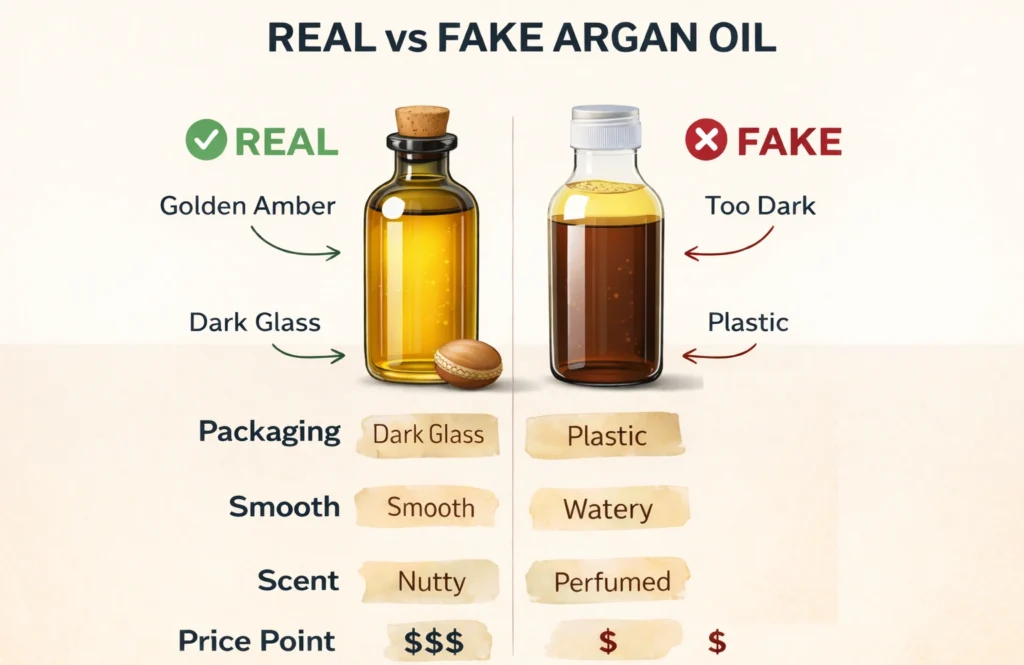
- Color: It should be golden yellow to light amber. Not too dark, not too light.
- Clarity: Clear with no cloudiness or floating bits.
- Consistency: Smooth and lightweight.
- Packaging: Always in a dark glass bottle to protect it from light.
Scent and Texture Tests:
- Aroma: A mild, nutty scent. It shouldn’t smell overpowering or rancid.
- Absorption: Should soak into your skin within 5-10 minutes.
- Feel: Non-greasy and silky.
- Residue: Leaves little to no greasy residue.
Label and Certification Checks Always look for 100% Pure Argan Oil on the label. Check for certifications like USDA Organic or Ecocert. The source should say Morocco. The ingredient list should have one thing: Argania Spinosa Kernel Oil. Avoid anything with added fragrances, preservatives, or other oils.
Price Point Reality Check Real argan oil is expensive to produce. In India, a 30ml bottle of pure oil typically costs between ₹800 and ₹2,000. If you see a price that seems too good to be true, like ₹300 for 100ml, it probably is. You’re likely looking at a diluted or fake product.
Trusted Brands and Retailers in India Buy from well-known beauty retailers like Nykaa, Purplle, or Amazon (sold by the brand itself). Look for reputable international brands such as Moroccanoil or The Ordinary. For Indian brands, check out Biotique or Khadi Natural. Always read reviews and check ratings before you buy.
Red Flags: How to Spot Fake Argan Oil
- Suspiciously Low Price: The biggest warning sign.
- Clear Plastic Packaging: Pure oil degrades in light.
- Strong Perfume Smell: Real oil has a subtle nutty aroma.
- Watery or Sticky Texture: It should be smooth and light.
- Long Ingredient List: It should only contain argan oil.
Storage and Shelf Life Tips Once you have the real thing, store it right. Keep the bottle in a cool, dark cupboard, not in your bathroom. Close the lid tightly after each use. Pure argan oil has a shelf life of about 2 years. If it starts to smell sour or rancid, it’s time to toss it.
Simple At-Home Purity Test Not sure about your bottle? Try this. Put a drop on a piece of paper. Pure argan oil will leave a translucent, non-greasy mark that absorbs. Adulterated oil with cheaper oils will leave a greasy, oily ring that doesn’t soak in.
Following these tips will help you invest in authentic argan oil. You’ll get all the amazing benefits for your skin and hair without wasting your money on imitations.
Frequently Asked Questions
Absolutely. It might sound wrong, but argan oil can actually help oily skin. Here’s why: it’s lightweight and non-comedogenic, meaning it won’t clog your pores. The linoleic acid in it helps balance your skin’s natural oil production. Think of it as sending a signal to your skin to calm down on making excess oil. Start with just 1-2 drops at night. You’ll be surprised—it moisturizes without making you greasy.
It depends on your hair type. For most people, 1-2 times a week as a pre-shampoo treatment works great. If your hair is really dry or damaged, you can go up to 2-3 times a week. You can also use a tiny drop as a daily leave-in conditioner on damp ends. The key is to listen to your hair. If it starts looking greasy, cut back. Consistency is more important than frequency.
For topical use on your skin, it’s generally considered safe and can be great for preventing stretch marks. However, you should always do a patch test first because pregnancy can make your skin more sensitive. As for eating it (culinary argan oil), it’s best to check with your doctor first. They can give you advice based on your personal health. When in doubt, ask a professional.
Good question. They come from the same source but are processed differently. Cosmetic argan oil is cold-pressed from raw kernels. It’s lighter, has a mild scent, and is meant for your skin and hair. Culinary argan oil is made from roasted kernels. It’s darker, has a stronger nutty flavor, and is for eating. Don’t mix them up! You shouldn’t cook with cosmetic oil, and culinary oil might be too heavy for your face.
Look for a few tell-tale signs. First, check the price. Real argan oil isn’t cheap. It should come in a dark glass bottle, not plastic. The scent should be mild and nutty, not perfumey. The texture is light and absorbs quickly. Also, read the label. It should say ‘100% Pure Argan Oil’ and list Argania Spinosa Kernel Oil as the only ingredient. If the price is super low or the ingredient list is long, it’s probably not the real deal.
Argan oil offers multiple benefits: deeply moisturizes skin without greasiness, reduces wrinkles and fine lines with high vitamin E content (600-900 mg/kg), controls frizz and adds shine to hair, supports cardiovascular health by lowering blood pressure up to 28.8%, and provides anti-inflammatory protection throughout the body. Its unique fatty acid composition makes it effective for both topical and internal use.
Yes, argan oil is highly beneficial for hair. It deeply moisturizes dry strands, controls frizz in humid conditions, protects against heat styling damage, reduces split ends, and promotes scalp health. For best results, use 1-2 times weekly as a pre-shampoo treatment or apply 2-3 drops daily as a leave-in conditioner on damp hair ends.
Yes, argan oil helps reduce scars through enhanced skin cell regeneration and collagen production. The vitamin E and essential fatty acids promote tissue repair and improve skin texture. Apply 3-4 drops twice daily to scarred areas, massage gently for 2 minutes. Visible improvement typically appears after 8-12 weeks of consistent use.
Absolutely. Overnight application is ideal for maximum benefits. Cleanse your face, apply 3-4 drops to damp skin before bed, and massage gently. The oil absorbs while you sleep, providing deep hydration and anti-aging benefits. It won’t clog pores or cause breakouts due to its non-comedogenic nature.
Yes, argan oil is excellent for lip care. It prevents chapping, heals cracks naturally, provides long-lasting moisture, and is safe to ingest. Apply 1-2 drops directly to lips throughout the day or before bed. It’s especially effective during winter or in air-conditioned environments.
Daily use is safe and beneficial for most people. You’ll notice improved skin hydration, reduced fine lines, better hair manageability, and enhanced scalp health. Start with small amounts (2-3 drops for face, 3-5 drops for hair) to avoid buildup. If you have oily skin, begin with every-other-day application and adjust based on results.
Yes, many dermatologists recommend argan oil for its non-comedogenic, anti-inflammatory, and antioxidant properties. It’s particularly recommended for anti-aging, sensitive skin, eczema, and post-procedure healing. However, always consult your dermatologist for personalized advice, especially if you have specific skin conditions or allergies.
Yes, pure argan oil can be applied directly to skin without dilution. It’s safe, non-irritating, and absorbs quickly. Apply 2-3 drops to damp skin for best absorption. Unlike some essential oils, argan oil doesn’t require a carrier oil. However, always do a patch test first if you have sensitive skin or allergies.
Excellent for mature skin. The high vitamin E content (600-900 mg/kg) boosts collagen production, reduces age spots and hyperpigmentation, improves skin elasticity, and provides deep hydration. Use twice daily – morning and night – for visible anti-aging results within 4-6 weeks.
Yes, it’s safe and effective for the delicate under-eye area. It reduces puffiness and dark circles, minimizes fine lines and crow’s feet, and provides intensive hydration without causing milia. Use your ring finger to gently pat 1 drop under each eye nightly. Avoid pulling or tugging the sensitive skin.
Yes, you can apply it directly. For pre-shampoo treatment, apply 1-2 teaspoons to dry hair sections, focusing on mid-lengths to ends. For leave-in treatment, use 2-3 drops on damp (not wet) hair after washing. Avoid applying directly to roots if you have oily hair to prevent greasiness.
It depends on your needs. Choose argan oil for anti-aging skincare, sensitive or acne-prone skin, fine or damaged hair, and lightweight absorption. Choose coconut oil for intense moisturization, antimicrobial benefits, thick coarse hair, and budget-friendly options. Many people use both – argan for face and fine hair, coconut for body and thick hair.
Daily use as a leave-in treatment is fine with minimal amounts (2-3 drops on damp ends). However, daily pre-shampoo treatments can cause buildup. For most hair types, 1-2 times weekly for intensive treatment and daily minimal leave-in use works best. Reduce frequency if hair appears greasy or heavy.
Conclusion
Argan oil delivers proven benefits for skin, hair, and overall health. From anti-aging and frizz control to cardiovascular support, this Moroccan oil is backed by science. Start with small amounts, choose authentic products, and stay consistent for best results.
References
- OpenPR. “Argan Oil Market Surges on Natural Beauty Demand” – Market growth and industry insights
- Nivea. “Argan Oil for Face: Benefits and Uses” – UNESCO heritage status and skincare benefits
- ScienceDirect. “Nutritional Composition of Argan Oil” – Fatty acid and vitamin E analysis
- MDPI Nutrients. “Therapeutic Potential of Argan Oil for Health” – Cardiovascular and gut health research
- SNS Insider. “Morocco Argan Oil Market Report 2032” – Industry forecasts and trends